
Zambia: From Victoria Falls to the Heart of the African Bush

Updated: Mar 2
There are journeys that enrich you, and then there are journeys that transform you. Our 10 days in Zambia did the latter. They felt like stepping into a world where life moves slower, smiles last longer, and simplicity becomes the highest form of luxury. Africa is unmatched, and some of our favourite experiences anywhere in the world are these moments in the wild—among people who live simply, humbly, and joyfully. The perfection and happiness here lie in simplicity. While most people chase money, power, validation, and noise, the people of Zambia work for their families, cherish community, and live fully in the present moment.
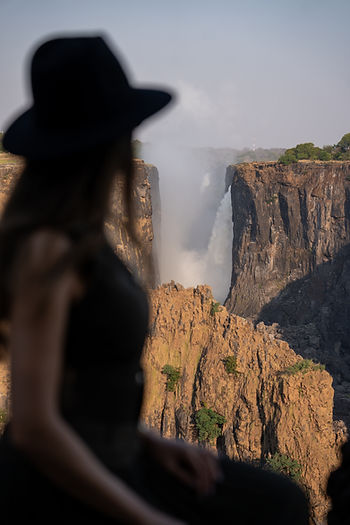
In Africa, I’ve met some of the kindest, most genuine souls. My heart feels full every time I am here. Crossing the border from Botswana into Zambia by car, we reached Livingstone, where giraffes and zebras wandered past our room to say good morning. Close by, Victoria Falls—one of the Seven Natural Wonders of the World—roared before us, and we found ourselves standing on the very edge in Devil’s Pool, with double rainbows arching above like nature’s blessing.
We saw the Falls from above in a microlight and a helicopter, floated along the Zambezi River in a golden sunset glow, and boarded the romantic vintage Royal Livingstone Express, which rolls toward the iconic Victoria Falls Bridge connecting Zambia and Zimbabwe.

Then came the wilderness: Lower Zambezi and South Luangwa, home to extraordinary wildlife and legendary leopard sightings. After visiting some of the world’s most exclusive safari destinations, nothing compares to the raw, untamed freedom of Zambia. Here, sightings are often yours alone; silence belongs to you and the animals. I needed to pinch myself every single time we went on a game drive.

We had candlelit dinners in the heart of the African bush, where not only candles and stars flickered in the night, but also pairs of curious animal eyes quietly watched us. We slept outside on a starbed, under the Milky Way and a billion shimmering stars, listening to the sounds of the wild. The crisp air, the silence, the feeling of being completely free—it was one of those rare experiences that make you stop and ask yourself, Is this really my life right now?
We had that feeling: the kind of freedom that stays in your bones forever.
Are you ready to embark on this adventure? Below, you will find our day-by-day itinerary.
GENERAL INFORMATION

Zambia’s history stretches back thousands of years, beginning with early hunter-gatherer communities whose tools and rock paintings can still be found across the country. Later, Bantu-speaking peoples settled in the region and developed major kingdoms such as the Lunda, Lozi and Bemba.
In the late 19th century, the area became Northern Rhodesia under British colonial rule. Zambia gained independence on 24 October 1964, led by its first president, Kenneth Kaunda, who emphasised national unity under the motto: “One Zambia, One Nation.”
Location: Zambia is a landlocked country in Southern Africa, bordered by Tanzania to the northeast, Malawi to the east, Mozambique and Zimbabwe to the southeast, Botswana and Namibia to the south, Angola to the west, and the Democratic Republic of the Congo to the north.
Its geography is incredibly diverse—rugged escarpments, wide savannahs, lush river valleys, vibrant wetlands, and the dramatic Zambezi River carving its way to the iconic Victoria Falls.
Etymology: The name Zambia comes from the Zambezi River, one of Africa’s great waterways, which forms much of the country’s southern boundary.

Symbol: Zambia’s national emblem is the African Fish Eagle, symbolising freedom, strength, and the country’s connection to its rivers and wildlife.
Size: Zambia covers around 752,618 km² (290,587 mi²), making it one of Africa’s larger nations.
Capital: Lusaka
Population: Around 22 million people in 2025
Tribes: Zambia is home to over 70 ethnic tribes, each with its own language, traditions, and cultural heritage. Despite this diversity, the country is known for its strong sense of unity and peaceful coexistence — something you truly feel while traveling through different regions.
Some of the most well-known tribes include the Bemba, Tonga, Lozi, Chewa, Ngoni, Lunda, and Luvale, among many others. Each group contributes to Zambia’s rich cultural tapestry through music, dance, storytelling, craftsmanship, and traditional ceremonies.
Languages: Zambia has over 70 indigenous languages, with English as the official language. Prominent regional languages include Bemba, Nyanja, Tonga, Lozi, Kaonde, Lunda, and Luvale.
Currency: Zambian Kwacha (ZMW) - values fluctuate strongly, so check current rates before your trip. For reference: 10 ZMW = 0.38 EUR ; 10 ZMW = 0.44 USD
Local time: Central Africa Time (CAT) — GMT+2.
Economy: Zambia’s economy is driven by copper mining, agriculture, tourism, and wildlife conservation. While not a wealthy country, it is rich in natural resources. Copper and cobalt lead the way as the backbone of its economy, gemstones like emeralds, amethyst, and aquamarine add sparkle, coal and iron are support industry, gold provides a valuable but smaller contribution, fertile soils produce maize, tobacco, cotton, and sugar, and vast forests supply timber, all of which showcase the country’s abundant and diverse natural wealth.
Zambia is also rich in culture. Tourism plays a vital role in supporting local communities and wildlife protection across the country.

Best time to visit: Zambia is a safari paradise, and the dry season (June to October) is the best time for wildlife viewing—animals gather around rivers and clear skies reveal stunning sunsets and starry nights.
DRY SEASON (May to October) – BEST FOR SAFARIS
Clear skies and excellent wildlife viewing
Ideal temperatures
Best time for South Luangwa, Lower Zambezi & Kafue
Victoria Falls fullest June–August
What to do:
Walking safaris in South Luangwa
Canoe safaris in Lower Zambezi
Victoria Falls (best June–August for full but clear views)
Exceptional leopard sightings
HOT SEASON (October–November)
Extremely hot, sometimes 40°C+
Incredible predator sightings around shrinking water sources
GREEN SEASON (November–April)
Lush and beautiful
Amazing birdlife
Baby animals everywhere
Lower prices, fewer tourists
Some lodges and roads may close due to rain

What to pack: Lightweight layered clothing, breathable t-shirts, comfortable trousers, shorts for hot afternoons, warm layers for early mornings and evenings, wide-brimmed hat, cap or buff, sunglasses, comfortable closed shoes for walking, sandals for relaxing at the lodge, swimsuit, light rain jacket, scarf or bandana for dust, insect repellent (DEET or Picaridin), sunscreen, lip balm with SPF, camera with extra batteries or power bank, flashlight or headlamp, travel adapter, medications and first-aid kit, toiletries, notebook or journal, optional: guidebooks or maps.
Note: Binoculars and reusable water bottles are usually provided by the camps.
Quick Safari Dress Code: Stick to neutral, earthy colors like khaki, olive, beige, and brown. Avoid bright colors, black, or white — they can attract insects or spook wildlife.
Power plug/sockets: Zambia primarily uses Type C (two round pins) and Type G (three rectangular pins) electrical outlets. The country operates on a 230 V supply voltage and 50 Hz frequency. Some lodges and camps provide a mix of socket types for international travellers, but it’s still recommended to carry a universal travel adapter to ensure all your devices can be charged safely.
Traditional clothing: Traditional Zambian clothing is vibrant, symbolic, and deeply connected to cultural identity. One of the most commonly worn garments is chitenge (also known as citenge) — a brightly patterned cotton fabric worn by both women and men. It can be styled in many ways: as dresses, skirts, headwraps, baby carriers, or even wrapped over the shoulder.
The patterns and colors often carry meaning, representing social status, community, or special occasions. During ceremonies and celebrations, traditional attire is paired with beaded jewellery, headdresses, and natural materials, creating striking and expressive looks.
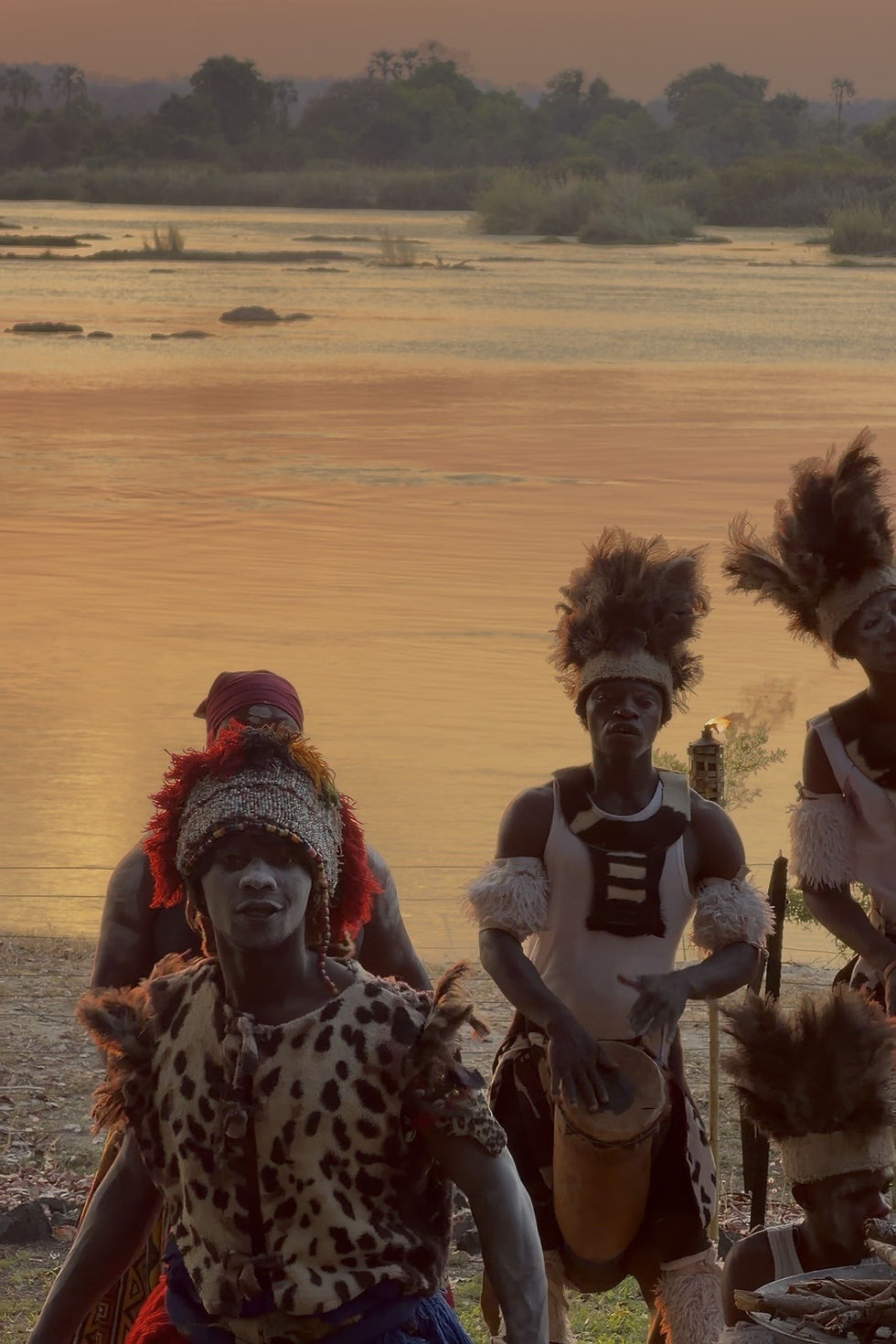
Music, dance and ceremonies: Music and dance are central to Zambian culture and play an important role in ceremonies, celebrations, and storytelling. Traditional dances are energetic, rhythmic, and often performed in groups, accompanied by drums, clapping, and singing.
Zambia hosts some of Africa’s most fascinating cultural ceremonies, including:
Kuomboka Ceremony (Lozi tribe): A spectacular event marking the seasonal movement of the Lozi king from the flooded plains to higher ground, featuring royal barges, drumming, and traditional dress.
Nc’wala Ceremony (Ngoni tribe): Celebrating the first harvest, symbolizing strength, unity, and gratitude.
Likumbi Lya Mize (Luvale tribe): Honoring initiation rites, ancestral spirits, and traditional masks.
These ceremonies are deeply meaningful and offer a powerful glimpse into Zambia’s living traditions.
Food culture: Zambian cuisine is hearty, simple, and deeply tied to local ingredients and traditions. Many meals are based on nsima, a thick maize porridge that is the cornerstone of Zambian eating. Meals are communal, often enjoyed with family, and focus on vegetables, grains, and locally sourced meat or fish. The simplicity of the food mirrors the life of the people: nourishing, fulfilling, and unpretentious.
Zambians are incredibly warm and generous. Sharing a meal is an act of hospitality—never refuse if offered. Street food is generally safe, but it’s best to stick to freshly cooked options at reputable stalls.
Staple ingredients: Maize (for nsima), cassava, groundnuts (peanuts), leafy greens (like rape and pumpkin leaves), fish (especially from Lake Tanganyika and the Zambezi), goat, chicken, beef, chilies, onions, and local herbs.
Typical foods and drinks:
Nsima with relish: Served with vegetables, beans, or meat—this is the daily staple
Ifisashi: Leafy greens cooked with peanuts, onions, and tomatoes.
Kapenta: Small dried fish, often fried and served with nshima.
Chikanda: Sometimes called African polony, a mix of groundnuts, wild tubers, and spices.
Vitumbuwa: Sweet fried dough balls, a popular snack.
Maheu: A fermented maize drink, slightly tangy and refreshing.
Chibwantu: A locally brewed beer from sorghum, often enjoyed socially.
Drones: Flying a drone in Zambia is not easy, and it’s heavily regulated. You cannot fly drones in national parks without a special permit, which requires advance application to the Zambian Civil Aviation Authority. The process is bureaucratic and includes submitting detailed documents: your drone specifications, intended flight locations, flight dates, proof of insurance, and personal identification. There is also a fee for the permit.
Even if you want to fly on lodge grounds, you must request permission from the lodge ahead of time, and they may have additional restrictions to ensure wildlife and guest safety. The reality is that drone use requires careful planning well before your trip—this is not spontaneous at all, so if you’re imagining cinematic shots, start the paperwork early.
Connectivity: Zambia is a country to disconnect and immerse yourself in the wilderness. We were connected in our lodges where Wi-Fi was available, but outside of that, the signal is limited. We bought a local SIM card in Botswana for data, but it was not useful in the wilderness, and honestly, that was part of the magic of Zambia: no distractions, just raw nature, roaring rivers, and starlit skies.
If you want to stay connected for calls or navigation in cities or towns, MTN, Airtel, and Zamtel provide coverage, but in most safari areas, it’s a luxury rather than a necessity.
HOW TO GET AROUND

We crossed the border from Botswana into Zambia by car with a pre-booked transfer. The process was surprisingly thorough:
Disinfection checkpoint: Shoes were dipped into a liquid bath, and car tires were also disinfected—a small ritual to prevent the spread of disease between countries.
Fever check: Officials checked body temperatures and issued a number if you.
Passport stamps: First leaving Botswana, then entering Zambia.
From there, all our transfers between safari lodges and cities were included. Between locations, we often flew on small 6-seater planes, which is the fastest way to cover large distances. Motion sickness pills are a must—personally, the turbulence had me nauseous 2–3 times!
Once at the lodges, game drives and activities were included, so all logistics were handled, allowing us to simply immerse ourselves in the wild without worrying about transportation or scheduling.
SAFARI GUIDANCE

Safari experiences in Zambia are all about exclusivity, immersion, and comfort.
Dry Season (May–October): Best for spotting wildlife, as animals congregate near waterholes.
Wet Season (November–April): Beautiful green landscapes and incredible birding, though some parks may be harder to access.
SAFARI DRESS CODE (especially in hot season: ~40°C with dry air)
Colours:
✔ Earth tones – khaki, olive, beige, brown
✔ Avoid white (dusty), black (attracts heat), blue (tsetse flies love it)

Mosquito Tips:
✔ Long-sleeved lightweight shirts
✔ Light trousers over shorts
✔ Insect repellent with DEET or Picaridin
✔ Avoid wearing perfume
✔ Sleep under nets when provided
Fabric and comfort:
✔ Breathable cotton or linen
✔ Quick-dry clothing
✔ Wide-brim hat
✔ Sunglasses
✔ Comfortable closed shoes for walking safaris (NOT white)
✔ A warm layer for early mornings and evenings
✔ A scarf or buff for dust on drives

Don’t forget:
✔ Sunscreen
✔ Camera
✔ Electrolytes
✔ A small daypack
✔ Binoculars - usually provided by the camp
✔ Torch
✔ A swimsuit for camps with pools
Safari tips:
✔ Lodges provide luxury experiences like candlelit dinners in the bush, stargazing, and overnight tents with full safety.
✔ Respect guides and wildlife; patience and silence bring the best sightings.
✔ Sundowners, walking safaris, canoeing, and exclusive drives are included in lodge stays—these moments often feel like your private safari.
DAY 1.
We landed at Kasane Airport in Botswana after an eventful start of the day, though the beginning of our journey wasn’t easy—Nico was very sick from a severe bout of food poisoning in Botswana (read the full story here). Initially, we thought we might have to go straight to a hospital, but after a bucket of medications, some intense moments of vomiting, and a lot of patience, he finally started to feel better, although a low-grade fever lingered.

From Kasane, we had a private transfer van to the border. At the border, we switched to a Zambian vehicle—everything was smooth and organized. The crossing itself is over the Kazungula Bridge, which links Botswana and Zambia across the mighty Zambezi River. This strategic point also connects Zambia to Namibia, Zimbabwe, and close to Angola. It’s not just a border crossing—it’s a magnificent piece of engineering suspended over the river, offering incredible views of the surrounding wildlife and wetlands.
Before the passport checks, we went through the standard disinfection procedure: our shoes were dipped into a liquid bath and the car tires were treated. This is done to prevent the spread of diseases and pests across borders. The next stop was a fever check, which gave me chills—just an hour earlier, Nico had a 40°C fever, and I half expected we might have to turn back. Fortunately, he was fine by that point, and they simply issued us a number to continue.
We then completed the passport stamps: first exiting Botswana, then entering Zambia.
KAZANGULA BORDER - LIVINGSTONE - approx. 70 km (43 mi)
The drive itself offered a glimpse of local life and the resilience of the people in this region. Along the way, we saw villagers going about their day and, famously, long lines of bikers traveling 40 km or more to cross the border. Many of them carry goods to sell, such as fresh produce, groceries, and small household items, which they transport to meet demand on the other side. It was a fascinating and humbling sight—so much effort and endurance for daily survival—reminding us that while we were on a luxurious adventure, life for many in this area is all about hard work and perseverance.


WHERE TO STAY

ROYAL LIVINGSTONE BY ANANTARA
Our three nights at the Royal Livingstone by Anantara felt like stepping into a dream. We stayed in a gorgeous suite overlooking the river, where impalas, monkeys, mongooses, zebras, and even giraffes wandered by as if we were part of their world. Every moment was peaceful, elegant, and filled with those small, perfect “pinch me” experiences you never forget.
Dining experiences were unforgettable:
Designer dinner under the Monkey Tree: Chefs cooked by us, the sunset was spectacular, and the atmosphere pure magic.
Evening at Kubu: The most breathtaking river sunset complemented an exquisite dinner.
Private breakfast on the jetty: Watching mist rise from Victoria Falls, with rainbows forming over the spray, felt otherworldly.
We also indulged in a couple’s massage, the perfect way to unwind after the journey.
The hotel team organized adventures for us:
Microlight flight over Victoria Falls
Sunset cruise on the Zambezi
Romantic dinner aboard the Royal Livingstone Express train
A wonderful bonus: hotel guests get free access to Victoria Falls from the Zambia side, which is a huge perk.
Everything—the staff, service, design, atmosphere—was flawless. It’s one of those rare places where luxury meets nature in the most beautiful way. We left with full hearts and memories we’ll cherish forever.
Instagram: @royallivingstone_anantara
Book here: Royal Livingstone Hotel by Anantara


Before dinner, we checked into our suite, and right in front of us there were many impalas calmly grazing on the grass. Around us, monkeys were roaming freely, casually walking past, sitting nearby, and clearly keeping an eye on everything—including us.
We had been warned not to leave the doors open—and we didn’t—but the monkeys here are absolute professionals. All it took was a five-second moment when I turned around, and before I even realized what was happening, one monkey had entered and pulled off a very smooth robbery, grabbing a banana straight from our fruit bowl. It was so quick and so perfectly timed that we couldn’t help but laugh. The monkey then sat outside and enjoyed the stolen banana to the fullest. No damage done, no bad feelings involved—just a very funny and very Zambian welcome moment.


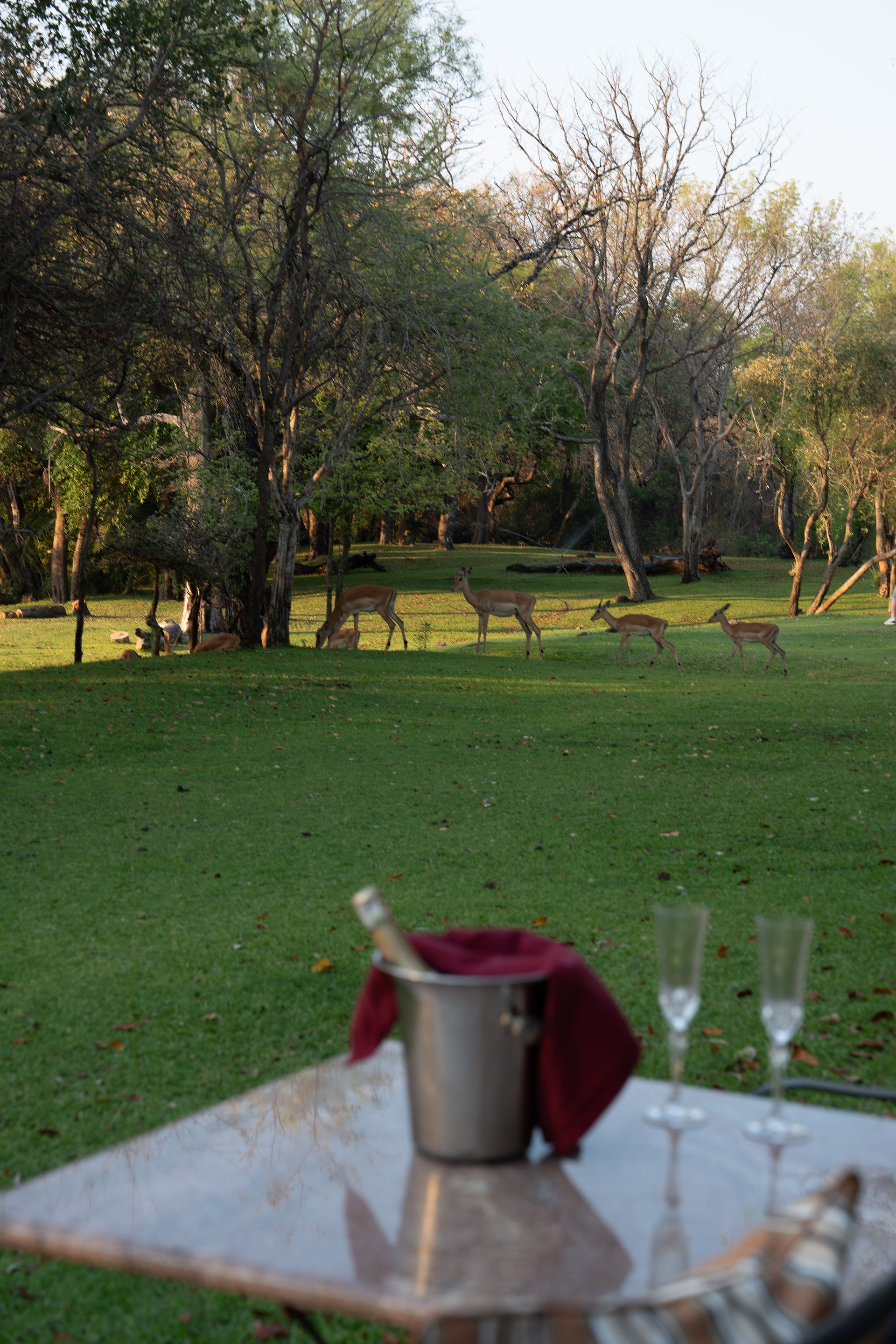
Before heading to dinner, we saw a traditionally dressed group of Zambians representing their culture and heritage walking past. They made their way down to the river, where they began to sing and dance, filling the air with rhythm, joy, and energy. I was invited to join them, and no matter how awkward I probably looked, it was impossible not to laugh. Taking part in that moment—unplanned, genuine, and full of life—was incredibly fun and unforgettable.


FIRST NIGHT: DINNER UNDER THE MONKEY TREE
After all the dancing and laughter, we made our way to our first evening experience: a designer dinner under the Monkey Tree, where the chefs prepared our meal right in front of us. The sunset over the river was spectacular, and the atmosphere—soft lights, wildlife sounds, and the gentle Zambezi breeze—made the experience feel otherworldly. Nico, still recovering, couldn’t eat as much as he usually would, but the magic of the evening was impossible to miss.
After dinner, we returned to our suite, watched the stars twinkle over the river, and drifted off to sleep, ready for the adventures that awaited us the next day.
DAY 2.
We started our day with a short golf cart ride from our suite at the Royal Livingstone by Anantara to Victoria Falls on the Zambian side. Technically, the walk is very short, but we weren’t completely sure, so the golf cart made it easy. On the way, we were greeted by a beautiful giraffe snacking on the trees, which was the perfect start to the day. Staying at Royal Livingstone gives you free entry to Victoria Falls—all you have to do is sign your name in the entry book.
The walk itself opens up a breathtaking view of the falls, and very close by you can see the Victoria Falls Bridge, connecting the two sides of the Zambezi River.


VICTORIA FALLS
Victoria Falls, known locally as Mosi-oa-Tunya—“The Smoke That Thunders”—is one of the Seven Natural Wonders of the World. Its sheer power and majesty have amazed visitors for centuries. While we visited during the dry season, when the Zambia side was quite dry, there’s a silver lining: the lower water levels allow access to Devil’s Pool, a natural infinity pool at the edge of the falls. This is something that’s not possible during the high-water season when the current is too strong.

If you want to see the falls in full force, the best time to visit is during the rainy season, roughly February to May, when the Zambezi is at its peak and the waterfalls are thunderous. The Zimbabwe side tends to offer the most impressive views in October, but keep in mind that crossing the border requires a visa, which should be organized in advance.
For reference, in Mosi-oa-Tunya National Park, international adults typically pay around $20 USD, SADC nationals around $10 USD, Zambian citizens significantly less ($2–$5), and children 6–16 pay half price, with children under 6 free. Payments are usually in USD cash or ZMW, and card acceptance varies. You also need to specify your nationality for the correct rate.
After exploring the falls in the early morning, we spotted zebras along the way back, a magical addition to the day. At breakfast in the hotel, we passed by our suite again and saw many curious mongooses scurrying about, standing on their hind legs to observe everything—so cute and full of personality.


HELICOPTER RIDE
Next up was a stunning helicopter ride with United Air Charter, lasting about 15 minutes. We had initially planned a flight with Livingstone’s Adventures, but unfortunately the flights for that week were cancelled due to maintenance. I had also hoped to do the longer Batoka Gorge flight, but even the shorter ride was absolutely breathtaking.
Sitting in the front with the pilot, the view was jaw-dropping. From above, the full width of the Zambian side of the falls became clear, with rainbows forming over the mist, sparkling in the sunlight. Seeing the falls from the air is a completely different perspective—far more expansive and powerful than from the ground.
Instagram: @unitedaircharterzambia
Book here: United Air Charter


COUPLE MASSAGE
After the flight, we returned to the hotel. Before even entering our room, we had unexpected visitors: two giraffes grazing right in front of our suite. I could have spent hours just watching them. Once we finally headed inside, we prepared for a couple massage, which was the perfect way to unwind after a morning full of adventure.
SUNSET CRUISE ON THE ZAMBEZI RIVER
Later, we were picked up by Livingstone’s Adventure for a sunset cruise on the Zambezi River. It felt like a water safari: gliding along the river as the sun turned the sky golden, spotting crocodiles, hippos, birds, and lush riverbank plants. Food, drinks, and music added to the relaxed, joyful atmosphere. Being on the water at this time of day was magical, and it gave us yet another perspective of the Zambian wilderness.


KUBU DECK DINNER
Back at the hotel, we had a lovely dinner at the Kubu Deck, right by the river. The combination of fine food, a gentle river breeze, and the sounds of wildlife around us made it an unforgettable evening.

We finished the day recharging for an early wake-up the next morning, hearts full and cameras full of memories from a truly incredible day.
DAY 3.
MICROLIGHT OVER VICTORIA FALLS
Our day started bright and early at 6:45 am with a 15-minute microlight flight over Victoria Falls with Livingstone’s Adventure. I couldn’t believe I was actually about to fly in a microlight for the first time—basically a lightweight, open-air aircraft for one passenger plus the pilot, offering the sensation of true flight and the thrill of being as free as a bird. My excitement was palpable, though I hoped the winds would cooperate!
During the flight, no objects are allowed, not even a phone in your pocket. Everything is recorded on a GoPro, and you can purchase the footage afterward. I opted for the video, which perfectly captured the experience.
Flying over the falls felt like an air safari. From above, we saw elephants wandering below, hippos lounging in the water, and more crocodiles than I’d seen even on the river cruise. The pilot narrated our surroundings the whole time, pointing out wildlife and the flow of the river.

Then we made a turn around Victoria Falls, and the view was absolutely majestic—rainbows arcing over the mist, the sound of the thundering water, and the raw power of nature overwhelming us. It was intense, humbling, and unforgettable.
Each microlight takes one passenger plus the pilot, so Nico flew next. His flight was shorter because the winds increased, giving him a slightly more adventurous experience than mine. I felt like a bird floating above the falls—completely free and in awe.
Instagram: @livingstonesadventure
Book here: Livingstone's Adventure

DEVIL’S POOL
After returning to the hotel, we went straight to our Devil’s Pool adventure organized by Visit Zambia. We were picked up from the hotel and transferred to the starting point. At the start, we rented water shoes (optional if you bring your own) to make walking in the river safer.
We signed up, then boarded a small boat with a few other guests that took us to Livingstone Island, a sacred and historic spot in the Zambezi River. On the island, we handed over our phones in a waterproof bag to our guide/photographer, and left all belongings in a secured metal box. From there, we walked to a viewpoint overlooking Victoria Falls, where the sound of thunder and the sight of a double rainbow made the moment unforgettable.


Then came the thrill: approaching Devil’s Pool, a natural infinity pool right at the edge of the falls. During the dry season, when the river is lower, it’s possible to walk along a rope, climb a few rocks, and safely enter the pool. The guides are extremely professional, holding you in place and making sure every step feels secure. You literally get to look down over the cascading water, feel the power of the river, and stand in one of the most incredible natural settings in the world.

There’s also Angel’s Pool, another nearby spot on the island (we didn't go), slightly less extreme but equally stunning. While some guests enjoy a natural “fish spa” with little fish nibbling at their feet, I didn’t have that issue—either I wasn’t tasty or just insensitive—but it added a funny little twist to the adventure.
Each visitor gets a few minutes on the edge for photos and video before the next group arrives. Even though it’s brief, it’s more than enough to be completely in awe. After the swim, we enjoyed a breakfast on the island before taking the boat back. Because we were staying at Royal Livingstone by Anantara, the boat dropped us straight at the hotel—though I had to sprint back barefoot across the hot sun-warmed rocks because I had left my flip-flops at the start!
Instagram: @visitzambia
Book here: Visit Zambia


POOL TIME
Back at the hotel, we prepared for some relaxing pool time. Even though I was a bit sunburned from the Devil’s Pool adventure, I was still buzzing with excitement and happiness. We soaked up some sun, ate some pizza, floated in the water, and enjoyed the calm before another big evening.


THE ROYAL LIVINGSTONE EXPRESS
For the evening, we were picked up by Bushtracks for a fine dining vintage train ride aboard the Royal Livingstone Express. The train runs on a historic line built in the early 20th century, originally intended to connect Zambia (then Northern Rhodesia) with Southern Africa and, in the grand vision, all the way to Egypt. Though the full north-south dream was never completed, the railway became vital for transporting people, goods, and linking communities around Victoria Falls.
Stepping aboard, the vintage carriages are immaculately restored, evoking a bygone era of luxury rail travel. The ride began with an aperitif and storytelling about the train’s history and the region. As we glided through the bush, it felt like a moving safari—herds of elephants are often spotted along this route, though we didn’t see any on our ride that day. The golden African light painted everything in warmth.
We arrived at the Victoria Falls Bridge, where a group of locals dressed in traditional clothing greeted us with singing and dancing, marking the sunset over the Zambezi. It was cinematic, magical, and deeply moving.
Back in the dining carriage, we were served a five-course meal. The experience was luxurious and romantic, though a quick note: mosquitos were present despite spraying, so be prepared.
Stepping aboard the Royal Livingstone Express felt like slipping into another time. There’s something enchanting about watching the African bush drift by while wrapped in vintage elegance and the gentle clinking of glasses. The moment we crossed the Victoria Falls Bridge at sunset—the golden light, the music, the romance—was one of those rare experiences that etches itself into memory forever.
Instagram: @travel_with_bushtracks
Book here: Bushtracks


After the train, we returned to the hotel, hearts full, exhausted, and ready for sleep. Another unforgettable day in Zambia had come to an end.
DAY 4.

BREAKFAST ON THE JETTY
After three unforgettable nights at The Royal Livingstone by Anantara, we ended our stay with one final, truly special experience: breakfast on the jetty.
Floating above the Zambezi River, surrounded by silence, soft morning light, and nature waking up around us, we sipped coffee and champagne while listening to the distant roar of Victoria Falls. The mist rising from the falls painted delicate rainbows across the horizon, shimmering gently in the early sunlight.
Below us, hippos and crocodiles moved lazily through the calm water, completely unbothered by the world above. On our way to the jetty, giraffes and zebras wandered freely across the path—the kind of moment that makes you pause, smile, and realize how rare and precious true peace really is.
It was the perfect, peaceful ending to our stay in Livingstone.


PACKING, GIRAFFES AND MORE POOL TIME
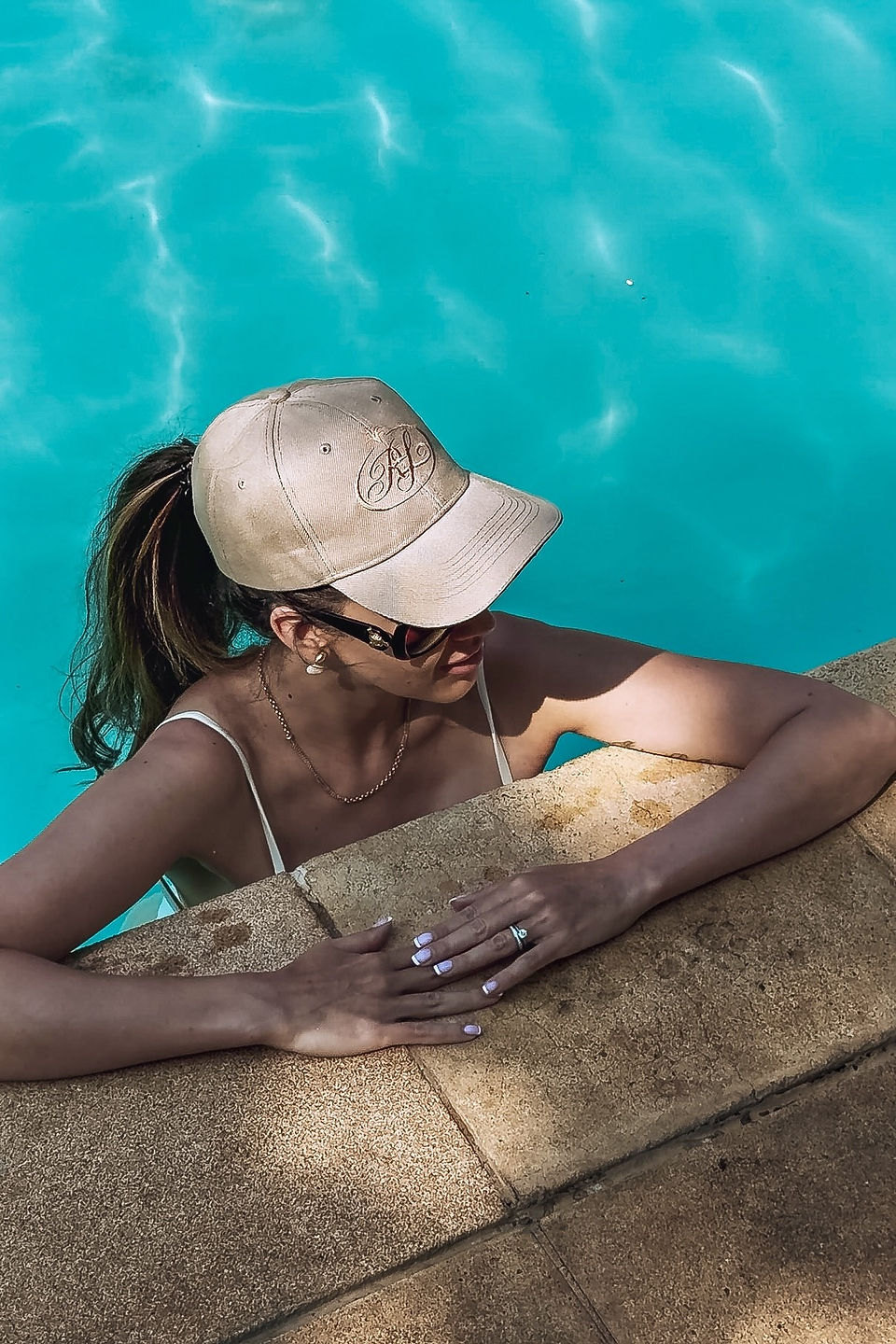
After the unforgettable jetty breakfast, we headed back to finish packing our luggage. Once packed, we squeezed in a few final moments by the pool and enjoyed a refreshing shower. With everything ready, we sat outside at our garden table, coffee in hand, watching giraffes wander casually past the front of our suite — one of those moments that makes you pause and just take it all in. And then it was time to move on to our next stop in Zambia.
It was the perfect, peaceful ending to our stay in Livingstone.


LIVINGSTONE → LUSAKA → LOWER ZAMBEZI

We headed to the airport for our journey deeper into Zambia’s wilderness. We first flew to Lusaka, then continued on a small six-seater plane to Jeki Airstrip in the Lower Zambezi National Park. The plane had limited air conditioning (if any at all), but the views were absolutely mind-blowing—vast landscapes unfolding below us, rivers carving through the land, and wildlife scattered across the plains.
Once again, we spotted elephants from the air, and as we landed, zebras grazed casually next to the airstrip, as if welcoming us into their world.
At Jeki Airstrip, we were met by our wonderful guide Chanda and tracker Mike, who would be with us for the next three nights. From the very first moment, the landscapes felt completely different from Botswana. On the drive to the lodge, we saw countless elephants, many with tiny babies, moving through the bush and even roaming freely near the lodge grounds.
We stopped more times than I can count. Long travel day or not, when wildlife appears like this, you stop and watch National Geographic, live and unfiltered.


LOWER ZAMBEZI NATIONAL PARK – WHERE THE RIVER MEETS THE WILD
Lower Zambezi National Park is one of Zambia’s most beautiful and lesser-visited safari destinations, known for its raw wilderness, river-based safaris, and incredible sense of space. Located along the northern bank of the Zambezi River, directly opposite Zimbabwe’s Mana Pools National Park, the park offers a unique blend of water, woodland, and open plains.
Unlike many safari destinations, Lower Zambezi feels intimate and untamed — sightings are often shared only with the animals, not other vehicles.
Landscape and vegetation
The park is defined by the Zambezi River and its fertile floodplains. The landscape includes:
Riverine forests along the water’s edge
Winterthorn, mahogany, and ebony woodlands
Open grasslands that attract grazing animals
Backwaters, channels, and islands formed by the river
This varied vegetation supports an impressive diversity of wildlife and makes the park especially scenic, whether explored by vehicle, boat, or canoe.
Wildlife and what you’ll see
Lower Zambezi is famous for its high density of elephants, often seen bathing, feeding, and crossing the river — sometimes right in front of camp. It’s also an excellent destination for leopard sightings, particularly along the riverbanks, where they hunt at night.
Other commonly seen wildlife includes:
Hippos and crocodiles in large numbers
Buffalo herds moving through the floodplains
Lions
Hyenas
Plains game such as impalas, waterbuck, kudu, and bushbuck
An incredible variety of birdlife, making it a paradise for birdwatchers


The park is also known for canoe safaris, a signature experience where you drift quietly past wildlife along the river — something few other destinations offer.
Why there are no giraffes (and what else you won’t see)
One of the most interesting facts about Lower Zambezi National Park is that there are no giraffes. You also won’t find zebras or wildebeest here.
The reason is purely geographical and historical. Natural barriers such as the Zambezi River and surrounding escarpments historically prevented these species from migrating into the area. Since the park has focused on conservation rather than artificial introduction, these animals were never relocated here.
Instead, the ecosystem developed differently, favoring species adapted to dense woodland, riverine habitats, and floodplains.

What makes Lower Zambezi special
What truly sets Lower Zambezi apart is the variety of safari experiences:
Game drives
Walking safaris
Boat safaris
Canoe safaris
Combined with low visitor numbers, this creates a feeling of exclusivity and immersion that’s increasingly rare in Africa.
Lower Zambezi isn’t about ticking off a checklist of animals — it’s about slowing down, watching elephants cross the river at sunset, listening to hippos at night, and feeling completely connected to the landscape.
It’s wild, raw, and deeply memorable — the kind of place that stays with you long after you’ve left.
WHERE TO STAY
LOLEBEZI
When we finally arrived at Lolebezi, we were welcomed in the most heartfelt way—smiling faces, singing, clapping, and warm Zambian hospitality that immediately made us feel at home. A refreshing welcome drink was placed in our hands, and right in front of the main lodge area, elephants wandered peacefully along the riverbank.
I was so overwhelmed by the beauty surrounding us that I could barely focus on check-in. My jaw was literally on the floor. Some moments simply go beyond words—and this was one of them.


Lolebezi is a luxury safari camp set along the banks of the Zambezi River, blending seamlessly into its surroundings. Elegant yet deeply connected to nature, it offers an intimate, immersive safari experience where wildlife is not something you go looking for—it comes to you.

Our three nights at Lolebezi were nothing short of unforgettable. We stayed in a stunning luxury villa with a private pool overlooking the river, and even that felt like its own safari. Elephants, hippos, buffalo, crocodiles, baboons, and countless birds passed by regularly. Sometimes, we would simply sit by the pool, watching this incredible “wildlife TV” unfold right in front of us.
The service was exceptional from start to finish. Haggai, Caleb, and Aggie took such wonderful care of us, always with warmth and genuine smiles. Nancy, the therapist, gave me one of the best massages I’ve ever had—and having elephants wander past during the treatment made it even more surreal. Our guide Chanda and tracker Mike were phenomenal—knowledgeable, patient, and deeply connected to the land. They made sure we experienced the very best of the Lower Zambezi, from majestic elephants to big cats and everything in between.


We loved the early mornings by the campfire, being gently woken with a ginger shot delivered to our villa, followed by a light breakfast before heading out on game drives. The food throughout our stay was outstanding—beautifully prepared, full of flavor, and always more than enough. From generous brunches to afternoon tea and dinner, every meal felt thoughtful and indulgent.
Instagram: @lolebezi_
Book here: Zambia Luxury Lodge Collection


A QUIET EVENING AT CAMP
After a relaxed afternoon at camp — complete with a high tea snack and some shooting — we spent the rest of the day soaking in the surroundings of the Lower Zambezi. There was no rush, just time to slow down and truly settle into camp.
As evening fell, we gathered for dinner, followed by time around the campfire. With hearts full and eyes heavy, we turned in for the night, knowing an early morning safari — and our first game drive — awaited us.


DAY 5.
THE RHYTHM OF SAFARI LIFE
The day started early — 5 am, to be exact — with a gentle knock and a ginger shot delivery to our villa. Mike walked us to the campfire area for a light pre-breakfast, where the air was crisp, the sky still soft with early light, and the bush slowly waking up.
There is something about an African morning that’s impossible to describe properly — the freshness, the scent of earth and vegetation, the quiet broken only by distant animal calls. No matter how many times I experience it, it never gets old. Nothing compares.
MORNING GAME DRIVE
We headed out on a morning game drive in the Lower Zambezi, greeted by the landscape as it came alive with the first light of day. No excuses—we never get tired of seeing wildlife in its rawest, most authentic form. After experiences like this, it’s impossible to imagine animals anywhere but in their natural habitat.
We encountered a large pride of lions, herds of buffalo, baboons, elephants, impalas, many hyenas, and so much more. As the sun climbed higher and the bush glowed golden, it became clear that this place was something truly special.
That’s the thing about safari — you never know what you’ll see, and that unpredictability is part of the magic. Some days are about big cats; others are about soaking in the rhythm of the bush.




SAFARI LIFE = FOOD (AND MORE FOOD)
After the drive, we returned to camp for a proper breakfast, followed by some well-deserved pool time. Then came lunch, a bit more relaxation, more pool time (because why not?), and soon enough… high tea.
I know — it sounds like all we did was eat.
And honestly? That’s not far from the truth. LOL.
Safari days are beautifully structured around food and game drives — and when it’s around 40°C (104°F) outside, you need the energy, even though the heat doesn’t exactly make you feel hungry.
AFTERNOON & NIGHT GAME DRIVE
In the afternoon, we headed out again for another game drive, with stunning sightings and a beautiful sundowner to end the day. Watching the sun dip behind the horizon with a drink in hand, surrounded by wilderness, never fails to feel special.
As darkness fell, we continued into a night game drive, which brought a completely different atmosphere. One of the highlights was spotting genets — small, elegant, and incredibly adorable as they moved quietly through the night.


EVENING BY THE CAMPFIRE & AFRICAN BUSH CAMPS CAUSE
Back at camp, we gathered around the campfire for drinks, where the team shared more about the African Bush Camps Foundation and the important work they do.
African Bush Camps is deeply committed to conservation, community support, and education. Through their foundation, they invest in local communities by supporting schools, creating employment opportunities, improving access to healthcare, and promoting sustainable tourism. They also play a key role in wildlife conservation, protecting habitats and ensuring that tourism directly benefits the people who live alongside these incredible ecosystems.
It’s inspiring to see luxury tourism done responsibly — where staying in a place like this actually helps protect wildlife and uplift local communities.
Learn more / donate here: African Bush Camps Foundation
After a delicious dinner, we headed back to our villa, tired in the best possible way. Another full safari day behind us, and more memories added to the collection.
Good night from the heart of the Lower Zambezi.
DAY 6.
GAME DRIVE
The day started, once again, with a ginger shot wake-up — safari fuel at its finest — followed by a quick stop at the campfire for a takeaway coffee before heading out on our morning game drive. There’s something about holding a warm cup of coffee while the bush slowly wakes up that just feels right.
The drive delivered everything we love about the Lower Zambezi: stunning landscapes, wide-open spaces, and wildlife everywhere. Along the way, we stopped to collect and taste baobab fruit, which was such a fun and unexpected moment — slightly tangy, refreshing, and packed with nutrients.
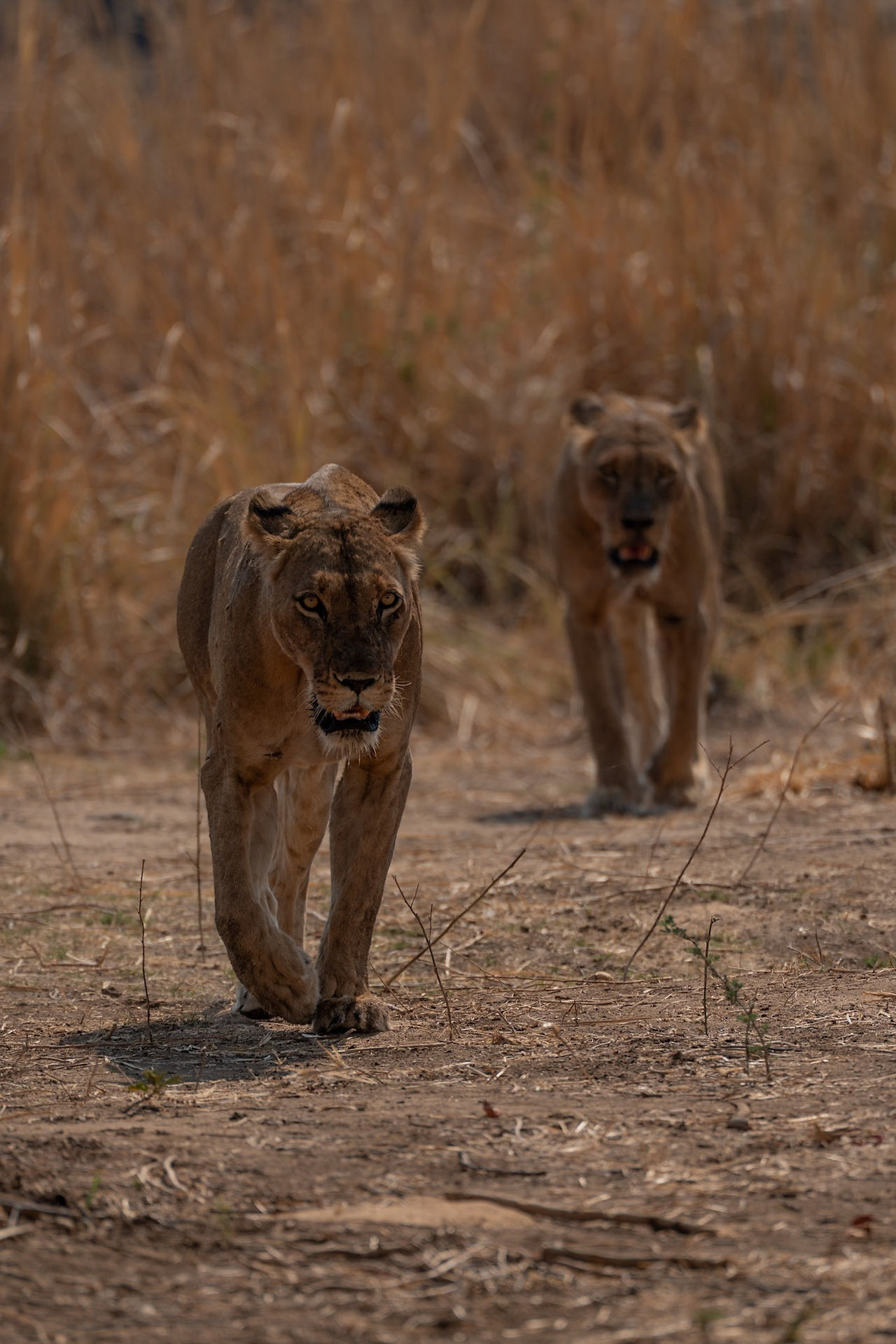
One of the most memorable moments of the morning involved two nomadic lionesses, one of them visibly pregnant, walking calmly through the area. Things got interesting when an elephant decided it wasn’t having any of it and chased them off.
Watching the dynamics between them was fascinating — the lioness simply pulled away, unfazed, and the situation resolved itself quickly. Still, the chase happened very close to our vehicle, adding an extra dose of adrenaline and reminding us just how unpredictable the bush can be.


ELEPHANTS, MASSAGE & PURE HAPPINESS
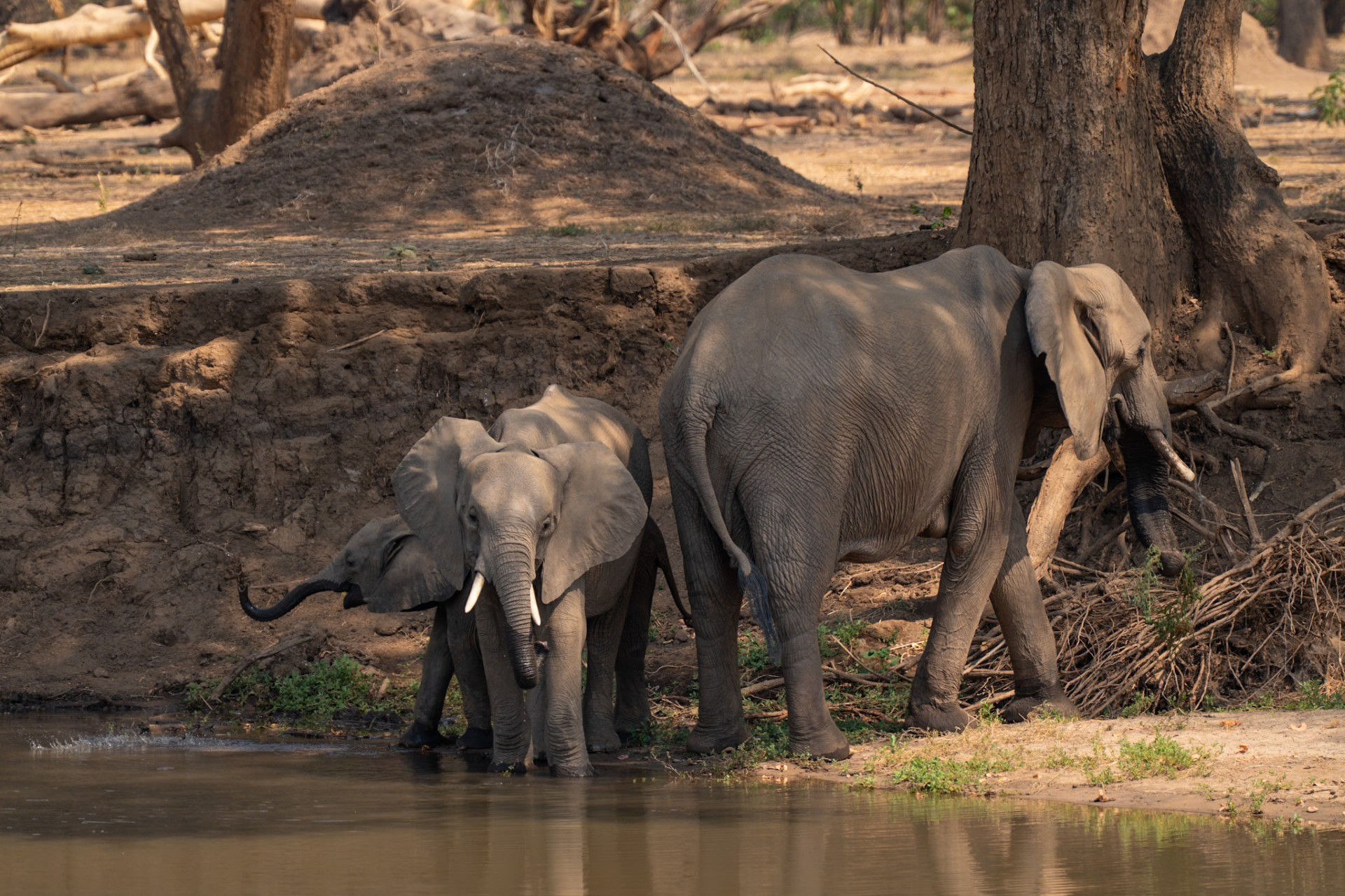
After the morning drive, we returned to the lodge for breakfast, followed by time by the pool and a much-anticipated massage. As if the day hadn’t already been perfect, the entire area around the lodge was suddenly filled with elephants — including a newborn baby elephant, which was without a doubt the cutest thing ever.
Just before my massage, an elephant appeared right in front of the spa area, completely distracting me. Somehow, Nancy still managed to work her magic and made me forget everything else for a while, delivering a truly incredible and deeply relaxing treatment.
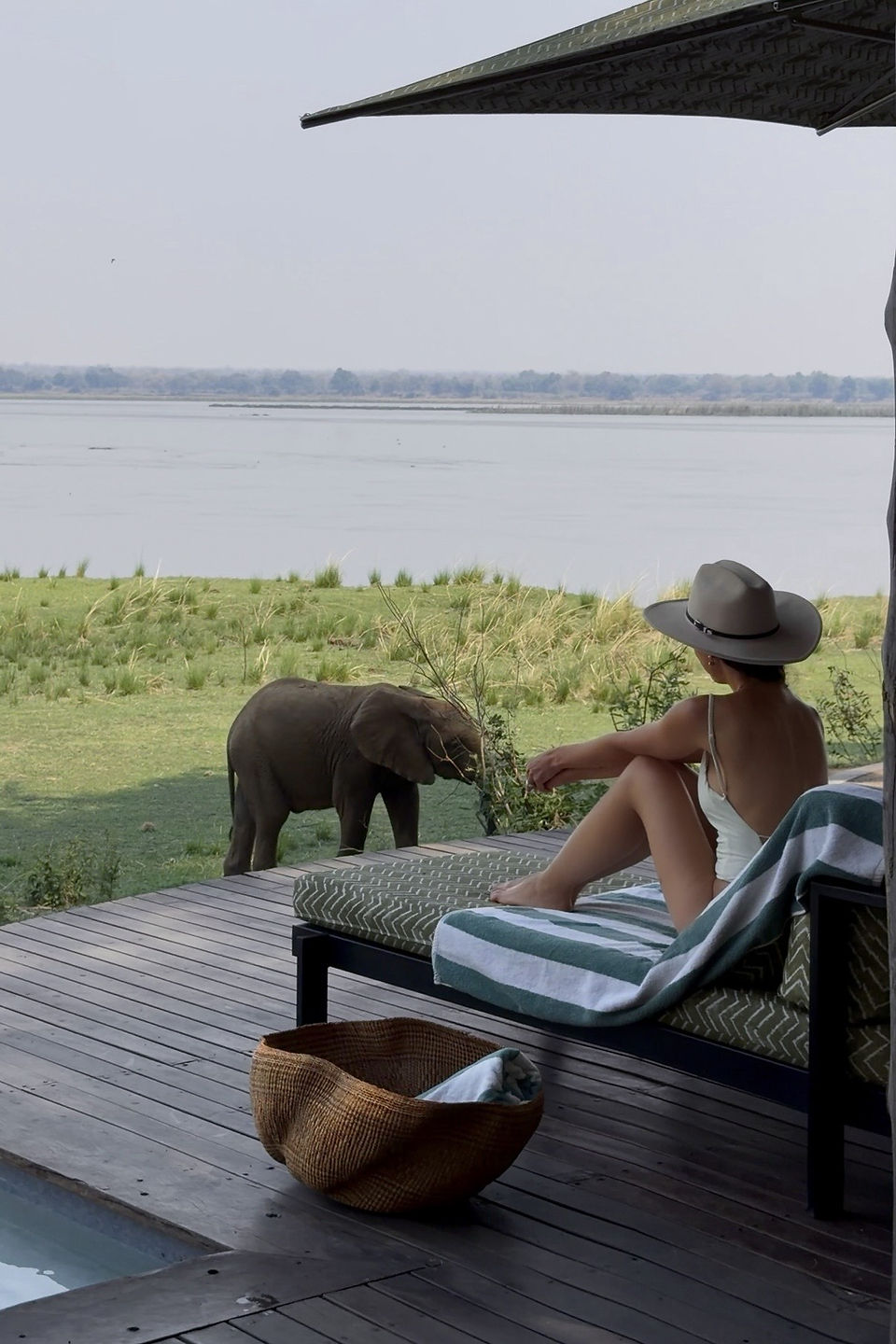
After the massage, I headed to the main pool area, where elephants were calmly eating grass and enjoying the river nearby. I honestly won’t even try to describe how that felt. A total pinch-me moment — I could have cried from happiness.



ONE LAST SAFARI & LEOPARDS AT NIGHT
After lunch and some time to prepare, the elephants were still around — including the baby, who was now chasing warthogs in a moment that felt straight out of a cartoon and made us laugh.
We headed out for our last afternoon and night safari in the Lower Zambezi, determined to soak up every final moment. And the bush saved something special for the end.
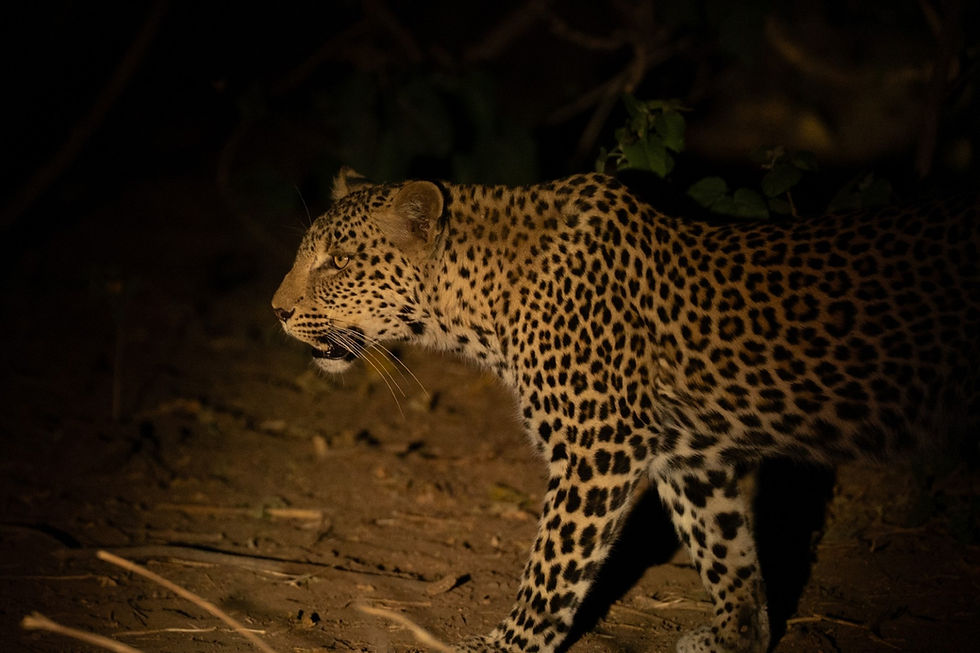
That night, we finally spotted two leopards. One was Mambo, the Queen of Lolebezi — confident, elegant, and completely at home in her territory. The second was a skittish young male, much more shy and cautious, moving quietly through Mambo’s area and clearly aware of whose domain he was in.
As if that wasn’t enough, we also spotted a bushbaby, wide-eyed and adorable, hopping through the trees — the perfect little surprise to end our final night safari in the Lower Zambezi.
DAY 7.
After enjoying a quiet breakfast at Lolebezi, taking in the last glimpses of elephants and the river, we felt a gentle nostalgia. Saying goodbye to the incredible team — Haggai, Caleb, Aggie, Nancy, Chanda, Mike, and everyone who had made our stay unforgettable — was emotional. Their warm smiles, waves, and hugs reminded us of the deep connection we had formed with this untamed corner of Zambia.


BETWEEN PEOPLE & WILDLIFE
We were then driven to Jeki Airstrip for our flight to Mfuwe. From Mfuwe, a one-hour drive brought us to Puku Ridge, passing through vibrant villages and fields along the way. On this journey, I had brought along pencils for the local children, and giving them out was such an adorable and heartwarming moment. Their smiles and excitement made me realize how small gestures can create big joy.
The drive itself became part of the experience. We loved observing how people go about their daily lives — walking to school, tending fields, cycling along dusty roads. David shared stories about growing up in the area and even showed us his village and school, giving us an incredibly personal glimpse into life here.
He spoke openly about the challenges of living alongside wildlife — elephants raiding crops, animals crossing paths with people, and the constant balance required to coexist respectfully. It’s not easy, but it’s a reality here.
David also told us that electricity only reached his village about ten years ago, and despite modern changes, he doesn’t wish for too much more. He loves the way life is — raw, simple, and deeply connected to community and tradition. Listening to him, it once again reminded me that real beauty doesn’t come from excess — it lives in simplicity. David is incredibly intelligent, thoughtful, and grounded, and hearing his perspective was one of the most meaningful parts of the journey.


SOUTH LUANGWA NATIONAL PARK
South Luangwa National Park, in eastern Zambia, is one of the most iconic wildlife destinations in Africa and is often called the birthplace of the walking safari. Spanning 9,050 km² (3,494 mi²) and centered around the meandering Luangwa River, the park is home to an incredible diversity of animals, birds, and plants.
Seasons and wildlife
Dry Season (May–October): This is prime game-viewing season. As water sources shrink, animals congregate along the Luangwa River and waterholes, making wildlife sightings frequent and dramatic. Elephants, hippos, buffalo, and antelopes gather around the few remaining water sources, while predators like lions, leopards, and hyenas actively hunt. Walking safaris are ideal during this season because visibility is excellent and vegetation is less dense.
Wet Season (November–April): The park transforms into a lush, green paradise. Many animals disperse over wider areas, making sightings less predictable, but the landscape is vibrant, rivers flood the plains, and newborn animals appear. Birdlife flourishes, with over 400 species including carmine bee-eaters, lilac-breasted rollers, African fish eagles, and kingfishers.
Vegetation and unique flora
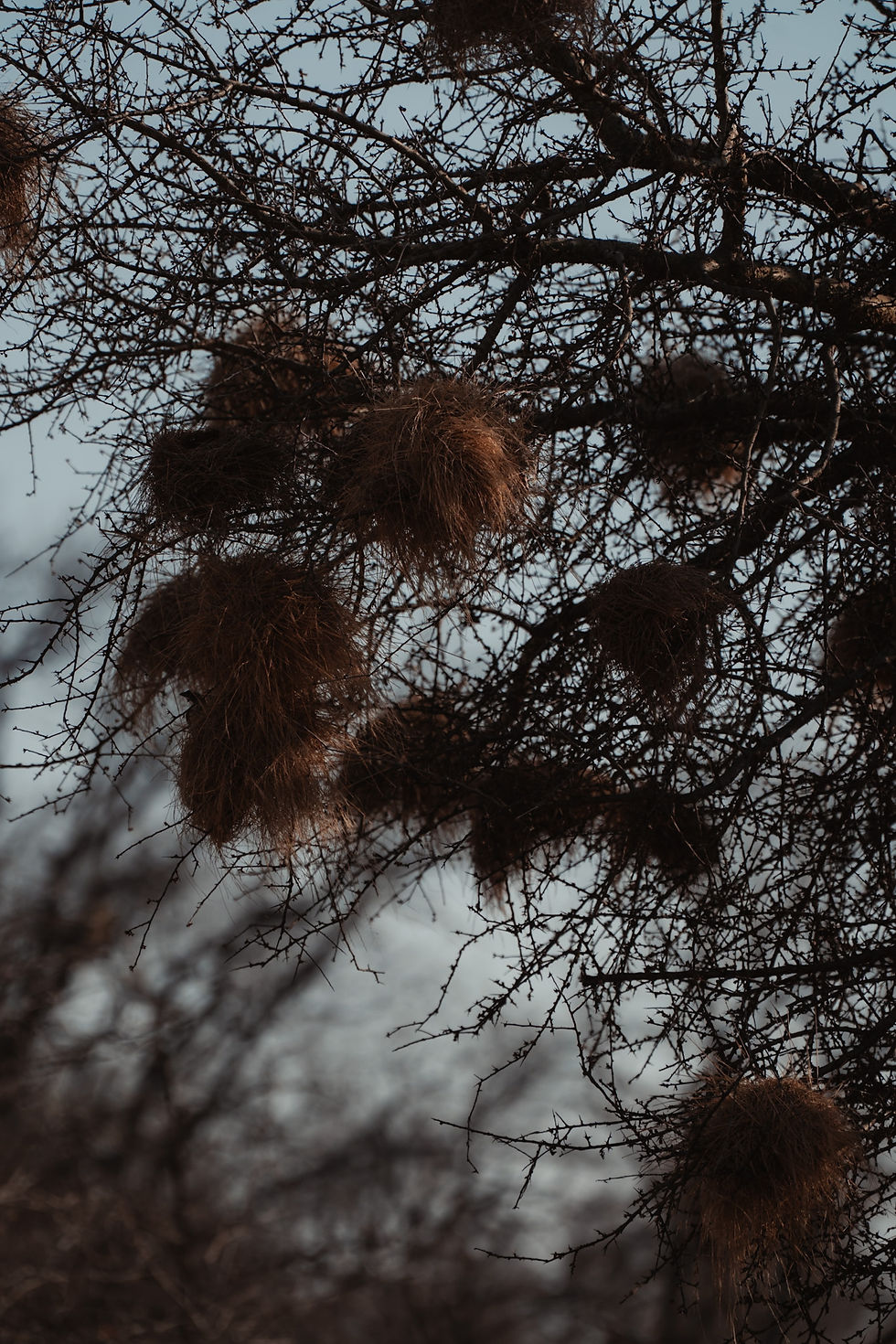
South Luangwa features a rich mix of floodplains, mopane woodlands, miombo forests, and riverine thickets. Iconic trees like the sausage tree (Kigelia africana), baobabs, and fever trees support wildlife year-round. Hippos and elephants feed near sausage trees, while baboons enjoy their fruits. The dense riverine areas provide shelter for leopards, bushbucks, and birds, creating a vibrant ecosystem.
Wildlife highlights (and absences)
The park is renowned for its high density of leopards, often spotted on walking safaris. Lions, hyenas, elephants, hippos, buffalo, giraffes (rarely), zebras, impalas, warthogs, and baboons are all present. Crocodiles abound in the Luangwa River, and smaller antelopes like bushbucks and reedbucks thrive in the woodlands.
The focus is on predators, elephants, and hippos. Night drives reveal nocturnal species such as bushbabies, genets, owls, and civets, making evening safaris incredibly rewarding.


Rivers and waterholes
The Luangwa River is the park’s lifeline. Waterholes near lodges like Puku Ridge offer “front-row seats” to wildlife, allowing guests to watch elephants, hippos, and birds without leaving the property. These natural gathering spots create unforgettable wildlife moments.
Self-drives vs guided safaris
While most safaris in South Luangwa are guided — either by 4x4 game drives, walking safaris, or night drives — some areas allow self-drives for experienced drivers. Self-drives let you explore at your own pace and can be rewarding in the dry season when animals congregate around water sources. However, parks enforce strict rules: stay on marked tracks, drive carefully to avoid disturbing wildlife, and hire a guide if unfamiliar with the terrain. For first-timers or those wanting intimate wildlife stories, guided safaris with knowledgeable trackers are recommended.
Conservation and community
South Luangwa emphasizes low-impact, high-quality safari tourism. Lodges support wildlife conservation and local communities, employing staff from surrounding villages, funding education and healthcare, and promoting coexistence with wildlife. Respect for both nature and local culture ensures the park remains untamed and thriving.
WHERE TO STAY

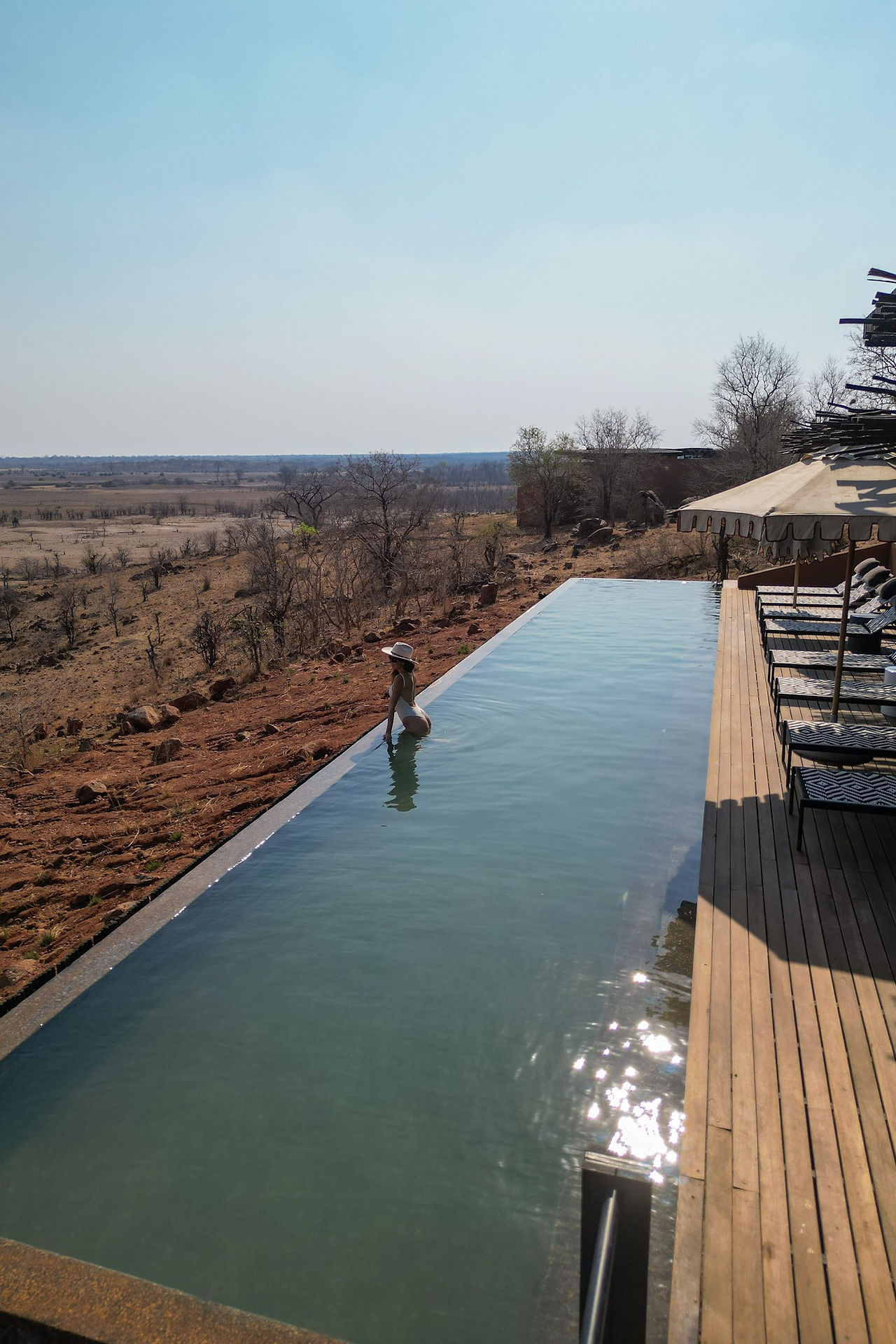
PUKU RIDGE
Even though we stayed only one night at Puku Ridge, it completely stole our hearts.
After arriving at the lodge, we were greeted with warmth, genuine smiles, and a sense of calm that immediately made us feel at home. The lodge itself is elegant and peaceful, perfectly positioned to overlook the surrounding landscape.
During the dry season, the team fills a small waterhole near the lodge, which creates an incredible wildlife viewing spot. During our very first lunch, we watched elephants with their babies, warthogs, hippos, baboons, impalas, and buffalo — all from our seats. The show continued from our villa and even while relaxing in our plunge pool.
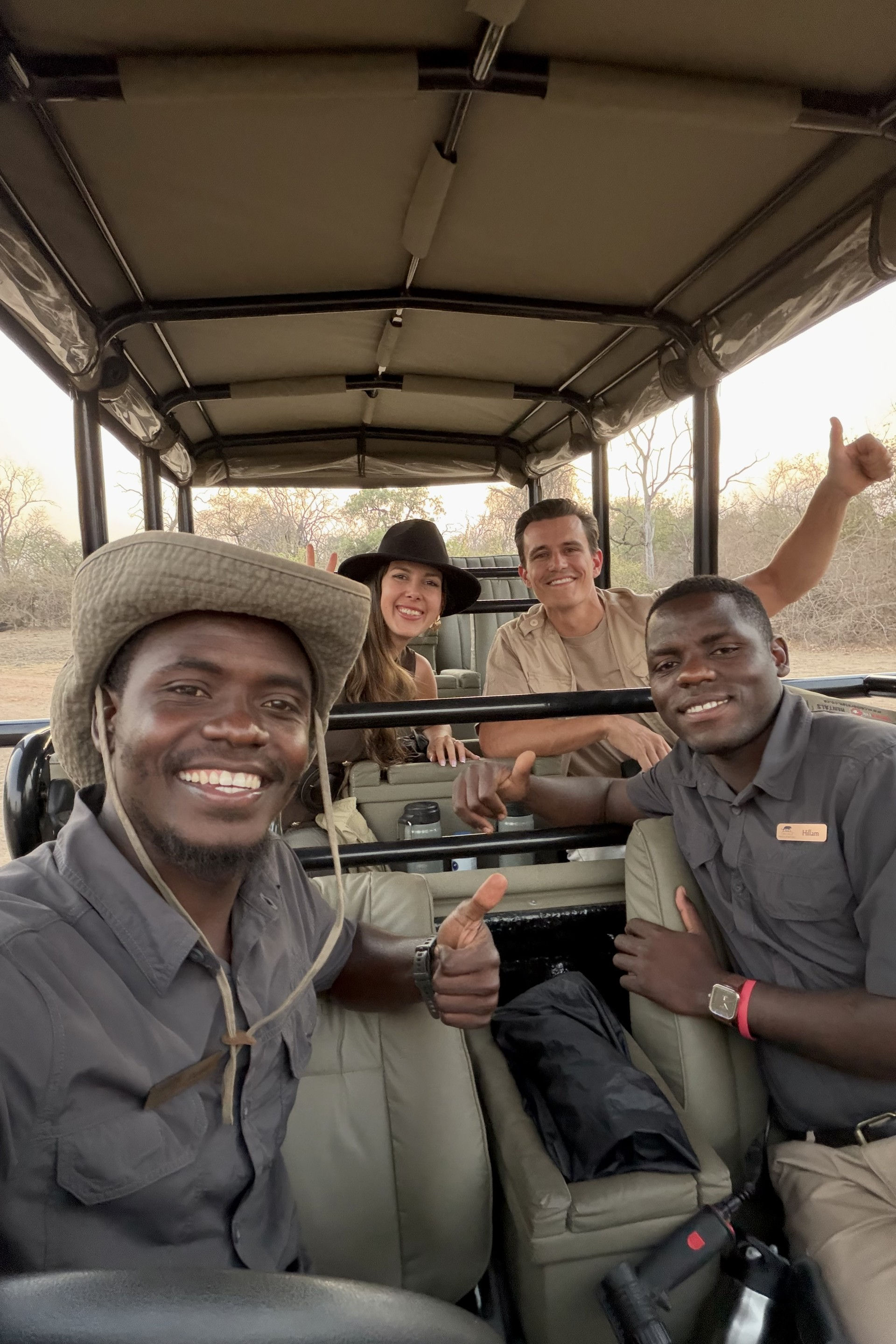
Our guide David and tracker Hillam were outstanding — knowledgeable, patient, and deeply respectful of the bush. A heartfelt thank you as well to Fred, Mathius, Michel, Johnson, and the entire team for making our stay feel so personal and special.
Instagram: @puku_ridge
Book here: Zambia Luxury Lodge Collection


LUNCH
Lunch at Puku Ridge was unforgettable. We sat overlooking the Kakumbi Plain, watching wildlife drift in and out of the watering holes right in front of camp. Baboons lounged nearby, hippos surfaced and disappeared again, and elephants moved slowly across the landscape as if on cue.
After lunch, we headed to a designated elephant lookout—a beautifully designed space with window openings and seating tucked low by the floodplains, so you’re sheltered but still completely immersed. The elephants came incredibly close, close enough to hear them breathe and shuffle through the grass. It felt intimate and humbling.


AFTERNOON GAME DRIVE
Later that afternoon, we set out on our game drive as the day began to cool slightly. We followed the river, where thousands of birds filled the trees and the sky, their calls creating a constant, lively soundtrack. Along the riverbanks, we saw more hippos gathered in one place than I’ve ever seen before—heads bobbing above the water, grunting and jostling for space in the shimmering water.
As we continued, we encountered lions resting in the shade, completely unbothered by our presence. One of the highlights of the drive was spotting a leopard, who seemed to put on a show just for us—rolling, stretching, and moving with effortless grace. After a few magical minutes, it quietly slipped away into the dense bush, reminding us how easily wildlife can vanish into the landscape.
As the afternoon slowly faded toward evening, the Puku Ridge team guided us farther on while we assumed we were simply searching for more animals—unaware that the drive was leading us toward yet another special moment.


A SUNDOWNER SURPRISE
Puku Ridge surprised us with a beautifully arranged sundowner on the riverbank. A stunning setup awaited us, complete with a welcome sign bearing our names—a thoughtful touch that instantly made the moment feel personal. After washing our hands, we raised our glasses and shared a toast to an unforgettable day.
As the sun began to set, the light softened and the sky glowed with warm colors, reflected in the calm river beside us. In that peaceful setting, surrounded by nature, the sunset felt like something out of a dream. As darkness slowly settled in, the evening was far from over—we climbed back into the vehicle and set off for a night game drive.


NIGHT GAME DRIVE
The night game drive offered a completely different perspective of the bush. We drove using a special red light, designed not to disturb the wildlife, which gave the surroundings an almost otherworldly feel. Not long into the drive, we spotted two lionesses lying quietly in the darkness, their presence calm yet powerful.
We then headed in the direction of a roaring male lion, the sound echoing through the night and sending chills down our spines. Along the way, we also encountered smaller nocturnal creatures—rabbits darting through the grass and a bushbaby glowing in the spotlight. The stillness, the sounds, and the sense of the unknown made the night drive thrilling and unforgettable.
A NIGHT UNDER THE STARS
After dinner, Johnson had prepared our star bed, and we decided to trade the comfort of our indoor room for a night beneath the open sky.
Falling asleep under the Milky Way, surrounded by the sounds of nature, was nothing short of magical. From our star bed, we watched constellations stretch across the sky, while elephants and puku quietly wandered toward the waterhole and lions called in the distance.
You wake beneath the wildest ceiling on earth — just you, the African bush, and a billion stars slowly melting into morning light.
South Luangwa has a way of capturing your heart — and Puku Ridge makes sure it stays there.
DAY 8.
We woke up early in our star bed at Puku Ridge, surrounded by the stillness of the African bush. Watching the sunrise while listening to the symphony of wildlife was pure magic — birds calling, elephants trumpeting in the distance, and the occasional rustle of nocturnal creatures fading into the morning. There’s nothing like starting a day immersed in the sounds of the wild.


After a refreshing tea and a quick dip in our plunge pool, we enjoyed breakfast by the campfire, soaking in the crisp morning air. Then it was off for another game drive, with one goal in mind: finding wild dogs. These rare and incredibly elusive animals had been spotted around the area over the past few days, and we were determined to see them. Unfortunately, luck wasn’t on our side — despite our efforts across three days of game drives, we didn’t spot them. Our guide later sent us a photo after we left — a perfect reason to return one day!


Even without the wild dogs, the morning was filled with unforgettable wildlife encounters. We watched kudus, puku, and impalas nibbling on the flowers of the sausage trees, baboons sprinting across the river to escape crocodiles, lions lounging in the shade, and giraffes, hippos, and wildhogs going about their day. Every sighting felt like a National Geographic moment.


Later, we moved to our next camp, just next door to Puku Ridge, a sister property under Chiawa Safaris — Chichele Presidential Lodge. We booked all our Zambia safaris with Zambia Luxury Lodges, and this experience exceeded every expectation.
WHERE TO STAY
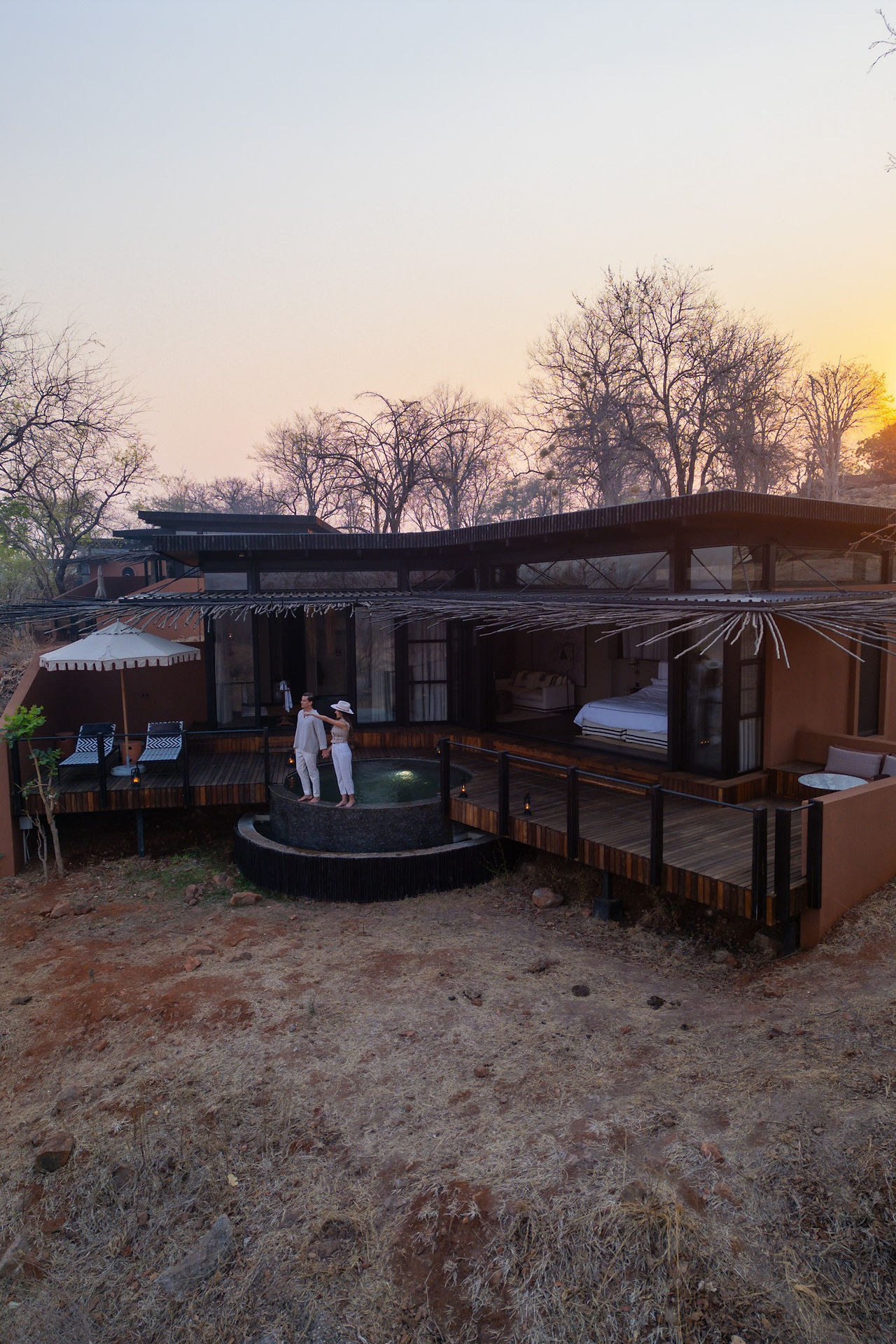
CHICHELE PRESIDENTIAL LODGE
From the moment we arrived, the warm welcome, singing, and smiles of the team made us feel instantly at home. The lodge itself is exquisite, designed to combine luxury with the raw beauty of the bush. Our private plunge pool overlooked the wildlife-filled plains, while the long spa pool and an indulgent couple’s massage offered the perfect way to relax after a morning game drive.

Chichele was originally the presidential lodge for visiting dignitaries, and some of its history remains — including the president’s chair and elegant touches throughout the property. Staying here makes you feel part of both the wild and the history of the area.
Our safaris with David and Hirramm were incredible — their deep knowledge, patience, and passion for wildlife made every drive special. While we didn’t see the wild dogs this time, we witnessed everything else we hoped for multiple times, and each sighting felt fresh and awe-inspiring. Special thanks to Miriam, Annemie, and Grant for their endless kindness and care.
Instagram: @chichele_presidential
Book here: Zambia Luxury Lodge Collection


LUNCH, SPA AND SLOW MOMENTS
After settling into the lodge, we took time to truly unwind. Lunch was served in a beautiful, relaxed setting, where we could take in the views and ease into the rhythm of the bush. Throughout our entire stay, I was treated to thoughtfully prepared plant-based menus, each one personalized with my name—a small but incredibly meaningful detail that made me feel truly cared for.
Later, we enjoyed a very relaxing couple’s massage, followed by time at the spa pool. Surrounded by nature, with nothing but soft sounds in the background, it felt deeply restorative. Refreshed and completely at ease, we returned to our room to prepare for the afternoon safari, already excited for what the day still had in store.




GAME DRIVE
The game drive that followed was filled with unforgettable sightings. We came across hyenas accompanied by their tiniest pups, a rare and heart-melting moment as they stayed close to their mothers. Not long after, we encountered elephants moving together as a family, with babies walking safely between the adults, protected at every step.
As we continued through the landscape, we spotted many other incredible animals along the way, each encounter adding to the sense of wonder. Every turn of the drive brought something new, reminding us how rich and alive the bush is.
But the real magic came on our way back: David suddenly stopped in the middle of the bush. Candles were lit, staff were singing, and a beautiful table was set up in the wild.


CANDLELIT BUSH DINNER
We were completely surprised with a private bush dinner for two — a 5-course fine dining experience, crafted just for us. The night was illuminated not only by candles and stars, but by the mysterious glow of watchful eyes in the dark. The atmosphere was raw, intimate, and unlike anything else I’ve ever experienced. A curious hyena watched from the shadows, adding just the right touch of adventure. With a guard nearby and the distant roars of lions echoing, goosebumps ran down my spine.
It was raw, magical, and unlike anything else I’ve ever experienced. Someone pinch me — this was romance in the wild, unforgettable and unmatched. I still have tears thinking about it. The entire lodge team created a memory that is permanently stamped on my heart.


DAY 9.
Another early wake-up greeted us at Chichele Presidential Lodge. The hope of spotting wild dogs lingered in our minds, though deep down we already knew they wouldn’t appear. Still, every moment in the African bush feels like a treasure, and today proved that once again.


GAME DRIVE AND HEALTHY STOP
We set off early for our morning game drive, passing through areas we hadn’t explored before, and almost immediately we were surrounded by wildlife. We saw so many animals along the way, but a few moments stood out above the rest. Watching a lioness in her natural element was powerful and humbling, and seeing a mother monkey gently caring for her baby was unexpectedly tender — one of those quiet, emotional encounters that stays with you.


About two hours into the drive, we entered a unique patch of dried trees, their stark silhouettes creating a hauntingly beautiful landscape. And then—another surprise awaited us. Misili and Robert from the Chichele Presidential team had prepared a healthy stop in the wild, in a location that felt completely untouched.


Around the bush stop, zebras, impalas, and kudus grazed peacefully, creating a lively yet serene backdrop. Further on our way back to the lodge we also encountered lions lounging in the grass. Bathed in gentle sunlight, birds calling, and the stillness of the bush surrounding us, it felt like a scene straight out of National Geographic—magical, raw, and deeply peaceful.


After returning to the lodge, we enjoyed lunch and a bit of relaxation by our plunge pool, watching impalas roam freely nearby.


The afternoon was reserved for our final game drive, which proved just as unforgettable. We spotted two more leopards and the richness of the South Luangwa bush in full display.



The night game drive was equally thrilling. Using a special red light, which is better suited for observing most animals without disturbing them, we saw genets, bushbabies, and even a civet, an incredibly rare encounter. For hippos and elephants, we avoided using the light altogether, as any light can disturb them — hippos can become disoriented, which is dangerous for both them and nearby people, and elephants may become aggressive if they feel threatened or startled. Most other animals, however, are completely unaffected, allowing for respectful, safe, and awe-inspiring viewing. Our guides were exceptional, ensuring that every encounter was ethical, safe, and unforgettable.


After returning to the lodge, we had a final dinner and began preparing our luggage for the journey ahead. We would say our goodbyes on the next day, but for now, we settled in for one last night at Chichele Presidential Lodge.
Saying goodbye to South Luangwa, its wild beauty, and the incredible team at Chichele Presidential Lodge was bittersweet. These last days had reminded us why Africa’s untamed landscapes and genuine people capture the heart in ways nothing else can.
DAY 10.
We woke up very early to capture the sunrise over the spa pool and South Luangwa. The golden, pink light reflecting on the water was absolutely magical, a perfect moment to pause and soak in the serenity before our journey home. Afterwards, we had a quick breakfast, and it was time to say our goodbyes to the Chichele Presidential Lodge team.


Saying goodbye to South Luangwa, its wild beauty, and the incredible team at Chichele was bittersweet. These last days reminded us why Africa’s untamed landscapes and genuine people capture the heart in ways nothing else can.
My eyes welled up with tears as we set off in the car. Thankfully, David was driving us, giving us another hour with this remarkable human and beautiful soul. Along the way, wildlife continued to amaze us. Zebras, giraffes, and other favorites crossed our path one last time, as if giving a final farewell from the African bush. He tried one last time to help us spot the elusive wild dogs, but as he said, what is not meant to be won’t happen. I take it as a sign to return, especially since the wild dogs reappeared in the afternoon, after we had flown home.


David also gave us the most touching gift: a hand-drawn picture of our cat, Thea. It’s something we’ll treasure forever. I still can’t believe how incredibly talented he is, keeping this artistry for the few lucky people he encounters.


Looking back over the trip, Zambia offered experiences we’ll never forget. From the thundering roar of Victoria Falls, the thrill of standing on the edge at Devil’s Pool, and soaring above the falls in a microlight and helicopter, to the romance of the Royal Livingstone Express and a sunset cruise on the Zambezi River — every moment was extraordinary. And of course, the quiet magic of the bush in South Luangwa and Lower Zambezi will stay with us forever.
Zambia leaves you with an extraordinary balance of experiences. The wildlife is magnificent — the thrill of seeing a lion pride, the majesty of elephants with their babies, the quiet power of leopards hidden in the grass. Yet the people, their warmth, and their respect for nature, create a deeper, lasting impression. Life here is measured not by what you have, but by the connections you nurture, the family you cherish, and the moments you share. Watching people live simply, yet fully, is a reminder that happiness often comes from valuing the right things, not accumulating more.
This trip reinforced why Africa remains one of my favorite places to explore. It’s the wild beauty of the land and its incredible animals, combined with the human warmth and simplicity, that leaves a mark on your soul. Zambia, your waterfalls, your sunsets, your wildlife, and your people have captured my heart. We’ll be back — drawn again to this untamed, extraordinary place that reminds me of the purest forms of wonder and joy.


Comments