
Botswana: The Most Exclusive Safari Destination


Botswana felt less like a trip and more like a secret—one we somehow stumbled into and were allowed to experience almost entirely on our own. This was, without question, the most exclusive safari we’ve ever done. Vast stretches of land, no crowds, no rush, no noise. Just us, the wild, and a series of tiny 4–6 seater planes carrying us from one untouched world to another. Flying so low and so often came with its challenges—turbulence, light stomachs, and a few moments we’d rather forget—but every single time we looked out the window, it all made sense.
From above, Botswana is breathtaking. We watched elephants gather at waterholes like moving sculptures, mothers guiding their babies through shallow pools, entire herds framed by endless earth tones and shimmering water. Those flights weren’t just transfers; they were front-row seats to life unfolding exactly as it has for thousands of years.

On the ground, the magic deepened. In the surreal emptiness of the Makgadikgadi Pans, we met the sweetest meerkats—curious, playful, and completely unfazed by us—and stood beneath ancient baobab trees that felt like guardians of the land. Later, the Okavango Delta welcomed us into a completely different rhythm: lush, alive, and quietly intense. Leopards passed by while we were having dinner as if it were the most normal thing in the world. We encountered countless lions, zebras, giraffes, and a few elegant cheetahs. We even found an abandoned ostrich egg, resting there like a forgotten treasure. We searched for wild dogs relentlessly, hopeful every day—but they stayed hidden, reminding us that on safari, nothing is guaranteed.
Not everything was perfect. Nico ended the journey with a severe food poisoning that nearly forced us to abandon the rest of our plans and fly home instead of continuing to Zambia. In a place this remote, vulnerability feels amplified. Yet even in that moment, Botswana remained what it had been all along—raw, real, and unapologetically wild.
This is a country that doesn’t try to impress. It simply exists, confidently and quietly, and lets you come to it. And if you’re lucky enough, it gives you the feeling that—for a brief moment—you were completely alone with Africa.

GENERAL INFORMATION
Botswana’s story is deeply rooted in resilience, wisdom, and harmony with nature. For centuries, the land has been home to Tswana-speaking peoples who built strong communities around cattle, land, and tradition. Unlike many African nations, Botswana emerged from colonialism with remarkable stability.
Formerly known as Bechuanaland, Botswana gained independence from British rule on 30 September 1966. Under the leadership of its first president, Sir Seretse Khama, the country embraced democracy, conservation, and careful economic planning—values that still define Botswana today.
Location: Botswana is a landlocked country in Southern Africa, bordered by Namibia to the west and north, Zambia to the north, Zimbabwe to the northeast, and South Africa to the south and southeast. Its landscapes range from the vast Kalahari Desert to shimmering salt pans and the lush, life-filled wetlands of the Okavango Delta.
Etymology: The name Botswana means “Land of the Tswana,” referring to the country’s dominant ethnic group.
Symbol: Botswana’s national animal is the zebra, symbolising harmony, balance, and unity—values deeply embedded in the country’s identity.
Size: Botswana covers approximately 581,730 km² (224,607 mi²).
Capital: Gaborone
Population: Around 2.6 million people, making Botswana one of Africa’s most sparsely populated countries.
Tribes and ethnic groups: Botswana is home to a rich mix of ethnic groups, with culture deeply rooted in tradition, respect, and community life. While modern Botswana is dynamic and forward-looking, traditional customs remain an important part of everyday identity.
The largest ethnic group in Botswana is the Tswana, made up of several clans including the Ngwato, Ngwaketse, Kwena, Rolong, and Tawana. Together, they form the cultural backbone of the country.
Botswana is also home to other important groups such as the Kalanga, Basarwa (San / Bushmen), Herero, Bayei, Hambukushu, and Bakgalagadi. Each group has its own language, traditions, and history, contributing to Botswana’s cultural diversity.
The San people, one of the oldest cultures in the world, are especially significant. Traditionally hunter-gatherers, they are known for their deep knowledge of the land, tracking skills, and close relationship with nature.
Languages: English is the official language. Setswana is the national language and widely spoken, along with several regional languages.
Currency: Botswana Pula (BWP) - stable and strong compared to many regional currencies. For reference: 1 BWP = 0.061 EUR ; 1 BWP = 0.071 USD
Local Time: Central Africa Time (CAT) —GMT+2
Economy: Botswana’s economy is built on diamonds, tourism, and cattle farming. It is one of Africa’s greatest success stories—politically stable, transparent, and deeply committed to wildlife conservation. High-end, low-impact tourism is a cornerstone of the country’s philosophy.
SAFARI GUIDANCE

Best time to visit: Botswana is a dream safari destination year-round, but timing matters depending on what you want to experience.
DRY SEASON (May–October) |BEST FOR SAFARIS
Excellent wildlife viewing
Animals gather around water sources
Cooler mornings, warm days
Clear skies and golden light
Best for:
Okavango Delta game viewing
Chobe elephant sightings
Predator action
Walking safaris
HOT SEASON (October–November)
Extremely hot (up to 40°C+)
Incredible predator sightings as water becomes scarce
GREEN SEASON (December–April)
Lush, dramatic landscapes
Baby animals everywhere
Exceptional birdlife
Fewer tourists and lower prices
Some areas may be inaccessible due to flooding.SAFARI DRESS CODE | what to pack:
Especially important in hot, dry conditions.
Colours:
✔ Khaki, olive, beige, brown
✘ Avoid white (dusty), black (heat), blue (attracts insects)
Clothing Tips:
Lightweight long sleeves
Breathable cotton or linen
Light trousers
Warm layer for early mornings
Comfortable closed shoes
Wide-brim hat & sunglasses
Essentials:
Sunscreen
Insect repellent (DEET or Picaridin)
Electrolytes
Binoculars (often provided)
Swimsuit (many camps have pools)
Scarf or buff for dust
Torch for night walks (often provided)
Power bank
Motion sickness tablets


Traditional clothing: Traditional clothing in Botswana reflects both practicality and cultural identity. The most recognizable garment is the chitenge or leteise, a patterned cotton fabric commonly worn as skirts, dresses, wraps, or headscarves.
During ceremonies and celebrations, traditional outfits may include:
Colourful wraps and shawls
Beaded jewellery
Leather garments, especially among the San and Herero communities
Distinctive headpieces, particularly worn by Herero women
Patterns, colours, and styles often reflect clan identity, social status, or the nature of the event being celebrated.
Traditions and cultural practices: Community life in Botswana is built around respect, dialogue, and shared responsibility. One of the most important traditional institutions is the kgotla — a community meeting place where leaders and villagers gather to discuss issues, resolve disputes, and make collective decisions. It represents Botswana’s strong tradition of democracy and open dialogue.
Music and dance play an essential role in cultural expression, often accompanied by clapping, singing, and drums. Traditional dances are performed during weddings, initiations, and community celebrations.
Important cultural events include:
Bogwera and Bojale initiation ceremonies, marking the transition into adulthood
Harvest celebrations and clan gatherings
Traditional storytelling, passed down through generations to preserve history and values
Food culture: Botswana’s cuisine is simple, grounding, and deeply tied to tradition. Meals are nourishing rather than elaborate, and food is about togetherness. In safari camps, local flavours blend seamlessly with refined, international cuisine—often enjoyed under the stars with animals nearby.
Hospitality is heartfelt, and sharing food is a sign of respect and warmth.
Staple ingredients: Sorghum and maize, beef (Botswana is famous for its high-quality beef), goat and chicken, beans and legumes, wild spinach and leafy greens.
Typical foods and drinks:
Seswaa: Slow-cooked, shredded beef or goat—Botswana’s national dish
Bogobe: A porridge made from sorghum or maize
Vetkoek: Fried dough, often served as a snack
Morogo: Wild spinach, usually stewed
Mageu: A traditional fermented drink
Drones: Botswana has strict drone regulations. Flying drones in national parks is prohibited without special permits, which are extremely difficult to obtain. Even private lodge use requires prior written approval.
In most safari areas, drones are simply not allowed—both to protect wildlife and preserve the serenity of the experience. If drone footage is essential to you, plan far in advance and manage expectations carefully.
Connectivity: Botswana invites you to disconnect. Wi-Fi is usually available in lodges, but outside of camps and towns, signal is limited or nonexistent. We had connectivity at our lodges, but honestly, being unreachable felt like a gift.
Local SIM cards (Mascom, Orange, BTC) work well in cities but not in remote safari areas. Expect silence, stars, and presence—and embrace it.
Power plug/sockets: Botswana primarily uses Type G (three rectangular pins) and Type D (three round pins) electrical outlets. The country operates on a 230 V supply voltage and 50 Hz frequency. Many safari camps provide a mix of socket types to accommodate international travellers, but it’s still a good idea to bring a universal travel adapter to ensure your devices fit and charge safely.
HOW TO GET AROUND
Botswana is vast, and distances are long. The most common way to travel between safari regions is by small bush planes, usually seating 4–6 people. Flights are scenic, intimate, and sometimes turbulent—motion sickness tablets are highly recommended. For these light aircraft, there are strict luggage regulations: baggage is typically limited to around 20 kg per person including hand luggage (sometimes slightly less depending on the carrier), and only soft-sided duffel bags without wheels or rigid frames are permitted due to the small cargo holds.
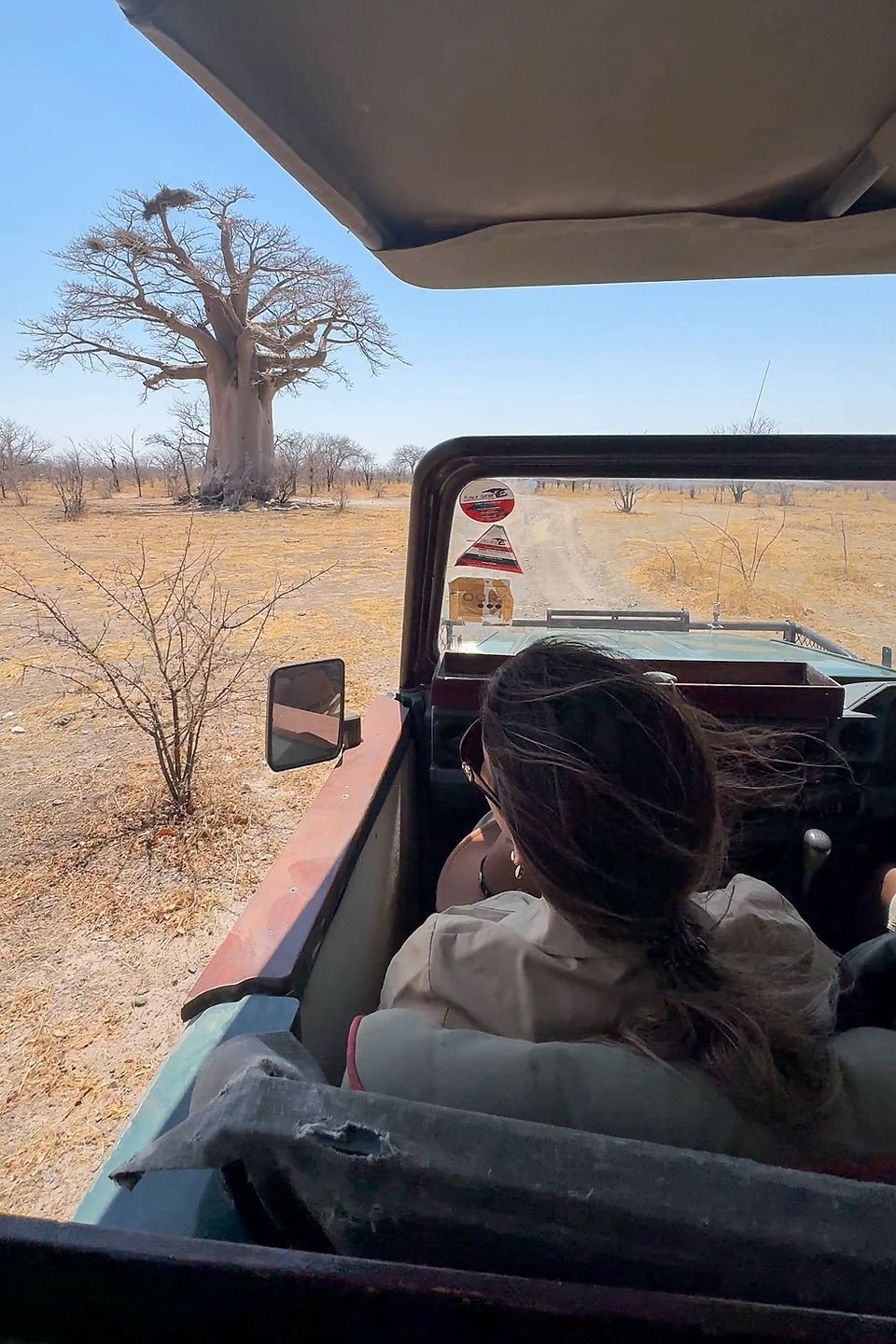
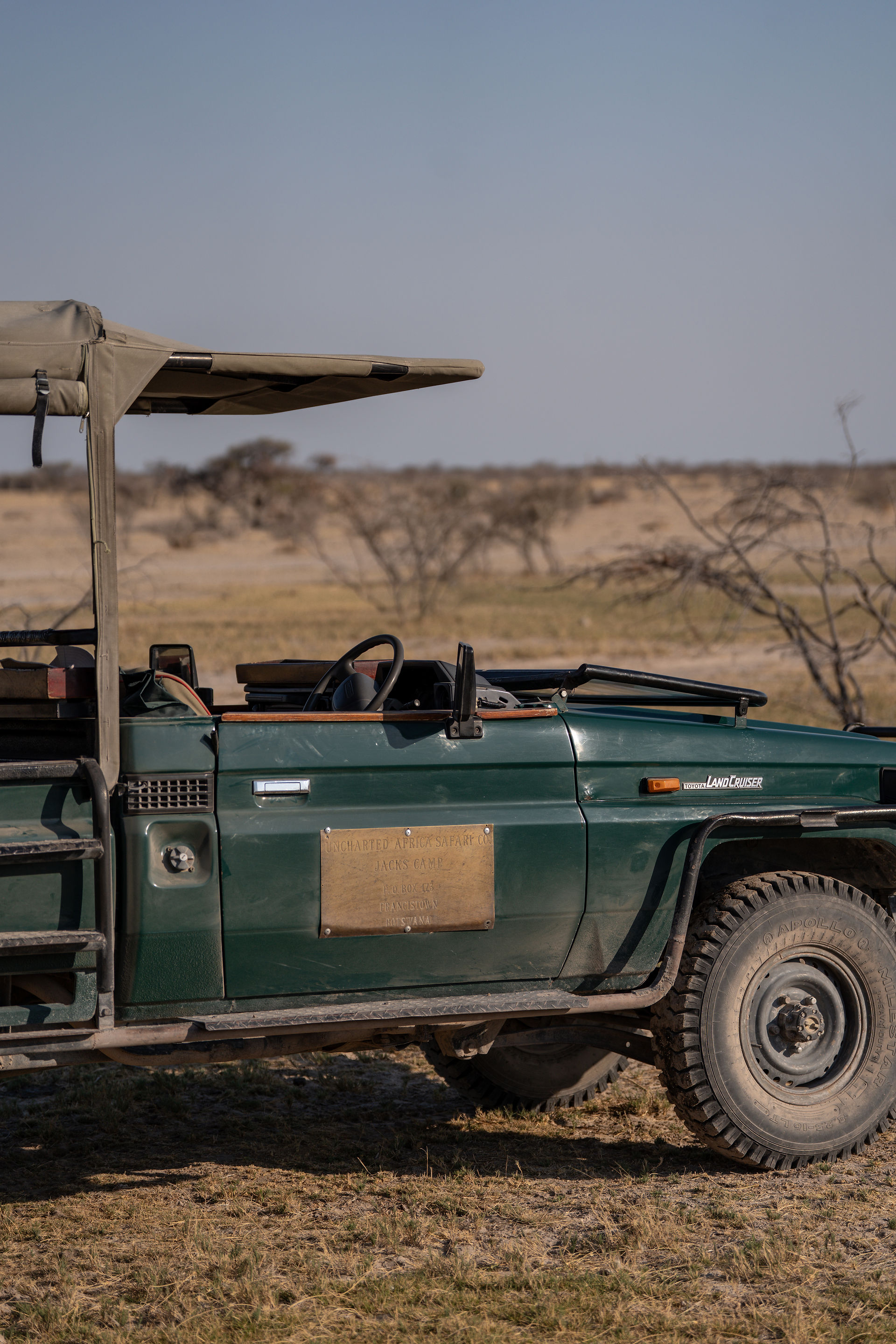
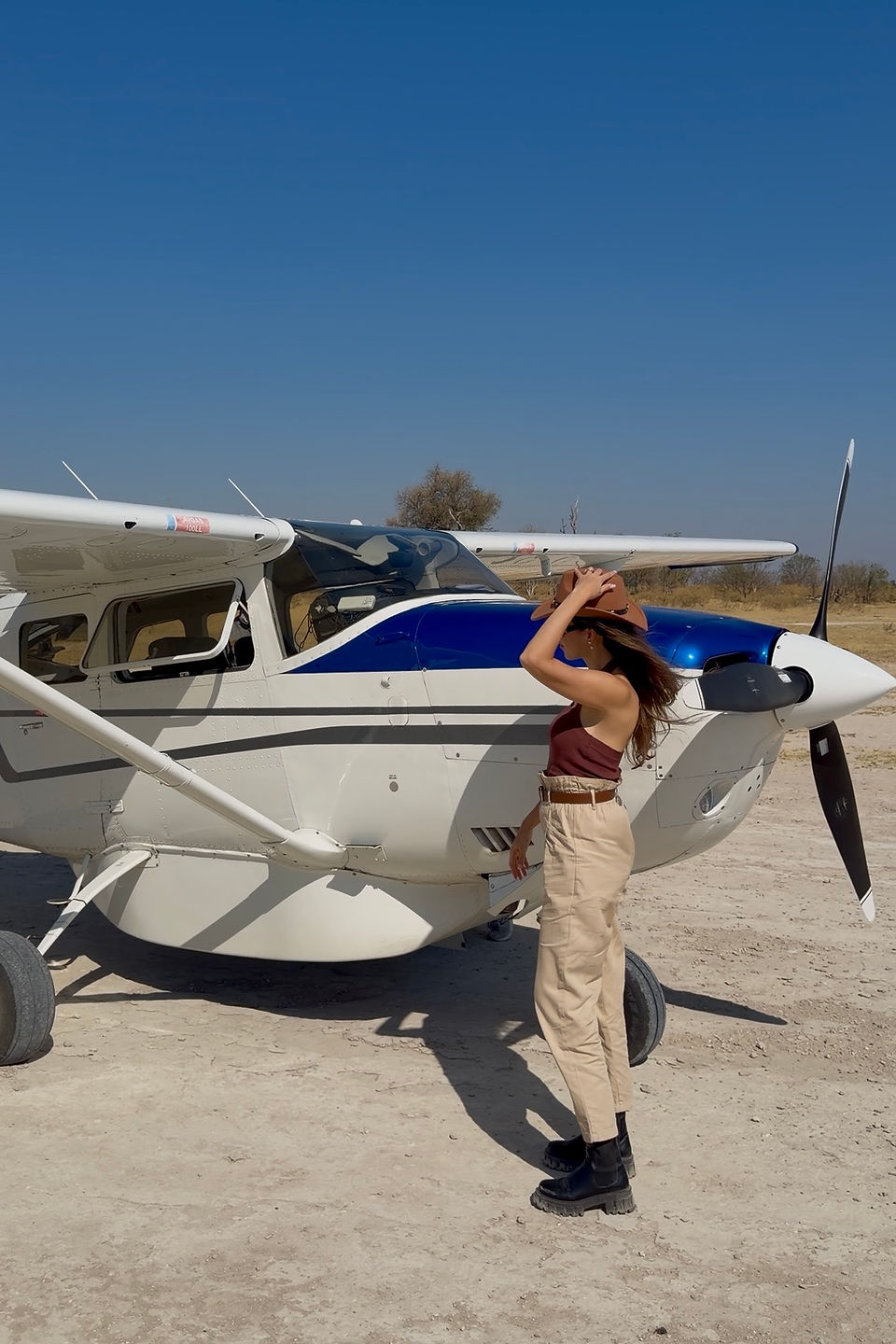

For certain legs of the journey, driving is also part of the experience. The route from Maun to Gweta, for example, is roughly 200–210 km, taking around three hours depending on road conditions. The roads can be unpredictable, with sudden potholes that demand constant attention. Wildlife often appears along the way—elephants reaching for tree branches, ostriches striding across the plains, and antelope grazing peacefully—reminding you that even the journey itself is part of the safari.
Our route included multiple flights between camps, each landing on remote airstrips surrounded by nothing but wilderness. Once at the lodges, everything is organised: transfers, game drives, walking safaris, and meals.
This is travel where logistics disappear—and the wild takes over.
DAY-BY-DAY ITINERARY
Our time in the surreal stillness of the Makgadikgadi Pans and the lush waterways of the Okavango Delta felt like stepping between two completely different worlds — one stark and sun-scorched, vast and almost lunar in its silence, the other alive and breathing, pulsing with water and movement. Both unforgettable in their own way.
Below, I’ll take you through our October journey day by day.
DAY 1.
MAUN - GWETA - approx. 210 km (130 mi)
After landing in Maun, the gateway to the wild, we picked up our rental car from Hertz and began the journey toward the Makgadikgadi Pans. The drive to Planet Baobab near Gweta is approximately 200–210 kilometres and takes around three hours, depending on road conditions. Wildlife may appear along the way, tempting you to stop, but I advise against it - the road is far from perfect, so it's best to keep moving and only stop where it's truly safe.
The road itself already felt like an introduction to Botswana’s rhythm. At one point we saw a large group of elephants gathered close to the roadside, stretching their trunks high into a giant tree, tearing branches down with slow determination. It felt intimate and surreal, as if we had driven straight into a wildlife documentary. Ostriches wandered across the plains, antelope grazed in the distance, and every few kilometres the landscape shifted subtly in colour and texture.

Elephants 

Driving requires focus. Potholes appear unexpectedly and can be deep enough to cause serious damage if you are not paying attention. There are not many cars on the road, which creates a false sense of security, but the danger lies in the road itself. Staying alert is essential.


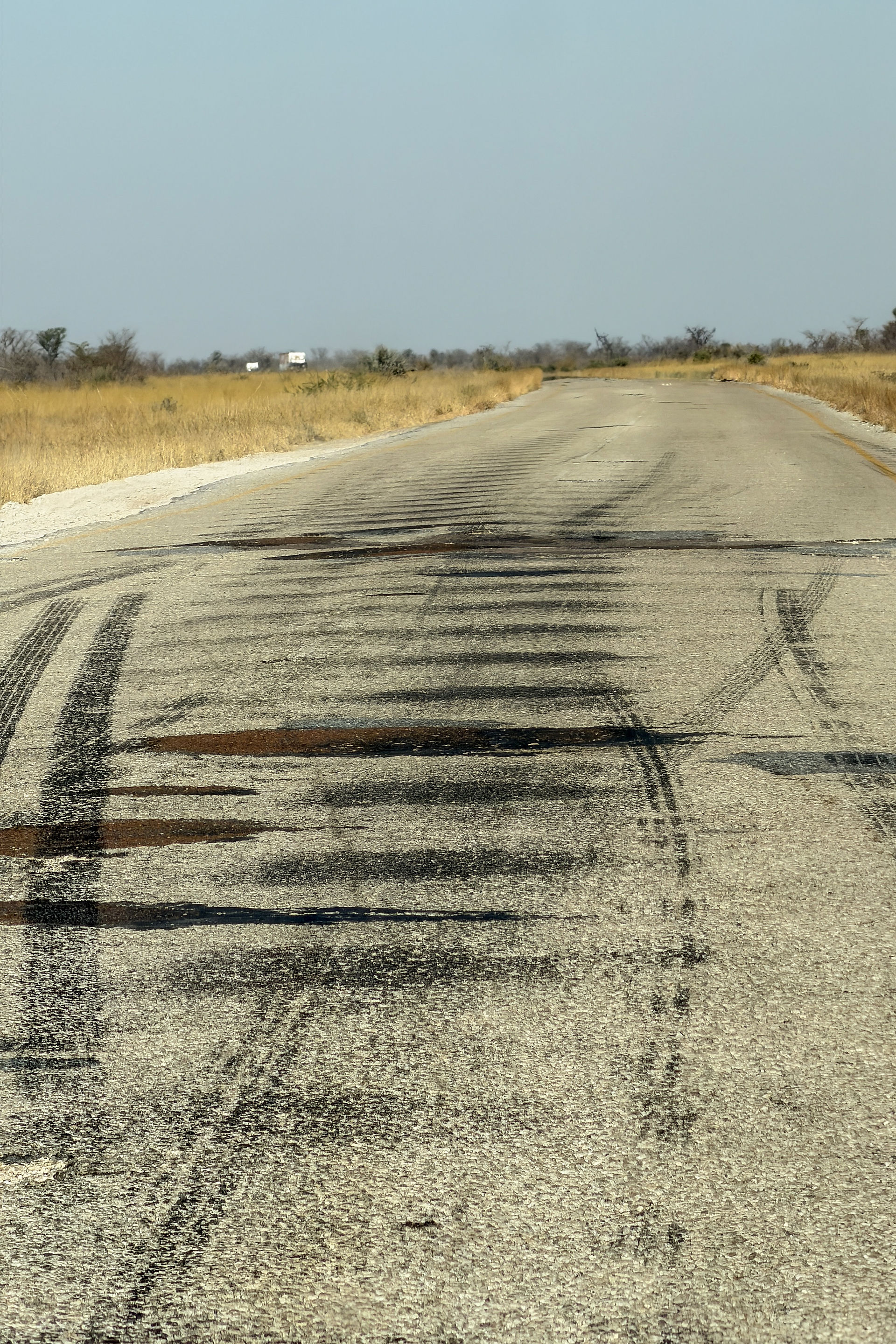
Along the way we passed through a veterinary disease control checkpoint, something common in Botswana due to the importance of protecting the cattle industry from foot-and-mouth disease. We stopped at a barrier where our tyres were disinfected - usually either sprayed or rolled slowly through a treated mat. We had to step out of the car and walk through a shallow tray filled with disinfectant to clean our shoes before being allowed to continue. The process was quick but strict, a reminder of how carefully Botswana manages its agricultural and wildlife balance.
WHERE TO STAY
PLANET BAOBAB
When we arrived at Planet Baobab, our home for the night, we felt the remoteness immediately. Our first choice, Jack’s Camp, had not been available, but Planet Baobab turned out to have its own character and charm. The lodge offers both camping options and quirky traditional-style huts scattered among ancient baobab trees. Our hut had a private bathroom with an outdoor feel — enclosed but open to the elements in a way that made you aware of where you were. Electricity cut out several times during our stay, but somehow that unpredictability felt aligned with the environment rather than inconvenient.


Activities here are naturally centered around the pans and the surrounding bush, with options including:
Guided excursions across the Makgadikgadi Pans
Visits to meerkat colonies
Walks and excursions among the giant baobab trees, discovering their history, ecology, and legendary presence in Botswana

We spent the afternoon walking among the giant baobabs on the property, their thick trunks glowing softly in the late afternoon light. As the sun set, the sky turned into layers of orange and pink over the flat horizon. Dinner was included and served in a relaxed, communal setting, and that evening we were briefed about the adventure awaiting us the next morning — meeting the meerkats, something I had dreamed about since childhood.
Our entire Botswana journey, including both the Makgadikgadi Pans and later the Okavango Delta, was organised with Gondwana Tours & Safaris, whose seamless planning allowed us to simply arrive, breathe, and experience. In a country this vast and remote, that kind of thoughtful organisation makes all the difference.
DAY 2.
We woke before sunrise, the air still cool and fragile, the horizon slowly melting from deep blue into soft gold. In the early hours, the Makgadikgadi Pans feel almost sacred — silent, endless, waiting. Wrapped in warm layers against the chilly desert morning, we climbed into the open safari vehicle and set off into the vastness. The wind brushed against our faces, carrying that dry, earthy scent that only exists in places this remote. Baobabs stood like ancient guardians in the half-light, horses moved quietly through the bush, antelope flickered in the distance, and eagles traced slow circles high above us. On the way, we also saw horses and Helmeted guinea fowl moving through the bush, adding even more life to the quiet morning. It felt like the world belonged only to us.


After about an hour’s ride across the sandy tracks, we reached the meerkat burrows. I was about to meet Timon, a meerkat I had dreamed of meeting since childhood — a lifelong wish finally coming true. Then a tiny face appeared from the sand. Then another. And another. Within moments, the earth seemed to crack open with life as the meerkats emerged, stretching toward the rising sun to warm their small bodies after a cold night underground.


Watching their morning routine unfold was pure joy. They wasted no time, immediately digging with impressive determination for beetles, larvae, and scorpions — they are famously resistant to scorpion venom, a necessary superpower out here. Sand flew everywhere as they foraged, completely focused, while one stood upright as the sentinel, scanning the horizon for predators. Their system is flawless: teamwork, constant communication, quick reactions. If danger comes, they vanish underground within seconds.
And then somehow, I became part of their landscape.
I lay down flat in the sand, barely daring to move. One curious meerkat climbed onto me, then another followed. And suddenly I was their lookout post — a human mound rising from the desert floor. Tiny paws pressed against me, tugging playfully at my hair, whiskers brushing my cheeks, little bodies balancing confidently as they stood tall on me to survey the plains. They dug enthusiastically around me, kicking dust into my face, completely unbothered by my existence. An entire army of fluff using me as their observation tower. I couldn’t stop laughing. It was chaotic, tender, hilarious, and surreal all at once.


After spending time with them and watching them forage, a beautiful breakfast spread was set up right there at the meerkat spot, and we enjoyed breakfast with the meerkats before continuing to follow them for a while longer.
Meerkats live in tight family groups, sometimes up to thirty members, sharing responsibilities for guarding, babysitting, and foraging. They are deeply social, protective, and surprisingly resilient in this harsh, arid environment. Being the only person trusted by them — even for those brief moments — felt like the purest kind of privilege. I felt chosen. Present. Completely, overwhelmingly happy.


After saying goodbye to the little legends, we drove the open safari vehicle out onto the endless salt pans. Some guests can take ATVs, but they have to follow the safari vehicle and stay on the tracks. We were in front of a couple who tried it, and dust quickly filled their faces. Watching them from ahead, it didn’t feel like a “must-do” experience — the ride looked fun, but staying on the tracks and dodging clouds of dust made it less magical than simply soaking in the endless, silent landscape from our open safari vehicle.
The white surface stretched infinitely, merging with the sky in a way that made it impossible to see where the earth ended. These pans are the remains of an ancient super-lake that once covered much of northern Botswana, and today they feel almost lunar — cracked, shimmering, silent. Standing there, with nothing but wind and horizon around us, was humbling beyond words.


We had made a crazy detour just to see the meerkats, coming for only one night because this was a dream of mine. After the experience, we returned to our rental car and drove straight to the airport on a tight schedule to catch our next safari flight. On the way, we were briefly stopped by the police for a routine check, but everything was fine, and we continued without delay.
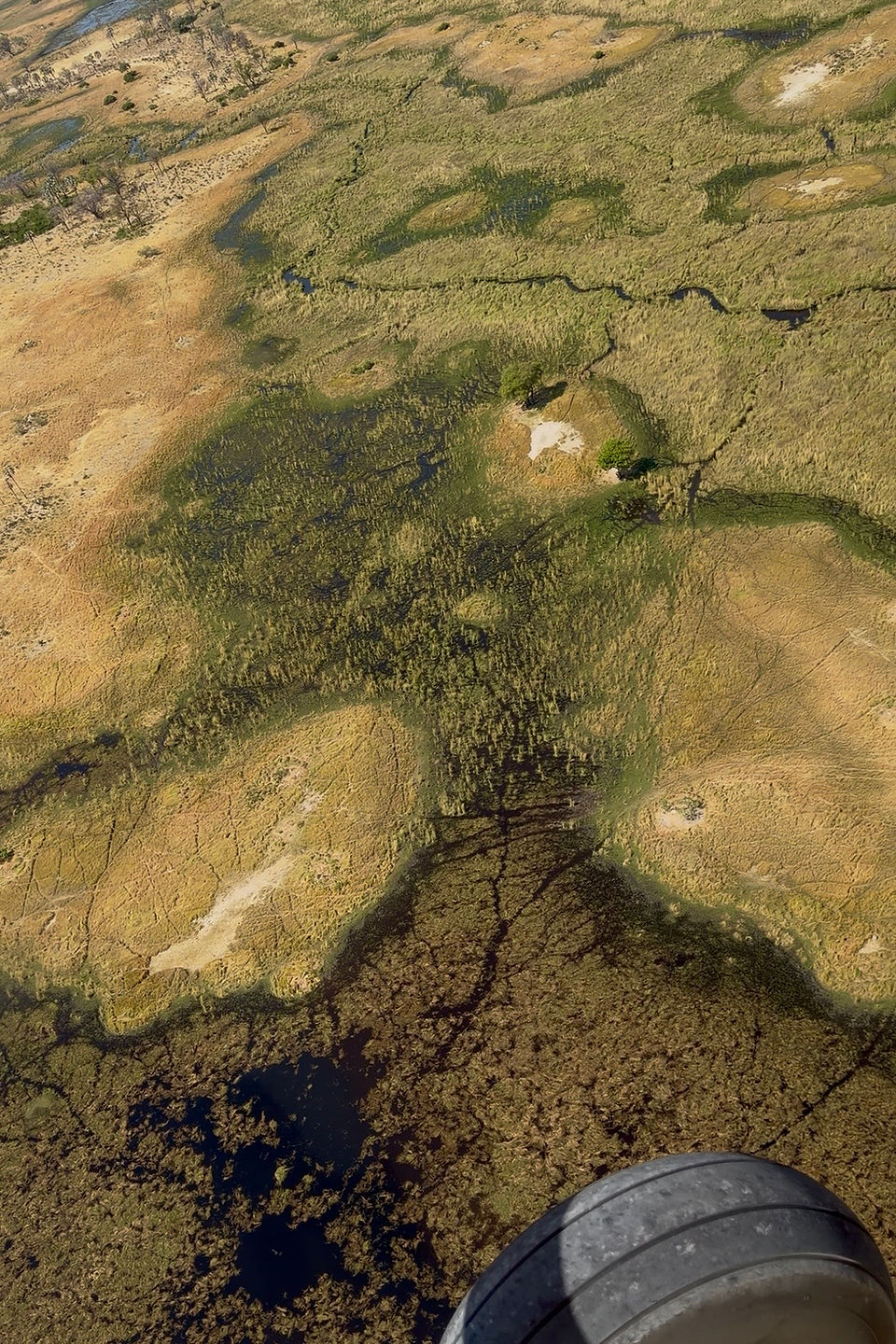
Soon, we boarded our private flight to Pom Pom Camp in the Okavango Delta. The planes between safari camps are small — not commercial aircraft, just tiny planes landing on minimal airstrips carved into the wilderness. The flight was bumpy and shaky, and I felt unwell almost immediately. By the time we landed, I had to vomit, which unfortunately kept me from enjoying much of the incredible scenery below. Even so, we glimpsed herds of elephants scattered across the delta, green islands floating in a maze of water channels, and oxbow lagoons glinting in the sunlight. From above, the Okavango looked alive — a watery, vibrant tapestry teeming with life, winding like a living network through the otherwise dry landscape.


Upon landing, we were met by our guide Ryder and tracker Lake, who took us to camp. Each camp on the trip, both in Botswana and Zambia, provided reusable bottles to carry on safari excursions, which we had to refill throughout the journey.
WHERE TO STAY
POM POM CAMP
Set in the heart of the Okavango Delta, Pom Pom Camp offers an intimate safari experience that blends understated luxury with true immersion in the wild. The camp consists of spacious tented suites built on raised wooden decks, designed to feel private while remaining completely connected to the surrounding landscape.
Each tent is beautifully appointed with a large, incredibly comfortable bed, thoughtful details, and a private deck overlooking the lagoon and surrounding floodplains of the Okavango Delta. Wildlife moves quietly in the distance while birds call from the reeds. One of the highlights is the outdoor private shower — a lovely experience where you can rinse off under the open sky, fully aware that you are in the middle of untamed Africa. Falling asleep to the layered sounds of the delta and waking up to soft morning birdsong is something you carry with you long after you leave.
A wonderful practical touch: complimentary laundry service, which makes light packing between bush flights effortless.
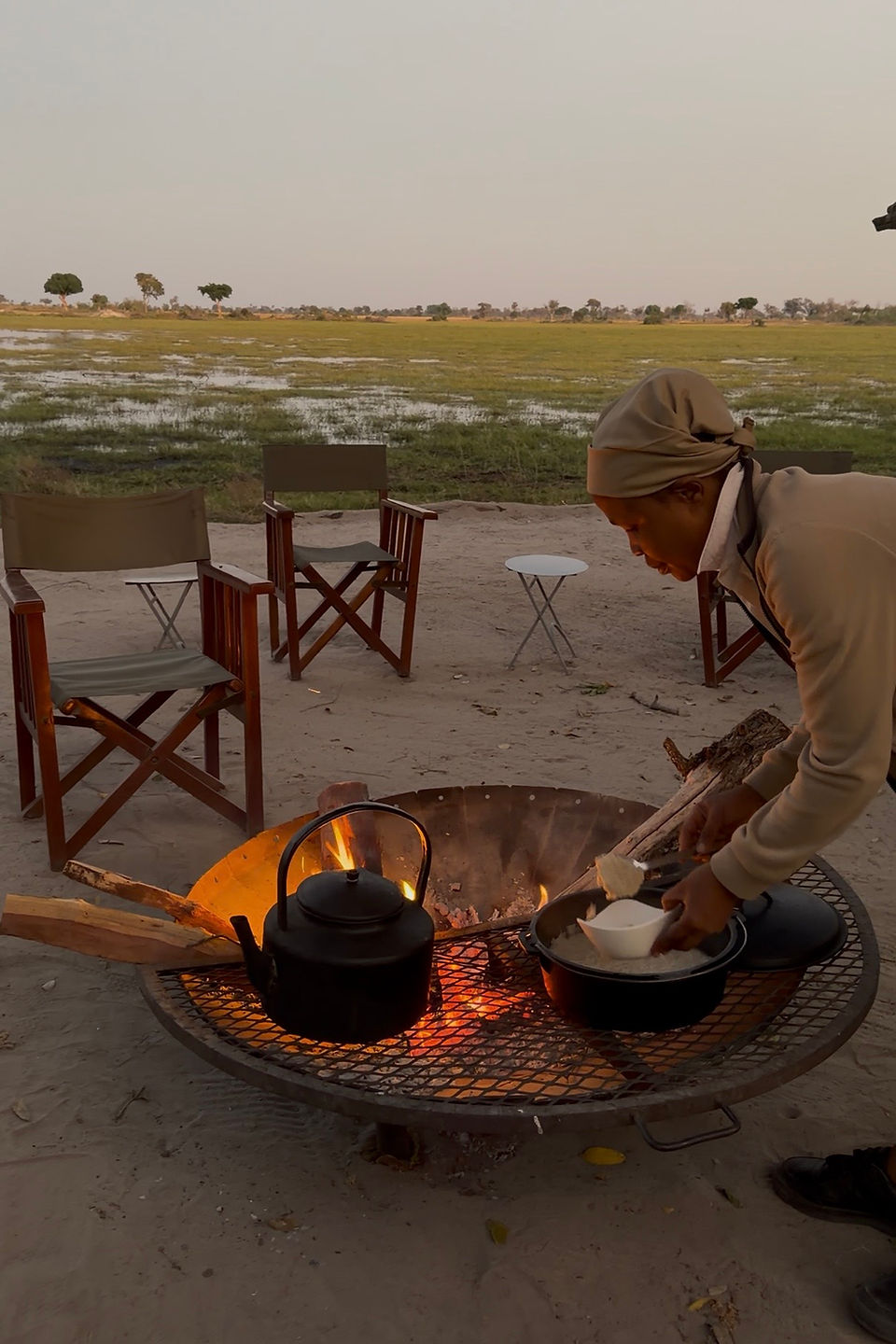
Mornings begin in the most classic safari way — gathered around the campfire before sunrise. Coffee or tea in hand, the sky slowly turning from dark to soft gold, you meet your guide and tracker while the delta wakes up around you. It’s quiet, intimate, and grounding. Evenings often return to that same fire, where guests sit together under a sky flooded with stars, exchanging stories from the day. Meals are shared at a communal table, creating a beautiful sense of unity — conversations flowing, sightings compared, laughter shared. It feels warm, authentic, and very much the Botswana way.
After dinners, you’re escorted back to your suite — a necessary and reassuring ritual in a place where elephants, hippos, and other wildlife roam freely through camp. Here, you are not separated from nature; you are simply coexisting with it.
Depending on water levels, activities include:
Morning and afternoon game drives
Mokoro excursions (traditional dugout canoe)
Motorboat safaris through the delta channels
Seasonal walking safaris when conditions allow
The combination of land and water experiences makes Pom Pom a perfect introduction to the richness and diversity of the Okavango Delta.
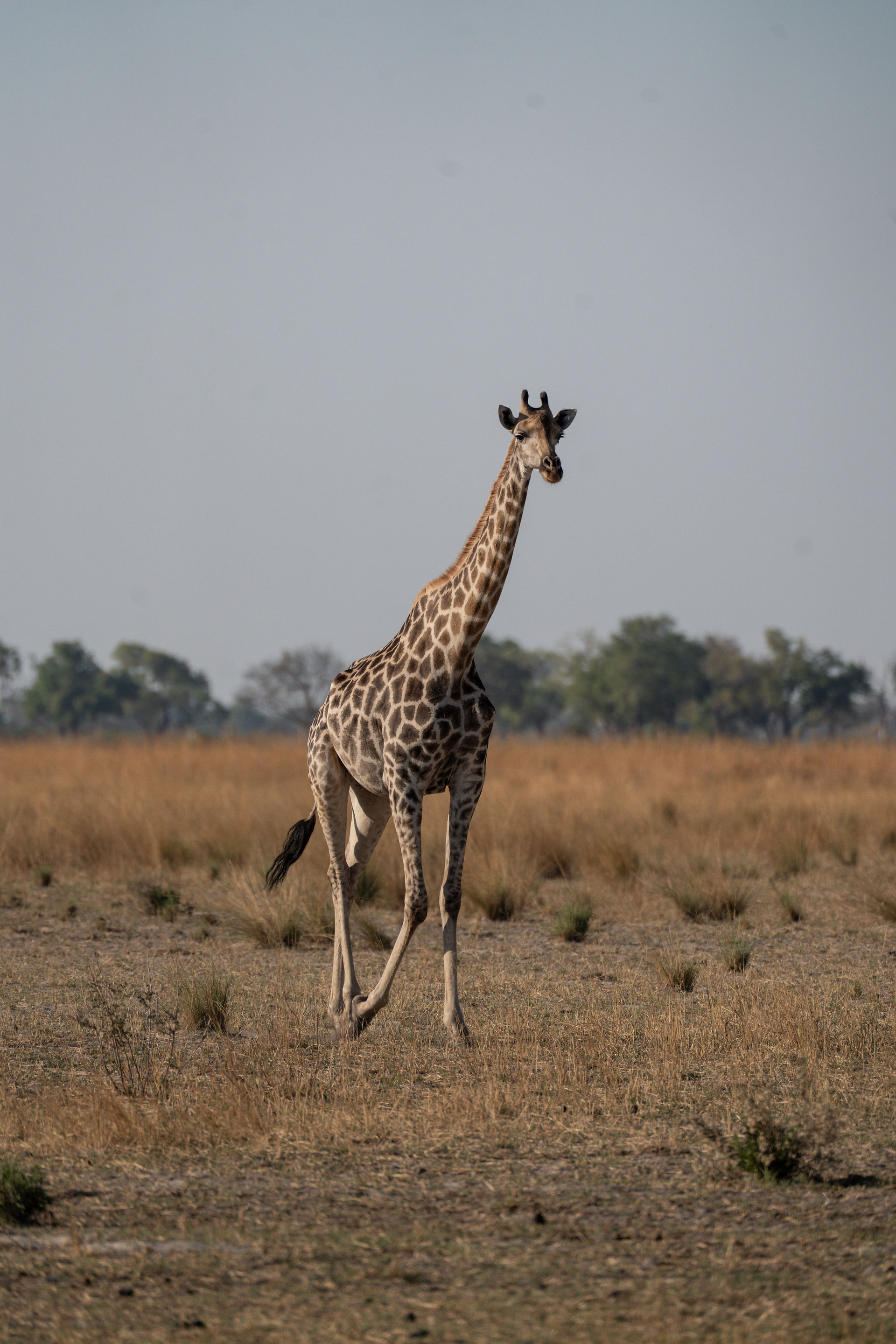
There wasn’t much time to rest before afternoon tea, after which we immediately headed out for our first real safari in the delta. The sights were unforgettable: giraffes with their babies moving gracefully among the reeds, zebras grazing in clusters, impalas leaping between channels, and hippos lounging in the water. We enjoyed a stunning sundowner in the bush, watching the sky ignite with colour as the sun dipped behind the horizon. Later, a short night drive with special lights allowed us to spot nocturnal wildlife.


Dinner that night was a shared experience with other guests at the camp, lively and welcoming. They even catered to my vegan requirements, and the staff and fellow guests made the evening feel warm and communal. By the end of the night, we were exhausted but exhilarated, our hearts full of wonder and the kind of joy only Botswana seems to deliver.
DAY 3.
We woke before sunrise again, the 5 AM alarm pulling us gently from deep sleep. The first light spilled across the delta, painting the sky in soft golds and pinks, and we had a quiet breakfast by the campfire, watching the day bloom around us. Today promised to be bombastic — and it did not disappoint.


Our morning game drive began in the open safari vehicle, gliding silently through the delta as the world slowly awoke. The air was still cool, carrying that earthy scent of dust and grass before the heat of the day would rise.
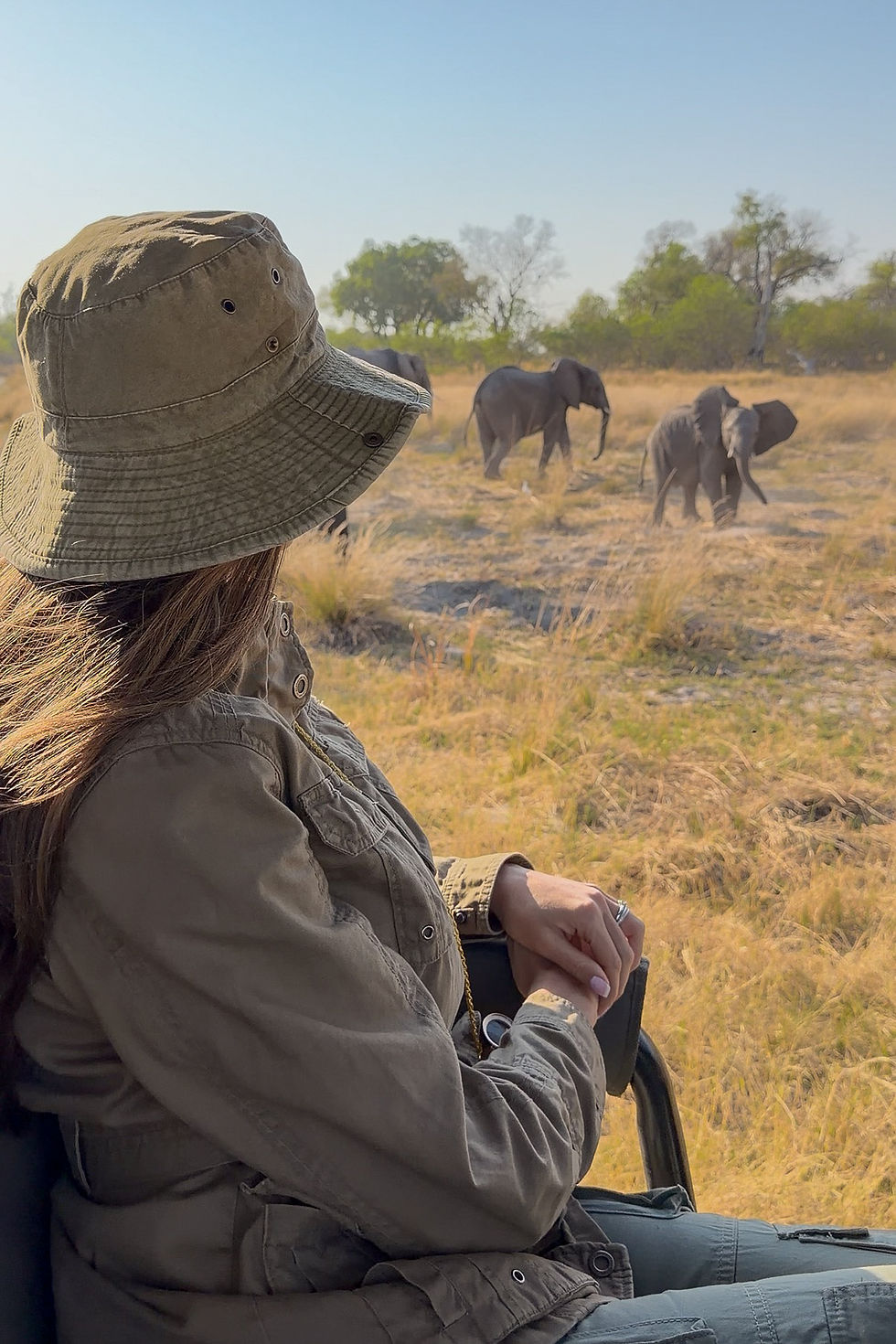
We saw giraffes again, their long necks rising elegantly above the treetops as they moved with slow, almost weightless grace. They walked calmly across the open landscape, their patterned coats glowing softly in the early light, pausing now and then simply to observe their surroundings. Not far from them, elephants appeared through the soft morning haze — enormous yet gentle, their ears flapping lazily as they crossed the landscape with quiet confidence. Watching them never gets old; there’s something grounding about their presence.
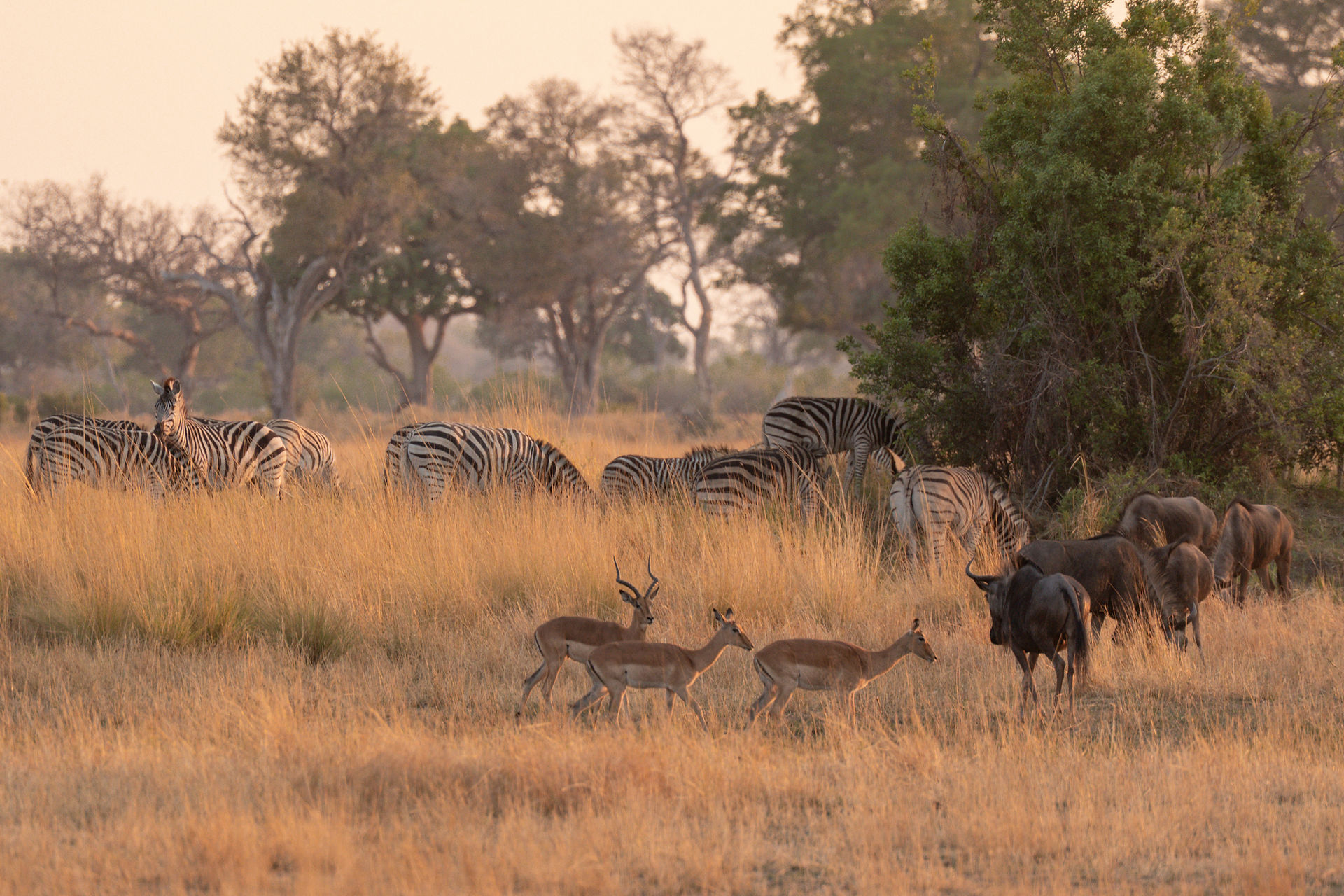
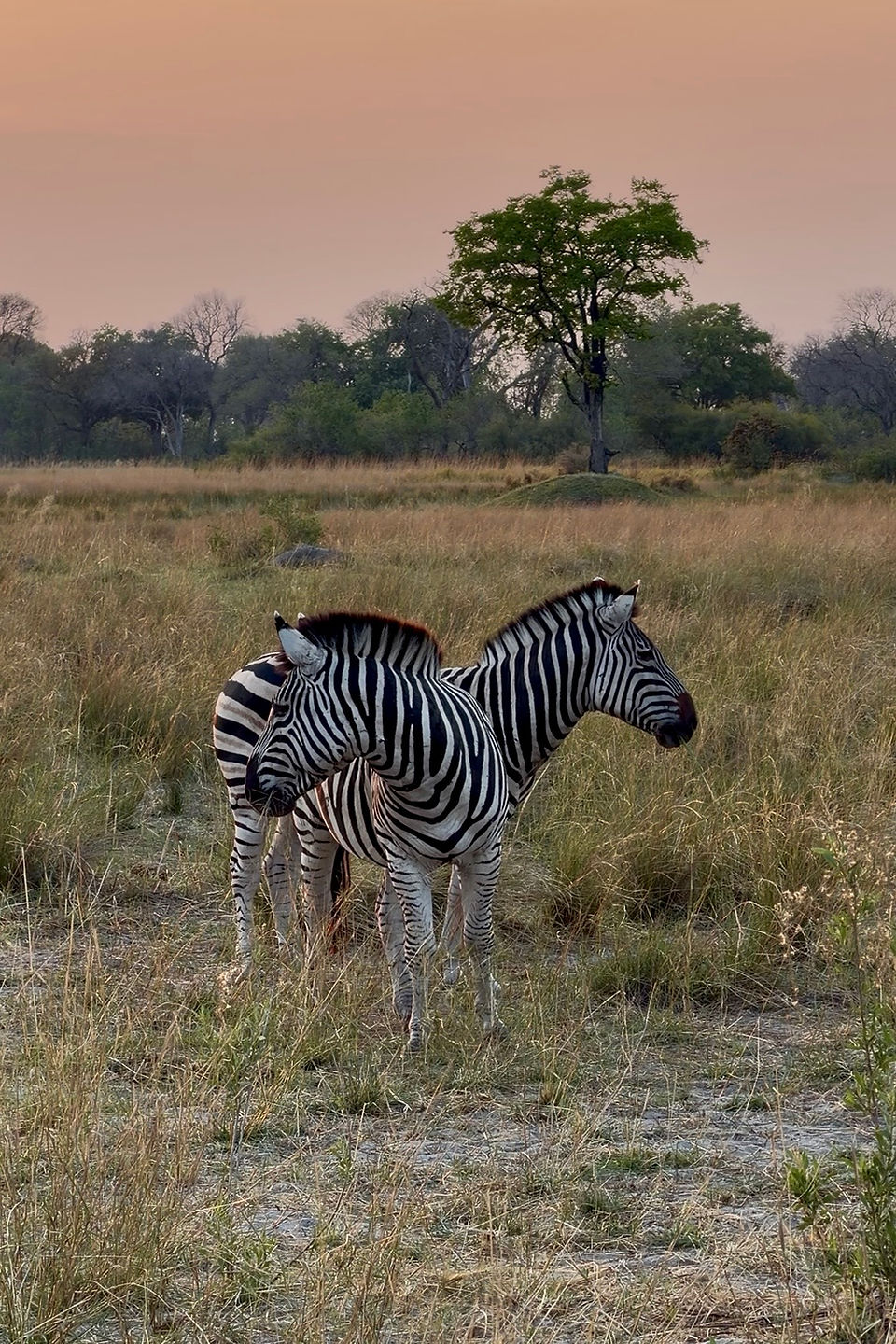
Zebras dotted the plains everywhere, their black-and-white stripes glowing in the golden light. Among them were impalas and wildebeest, grazing together in that quiet harmony so typical of the delta — different species sharing the same space, each alert in their own way. Small groups lifted their heads in unison from time to time, scanning the horizon.
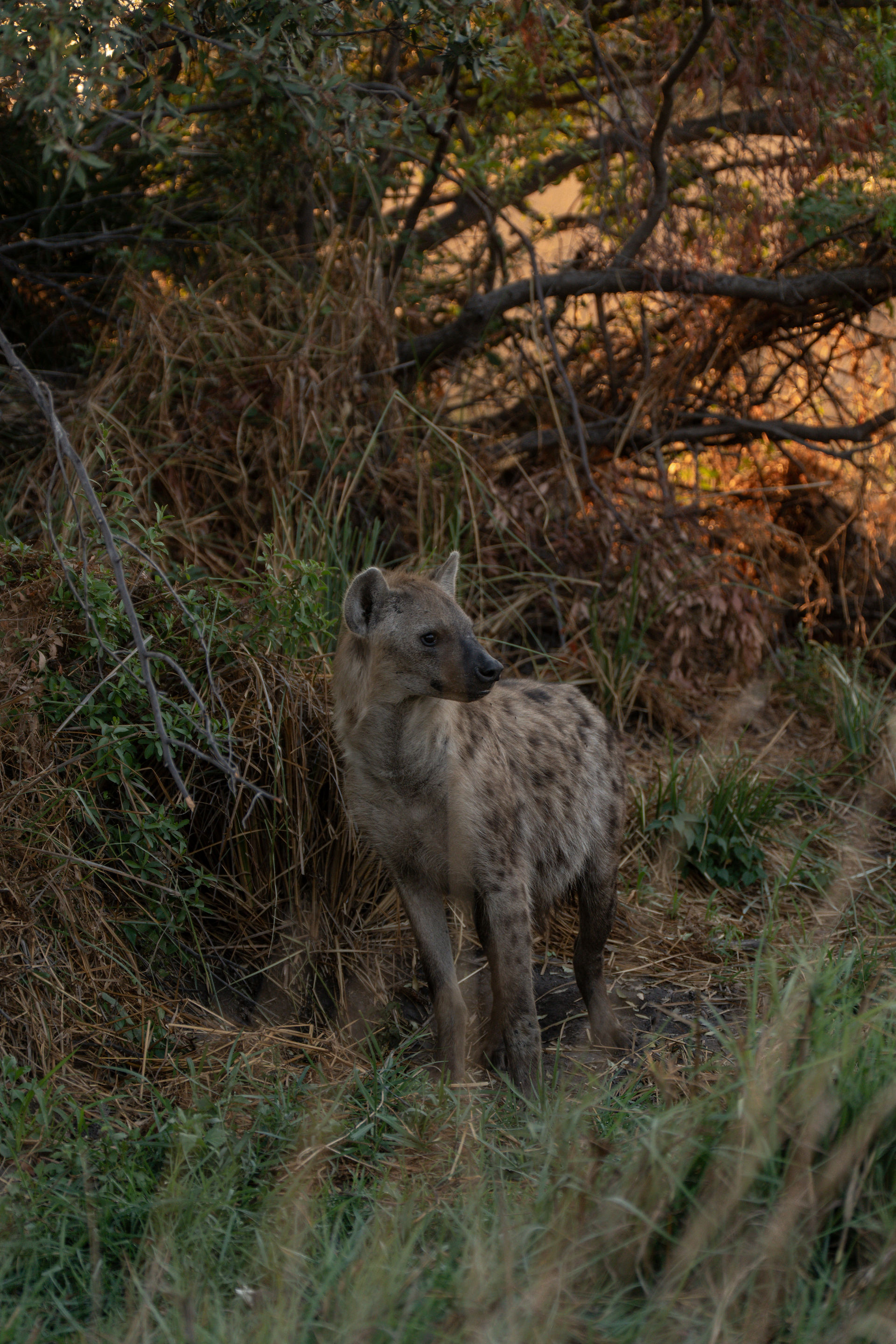
Then the atmosphere shifted. We came across hyenas feeding on a zebra. The smell reached us first — strong, raw, impossible to ignore. It was nature in its most honest and unforgiving form. What made it especially emotional was that several other zebras remained nearby. They didn’t immediately scatter. They stood at a distance, still and watchful. It may be human instinct to interpret their posture as grief, but in that quiet moment it truly felt as though they had lost one of their own. Their stillness felt heavy. I felt a deep sadness witnessing it — the beauty and brutality of the wild existing side by side.
As we continued, the delta revealed even more life. Among the many animals we encountered was the striking Saddle-billed Stork, its vivid red, black, and yellow bill unmistakable against the pale sky. Every turn of the vehicle brought another surprise, another reminder of how alive and layered this ecosystem truly is.




We then spotted a pride of lions lounging atop a rock, the image straight out of The Lion King. They sprawled in the early light like true royalty of the savanna — some stretched lazily across the warm stone, others lifting their heads with calm authority. One young male stood slightly elevated, scanning the horizon in a way that instantly brought Simba to mind — proud, powerful, completely at home in his kingdom.
Paw prints in the sand told the story of their night — patrols, hunts, silent movement through the darkness while we slept safely in camp. The exclusivity of Botswana hit me deeply in that moment — no other vehicles, no crowds, just us and the wild. Unlike Tanzania, where safari can sometimes feel like sharing the stage with dozens of other tourists, here it felt entirely ours. It wasn’t just a sighting; it felt like a private audience with the true kings of the savanna.


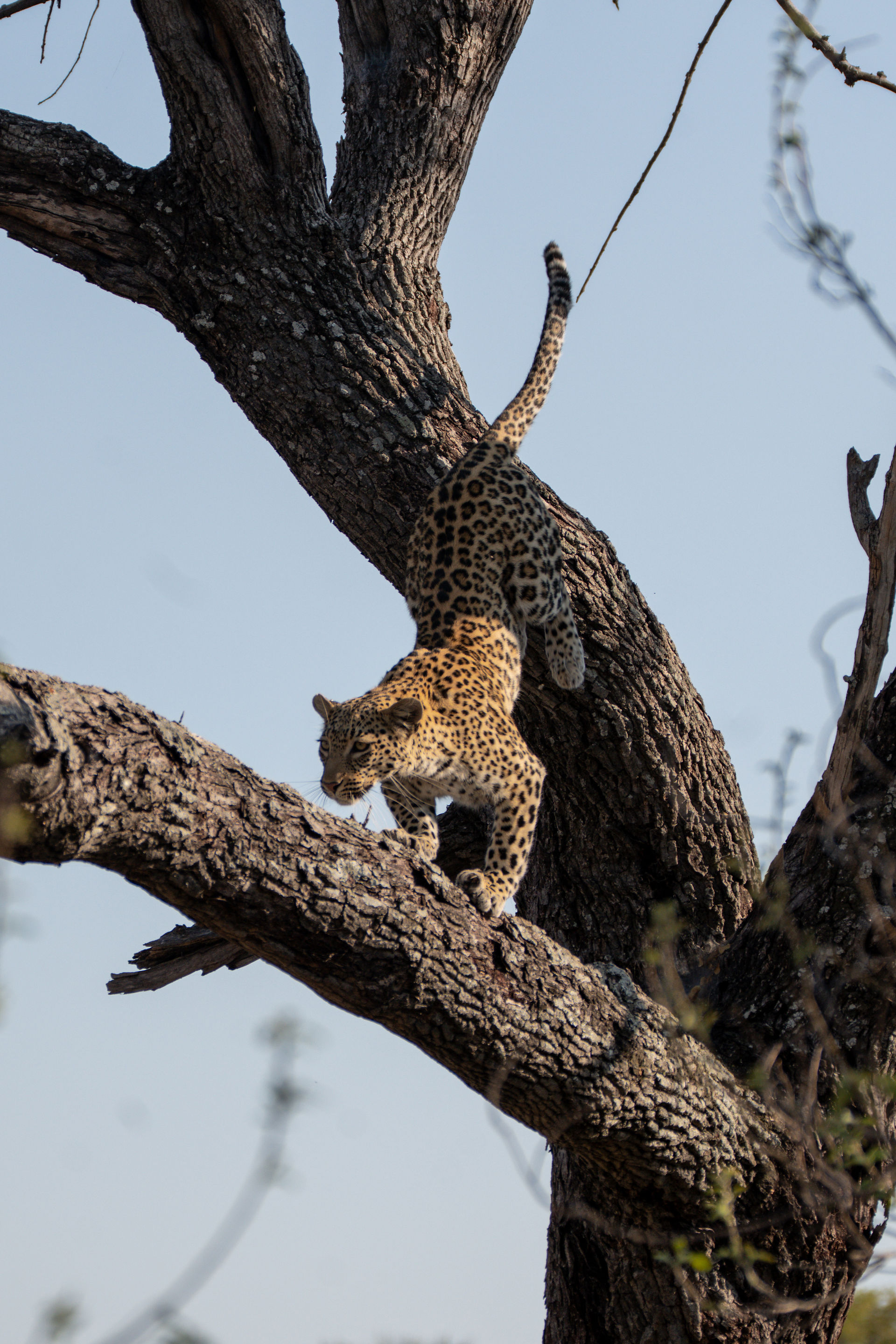
Then came the most elusive cat: a leopard, draped elegantly in a tree, paws dangling, alert eyes scanning for prey. We stayed for a long time, captivated as she plotted and waited. Suddenly, she lunged at a squirrel, which darted into a hollow in the tree. With incredible strength, the leopard clawed at the tree, using its paws to break branches and dislodge the prey. My heart ached as the squirrel fought desperately in the hollow, but ultimately, the leopard caught it. I couldn’t watch. Nature is merciless yet beautiful, a delicate balance of survival, patience, and skill. Watching the predator work — sometimes going days without food — reminded me how wild and untamed this land truly is.




Amid the drama, the delta revealed its subtle beauty: sprawling waterways, green islands floating in a sea of reeds, and the occasional elephant quietly moving through the brush.
After seeing more giraffes, elephants, birds, etc., we saw a baby leopard, crouched low in the grass, waiting for its mother to return with food. Its small, golden eyes scanned the delta, alert and aware, already learning patience and vigilance in the ways of the wild. Watching this little predator, hidden but fierce, felt humbling.
After hours of tracking, seeing all this wildlife without another vehicle in sight, I felt the true meaning of Botswana’s exclusive safaris. It’s not just seeing animals; it’s having space, silence, and intimacy with the wilderness.


Back at camp, we rested and enjoyed lunch before heading out for an afternoon water safari.


Before we boarded the motorboat, we were greeted by a congregation of kudus, their spiral horns twisting elegantly toward the sky. They moved with a quiet dignity, blending seamlessly into the delta’s mosaic of water and reeds, and watching them was like witnessing poetry in motion — the kind that makes you hold your breath and simply marvel.
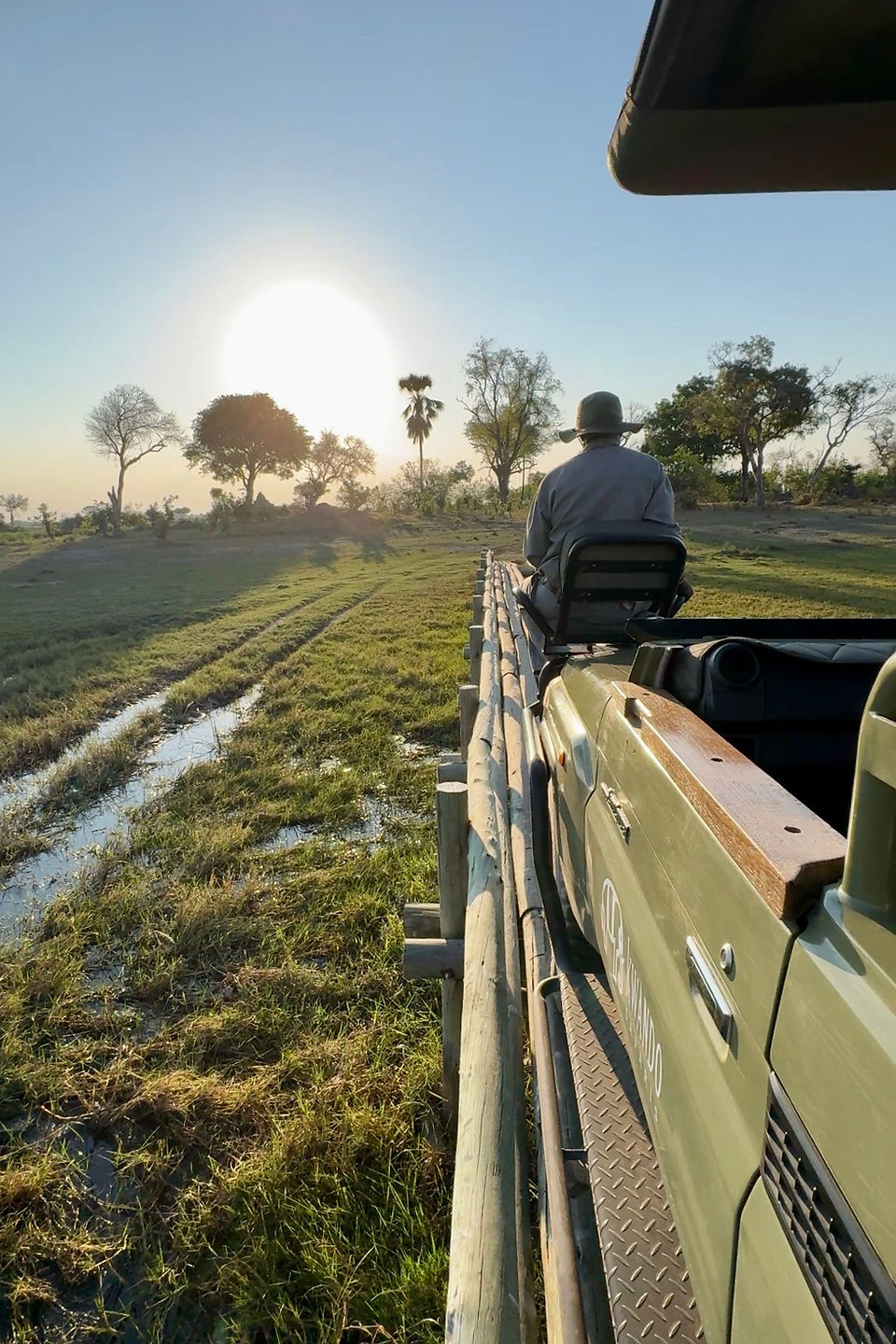


Then we set off on the small motorboat through the delta channels, the water alive with movement and sound. Buffalo grazed near the banks, their massive backs dotted with birds picking at insects — a living, breathing ecosystem working in harmony.
But the real drama came from a large group of hippos gathered in one spot. Partially submerged, their eyes and ears barely above water, they emitted deep, guttural grunts and wheezes, opening their enormous mouths in warning. Our guide explained the tactic: we had to pass them at full throttle, because as soon as we were clear, they would dive and reappear behind us, fully submerged, often surfacing exactly where our boat had just been. We had to pass quickly, hearts pounding, fully aware that one could surface beneath us at any moment. Every pass demanded speed, focus, and respect for their raw power.
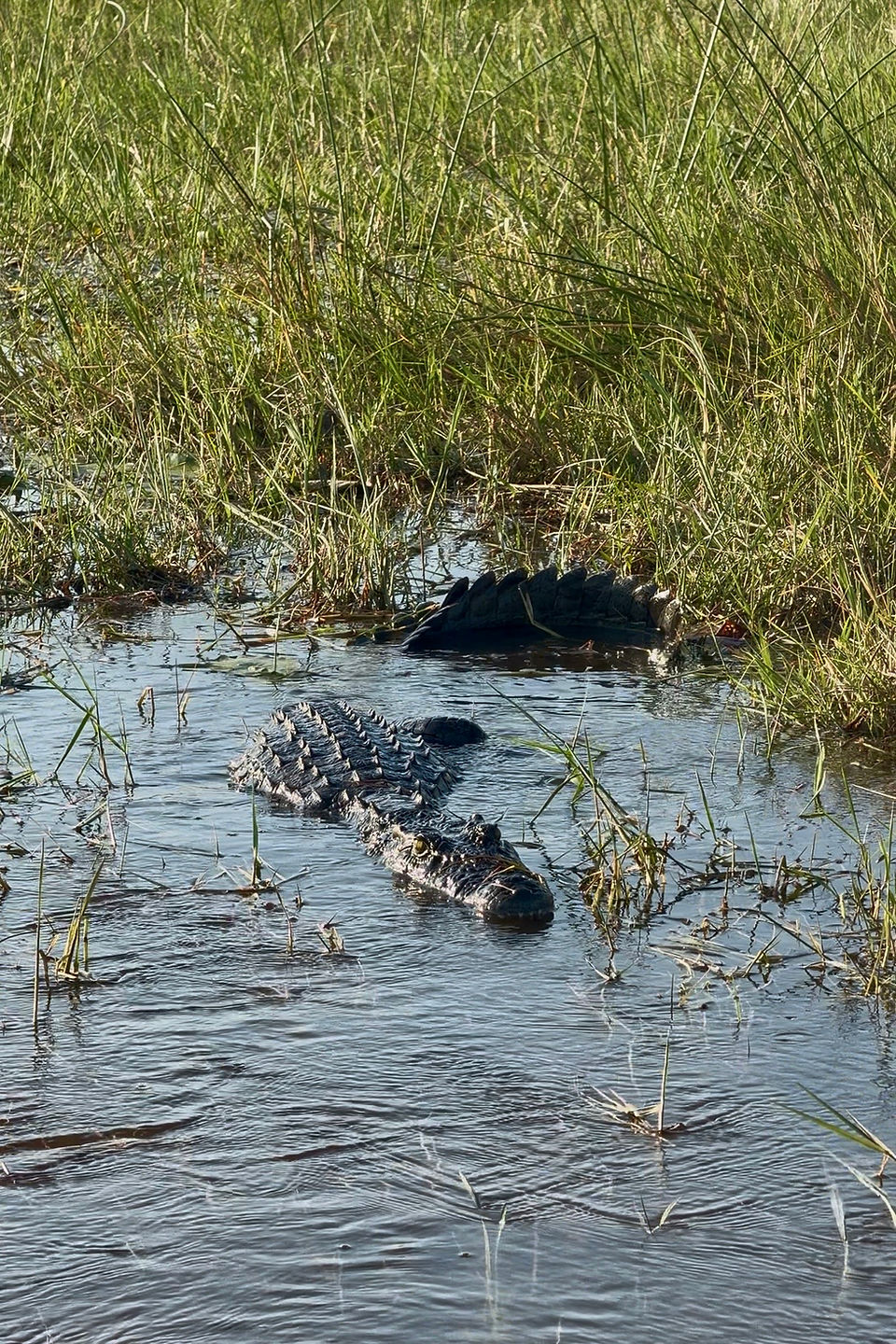
At the very end of the ride, a crocodile appeared near the edge of the water, its body mostly hidden but eyes fixed on us. It was clearly unhappy with our presence, a silent, icy reminder that the delta is home to creatures both majestic and dangerous. The combination of aggressive hippos and the displeased crocodile made the ride unforgettable — a thrilling, heart-pounding reminder that in the Okavango, the wild rules entirely.



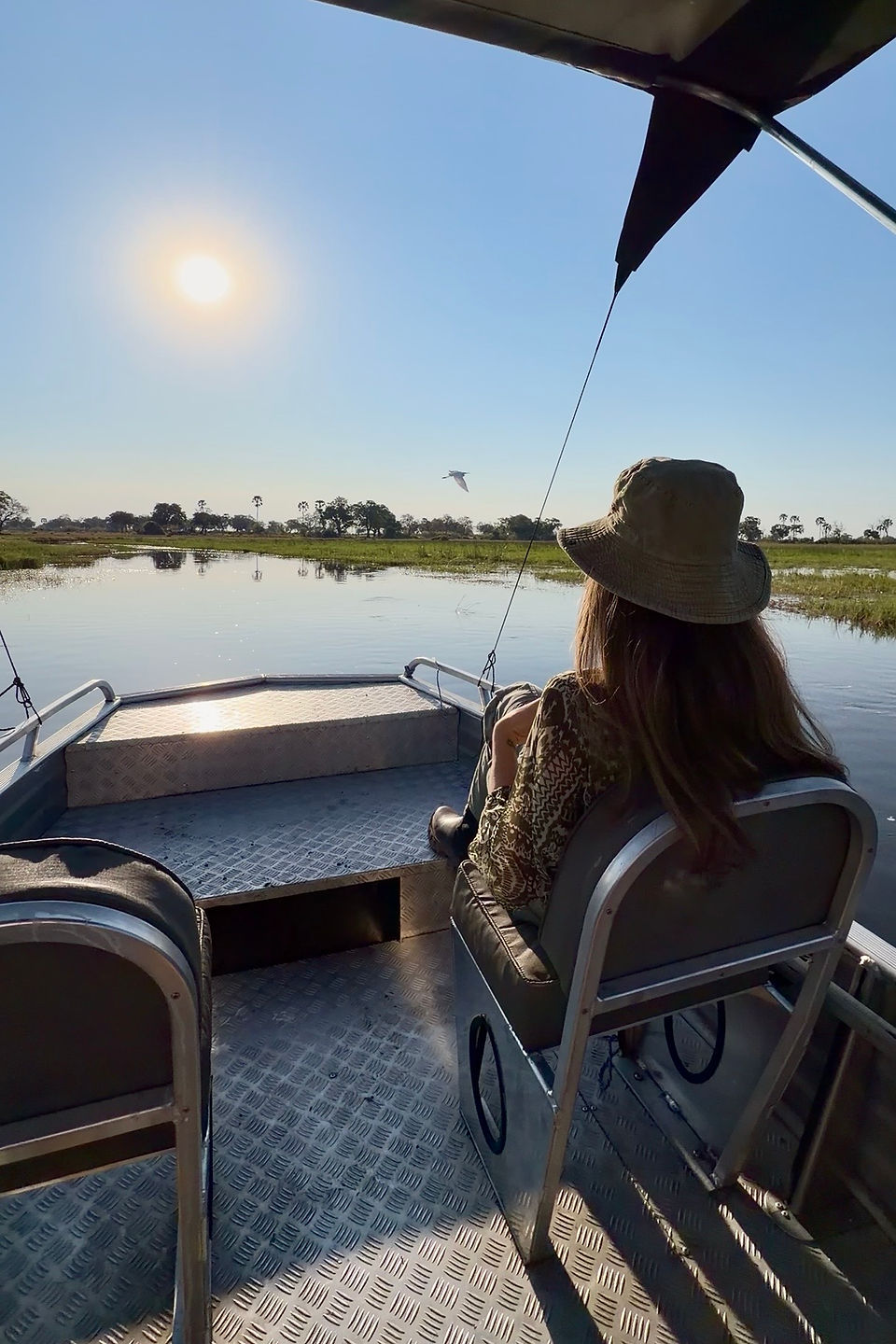
After the boat ride, our afternoon game drive continued with one fleeting, magical moment after another. First, a serval appeared, moving like a shadow through the reeds before vanishing as quickly as it had come — elegant, elusive, untouchable.
Then, as if the delta itself were building to a climax, the elephants appeared. Not in a herd at a distant waterhole, but right before us, tearing into live trees with unimaginable power. The sun was low on the horizon, draping the scene in molten gold and fiery orange. Each swing of a massive trunk, each snap of a branch, resonated with raw strength and dominance — a living spectacle that dwarfed anything we had imagined. These are the stories we’ve heard, the tales of elephants breaking trees, but witnessing it in person, with the sunset ablaze behind them, made it a theatrical display of sheer force and grace. Dust rose, shadows stretched long, and the world seemed to hold its breath as giants moved through their kingdom.
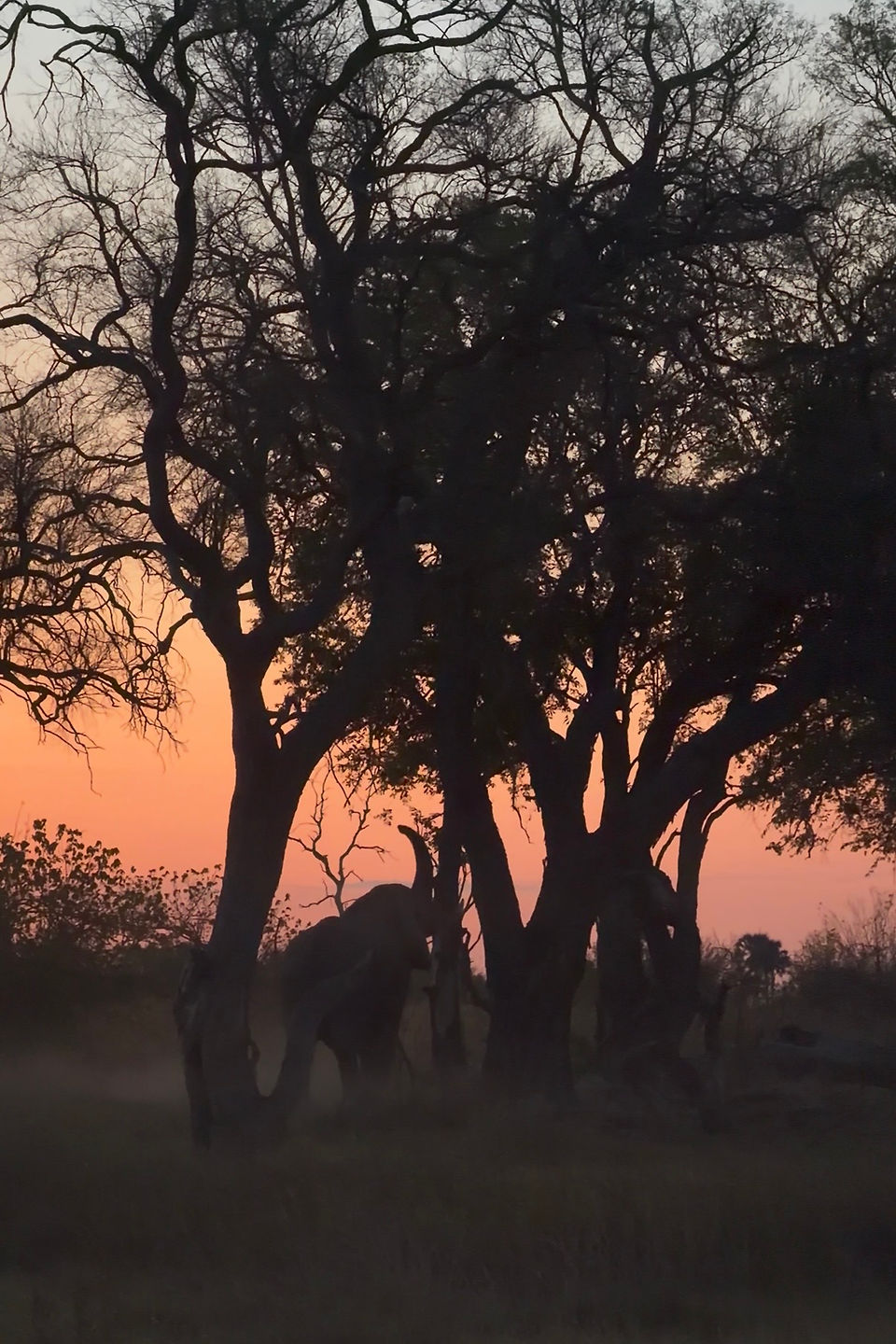


Later, on our way back to camp under the vast African sky, we spotted an African wildcat. Smaller and more delicate than its larger cousins, it moved with quiet precision through the darkness, its eyes catching the light for just a moment before it disappeared into the night — a brief, flickering glimpse of the wilderness still wide awake.

The day’s crescendo carried on to dinner — an on-site, outdoor safari meal. Nico went to grab a drink, and just behind him, two mating leopards casually walked through the camp. They moved with ease and confidence, completely unconcerned by us, as if we were nothing more than shadows on their path. Breathless, we watched, feeling the pulse of the wild all around us.


By the end of the day, I felt a profound connection to Botswana: lions and leopards, elephants and impalas, buffalo, birds, hippos warning us to keep our distance, and the waterways themselves — all living in harmony, all accessible in a way that feels exclusive, private, and deeply alive. It was exhausting, exhilarating, and humbling all at once. Today, the wild felt entirely ours.
DAY 4.
Another 5 AM wakeup, campfire crackling in the cool delta morning, and the horizon already hinting at gold. Our guide led us out for another adventurous day.


On the way to our first experience, we were treated to the quiet beauty of elephants taking their morning bath and giraffes grazing gracefully, their long necks reaching for leaves, the sun highlighting every contour of their patterned coats.


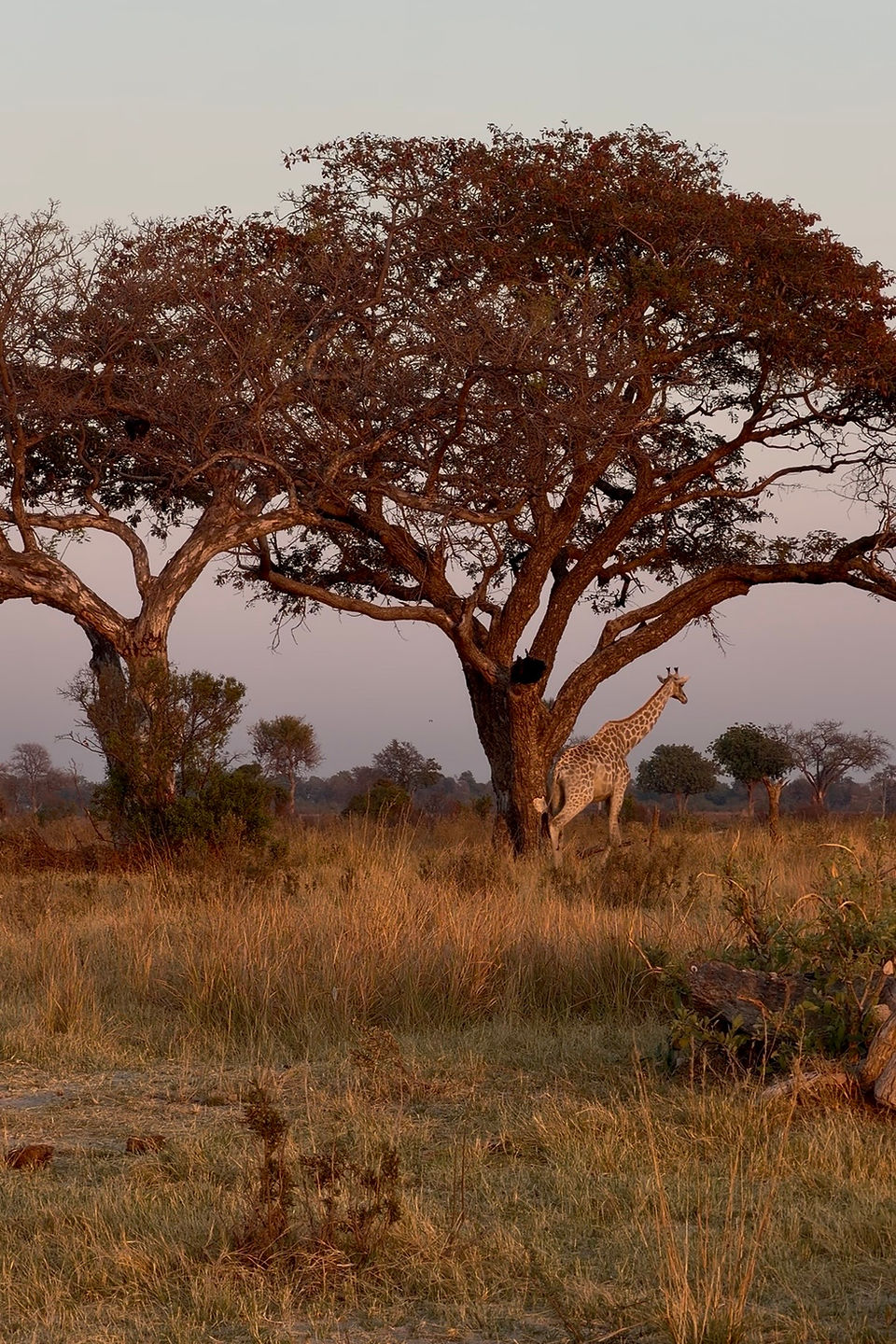
Soon we reached the mokoro — the traditional dugout canoe that has been used for generations to navigate the shallow, reed-filled waters of the delta. Our guide skillfully polled the canoe through the channels, no engines, no noise — just the quiet ripple of water and the rhythm of centuries-old knowledge. The mokoro is the original way locals explored the delta, perfect for observing wildlife without disturbing them. Gliding silently, we marveled at the bright green water lilies dotting the channels, their pads floating like tiny islands, punctuated by the calls of birds and the occasional ripple of a buffalo in the distance. Impalas grazed along the banks, and herds of buffalo moved gracefully through the shallows, their reflections mirrored in the calm waters. The guide carried a gun purely as a precaution, but the delta, generous and calm, posed little threat that morning. There were no hippos like the previous day to keep us on edge, and crocodiles kept their distance. I felt nothing but awe, respect, and a tinge of the thrill that comes from being in a place where nature sets the rules.

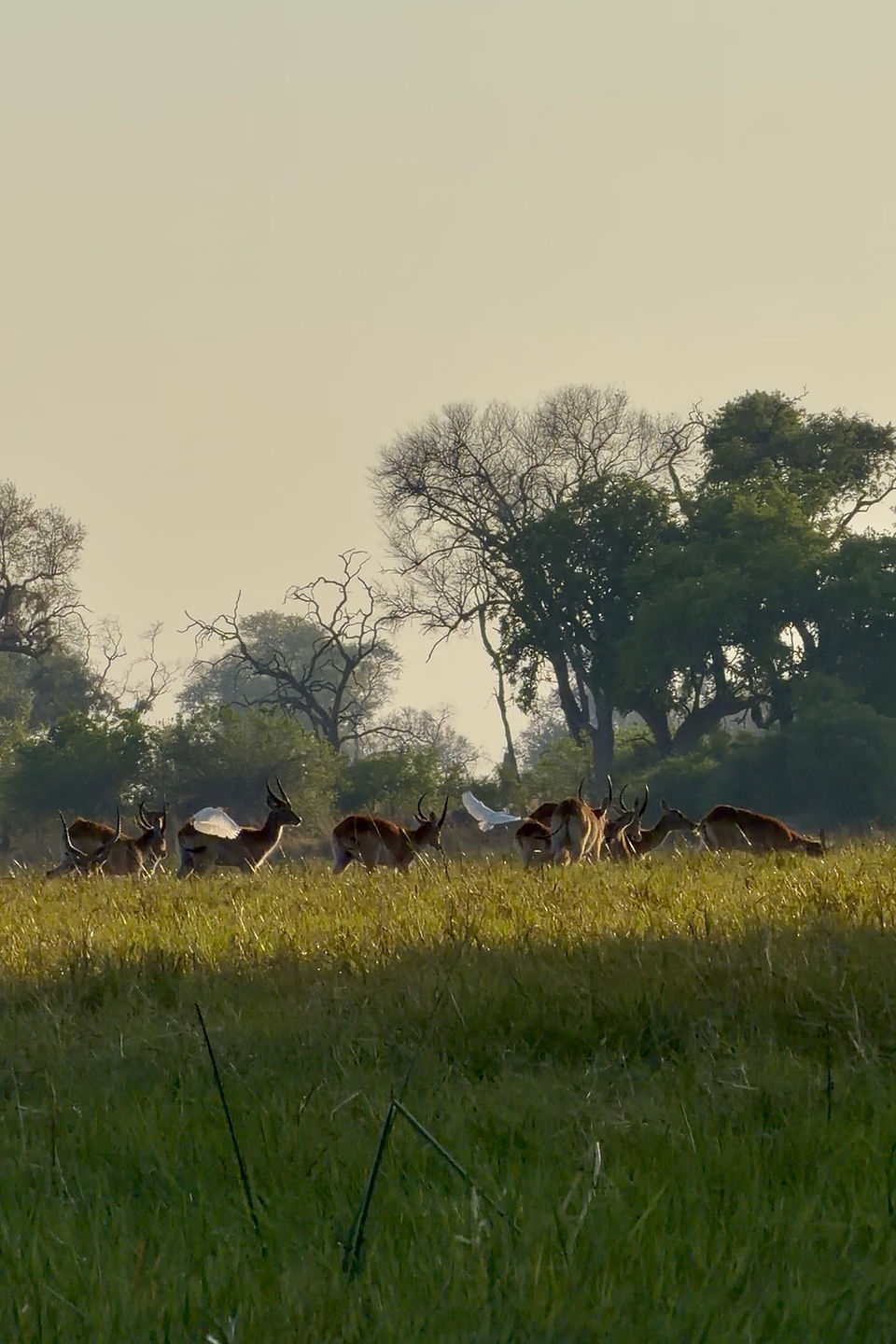


After the mokoro ride, we returned to the vehicle for the final round of our morning game drive before leaving this part of the Okavango Delta. There, perched in a tree and perfectly still, was a beautiful leopard — a quiet, breathtaking sight to end the morning.
It felt almost unreal. Leopards are famously among the most difficult animals to see in the wild — elusive, solitary, and masters of camouflage — yet the Okavango Delta had been incredibly generous to us. During our stay we had seen several, something many safari-goers can only dream of. Spotting one more, calmly resting on a branch in the soft morning light, felt like a final gift from the Delta.
As we continued the drive, we also passed familiar scenes again — buffalo grazing across the plains and other wildlife moving through the landscape as the Delta slowly came to life for the day.
Ending our last drive with another leopard sighting felt almost too perfect — the most fitting goodbye to this part of the Delta.


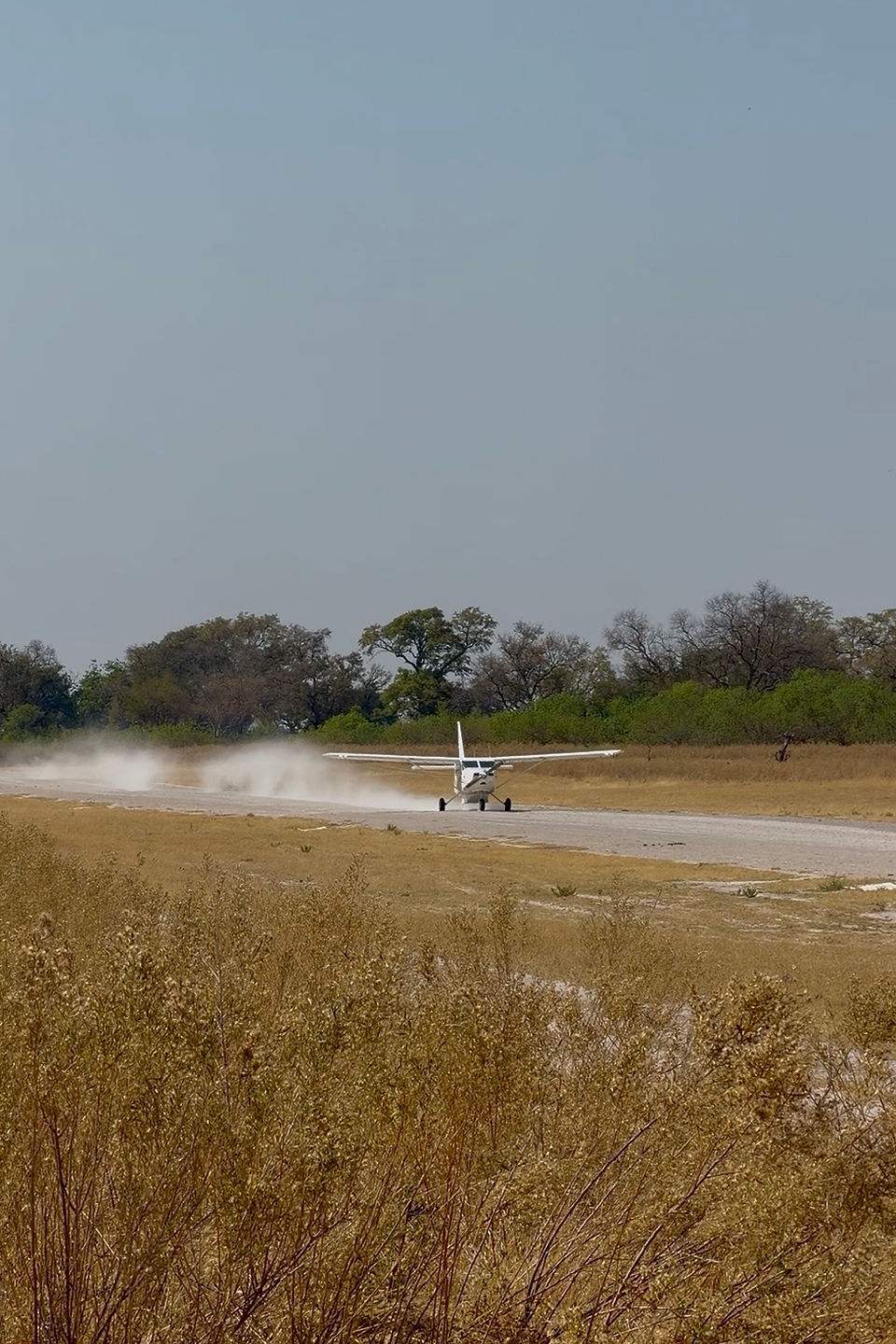
We then took another small flight to Kwara Camp. The views from above were insane: winding waterways glimmered like molten silver, islands of green rose from the delta like emerald jewels, and herds of elephants and buffalo moved slowly below. Even on the landing strip, zebras casually crossed, reminding us how untamed this landscape truly is. The flight was bumpy once again, and I felt a bit queasy, but the panorama kept me mesmerized despite the discomfort.


WHERE TO STAY
KWARA CAMP
Kwara Camp offers a beautiful balance between classic safari charm and relaxed luxury in a private concession of the Okavango Delta. Surrounded by wide floodplains and open savannah, the setting feels expansive and wild, yet the camp itself is warm, welcoming, and effortlessly comfortable.
The tented suites are spacious and thoughtfully designed, with large, comfortable beds, indoor bathrooms, and private outdoor decks where you can sit and watch wildlife pass by. A special highlight is the freestanding bathtub with a view — soaking while overlooking the bush feels almost surreal, as if the wilderness is part of your room. Like many high-end camps in Botswana, complimentary laundry service is included — a true advantage when traveling between bush flights with limited luggage, allowing you to pack light while staying comfortable throughout your journey.
One of Kwara’s standout features is its two swimming pools — a rare and wonderful luxury in the bush. After dusty game drives, cooling off while overlooking the surrounding plains feels incredibly indulgent. We spent quiet hours by the pool watching impalas move through the grass and elephants approach nearby water.
The atmosphere at Kwara is lively yet intimate. Even during brunch, animals wander past in the distance, and cheeky primates keep you on your toes. The sense of immersion never fades — whether you’re relaxing between drives or enjoying a sunset drink overlooking the floodplains.
Activities at Kwara are diverse thanks to its private concession and access to both land and water environments. Depending on the season, experiences may include:
Morning and afternoon game drives
Night drives
Mokoro excursions (water levels permitting)
Motorboat safaris
Seasonal walking safaris


Upon landing, we were met by our guide and tracker and immediately headed for brunch. Before settling down, we did a quick tour of the camp to see the two pools. On the way, a giant elephant appeared, and we had to slowly step back, giving him the right of way — you don’t go in the path of an elephant. At brunch, wildlife continued to drift by, from wild hogs to the occasional elephant, making the meal feel like a front-row seat to the delta’s everyday life.


Afterward, we relaxed at one of the pools, watching impalas and another elephant drinking from the ponds nearby. Our peace was briefly interrupted by a wave of baboons racing toward the pool, fighting and playing chaotically. In the flurry, I stubbed my little toe against the sunbed — it turned the full spectrum of the rainbow and swelled to the size of a sweet potato. Painful, yes, but also absurdly funny. It reminded me how instinctively you react in the wild.


Once we were ready for the afternoon, we hoped for a sight we had been dreaming about for a long time: spotting cheetahs in Botswana. We told Candy, our guide, that we were determined to find them, and he took the mission seriously. Not long after setting out, we found them — two cheetahs resting quietly in the savannah.
They were lying in the grass, calm and unbothered, occasionally stretching their long limbs or grooming themselves. Every so often one would lift its head and look out across the plains before settling down again. Up close, their elegance was striking: lean bodies, long tails, and the dark tear marks that make their faces so distinctive. They looked a little slim, perhaps hungry, but completely at ease in the fading afternoon light.
We stayed with them as the day slowly turned to evening. The cheetahs remained stretched out in the grass while the sky shifted through warm shades of gold and orange. Watching the sunset beside them felt surreal — a quiet, beautiful moment in the middle of the savannah.


When darkness fell, we headed out on a short night drive under the glow of a full moon. The delta felt entirely different in the dark — quieter, more mysterious, and full of small movements in the shadows. One of the highlights was spotting Africa’s “kangaroos,” the springhares. With their large reflective eyes, powerful hind legs, and long bouncing leaps, they looked almost otherworldly as they moved through the grass.
The night still had more to offer. We spotted jackals moving through the grass and later encountered lions in the darkness — a thrilling end to a game drive that had already given us so much.
Dinner that night was quiet and warm, the perfect way to close a day packed with wildlife, laughter, adrenaline, and awe. We went to bed exhausted but completely enchanted by everything Botswana had revealed that day.
DAY 5.


We woke as early as possible, the first hints of light spilling across the delta. Even before leaving the camp, the wildlife greeted us: zebras and impalas grazed side by side in the soft morning light, while herds of buffalo kicked up clouds of dust along the tracks — many of them with tiny calves staying close to their mothers.
In the distance, elephants moved slowly across the landscape, their silhouettes emerging through the golden haze of the early morning. Not far away, a pair of ostriches strode across the open plains, their long legs carrying them effortlessly through the grass. Nearby, a kudu stood gracefully at a pond, lowering its head to drink, its long spiral horns reflected in the still water. Above us, a marabou stork perched in a tree, its large, unmistakable silhouette standing out against the brightening sky.
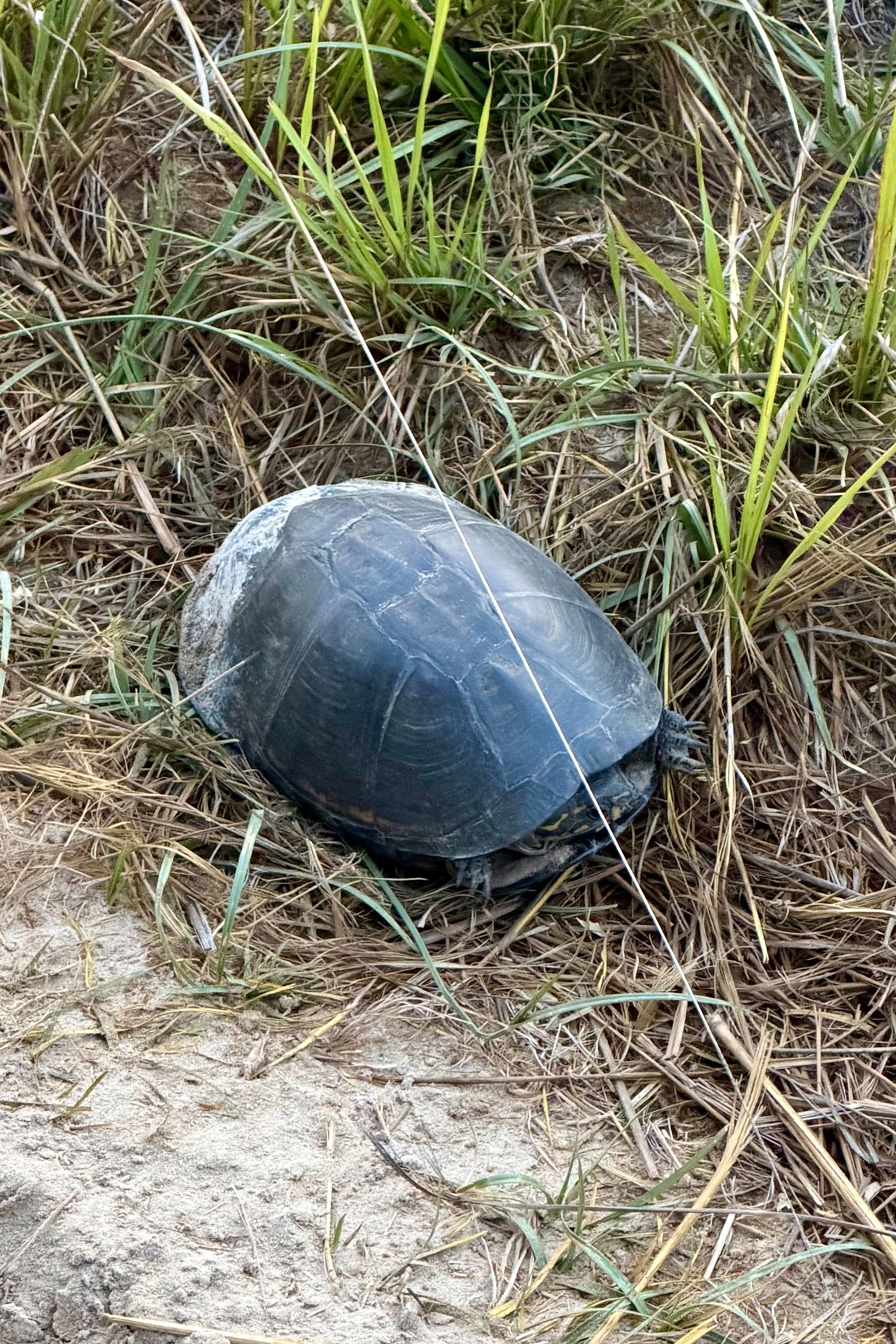
Along the track, we even spotted a terrapin turtle slowly making its way across the ground. A black-backed jackal trotted through the grass not far away, alert and purposeful as it moved across the plains.
Everywhere we looked, the landscape seemed to be waking up with us, full of movement and life.



A pride of lions — mostly lionesses and younger members of the group — lounged comfortably among the fallen branches of a large broken tree. Some were draped across the trunk, others lay tangled together on the ground, their bodies overlapping in a lazy pile of golden fur.
They stretched, yawned, and occasionally nudged or pawed at one another, a quiet mix of playfulness and affection. A few lifted their heads from time to time, calmly scanning the surrounding plains before settling back down again. One pair lay pressed together, almost cuddling against the warm wood, while another young lion stretched out its long legs as if completely unbothered by the world around it.
It was a beautiful scene — the pride resting peacefully, framed by the twisted branches of the broken tree, the soft light catching their coats. There was something both powerful and tender about watching them like this: the future hunters of the savannah looking, in that moment, simply relaxed and at home in their kingdom — their massive paws stretched out in the dust.


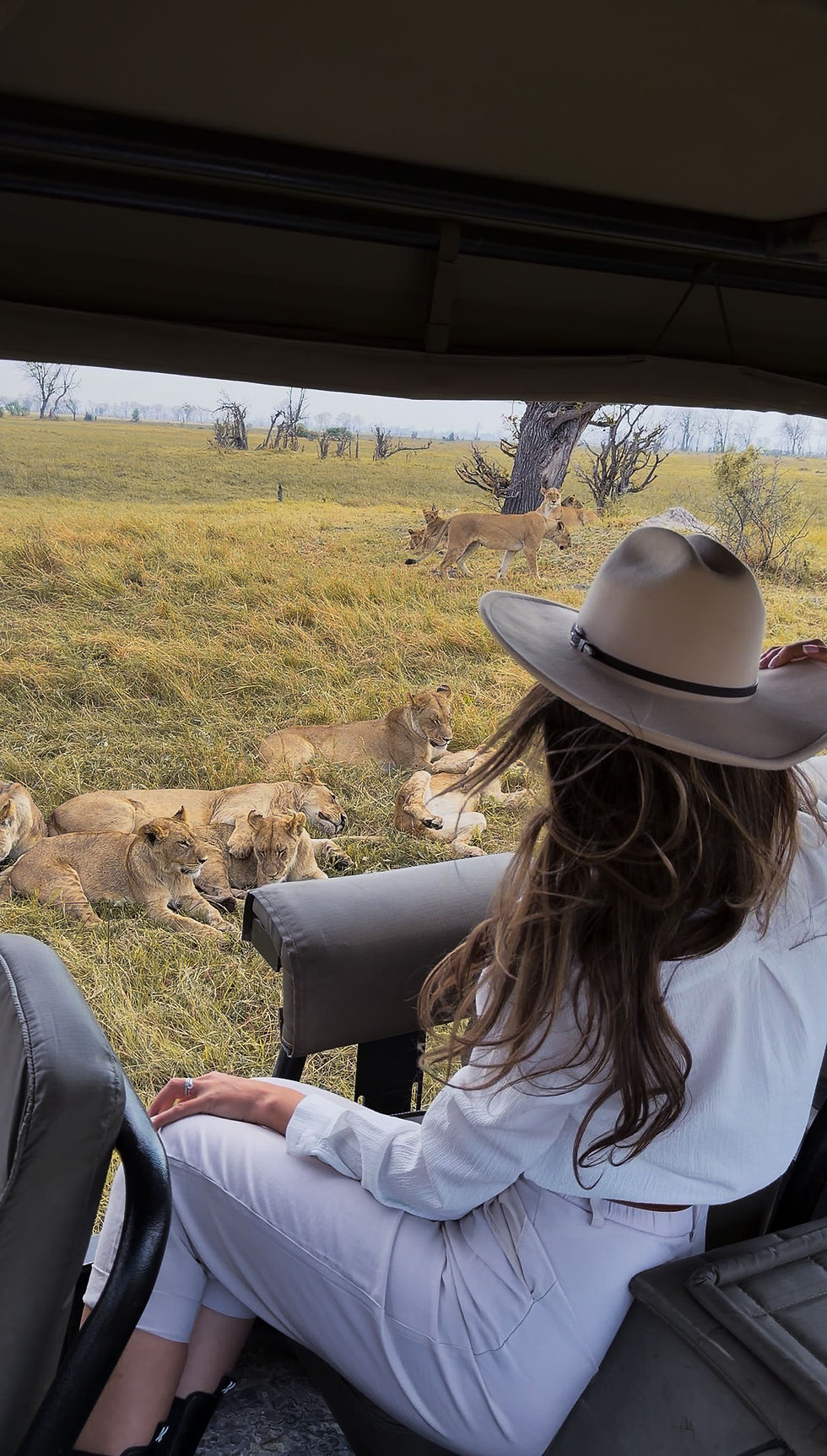
Not long after leaving them, we stumbled upon yet another pride of lions. This one was even larger — a whole family spread across the savannah. At first we spotted a few lionesses resting in the grass, but then more lions began to appear. From different directions across the open plains, one after another slowly approached and joined the group, until we realized just how many there were.
Among them were several cubs, already a bit grown but still clearly young. They stayed close to the lionesses, occasionally playing with each other or wandering a few steps before returning to the pride. At one point we watched as a couple of the cubs approached one of the lionesses and began to drink milk while she lay calmly in the grass — a quiet, intimate moment in the middle of the savannah.
The lionesses rested nearby, some stretched out in the shade, others sitting upright and surveying the plains with calm confidence. The cubs moved between them, sometimes playful, sometimes simply lying down beside the adults.
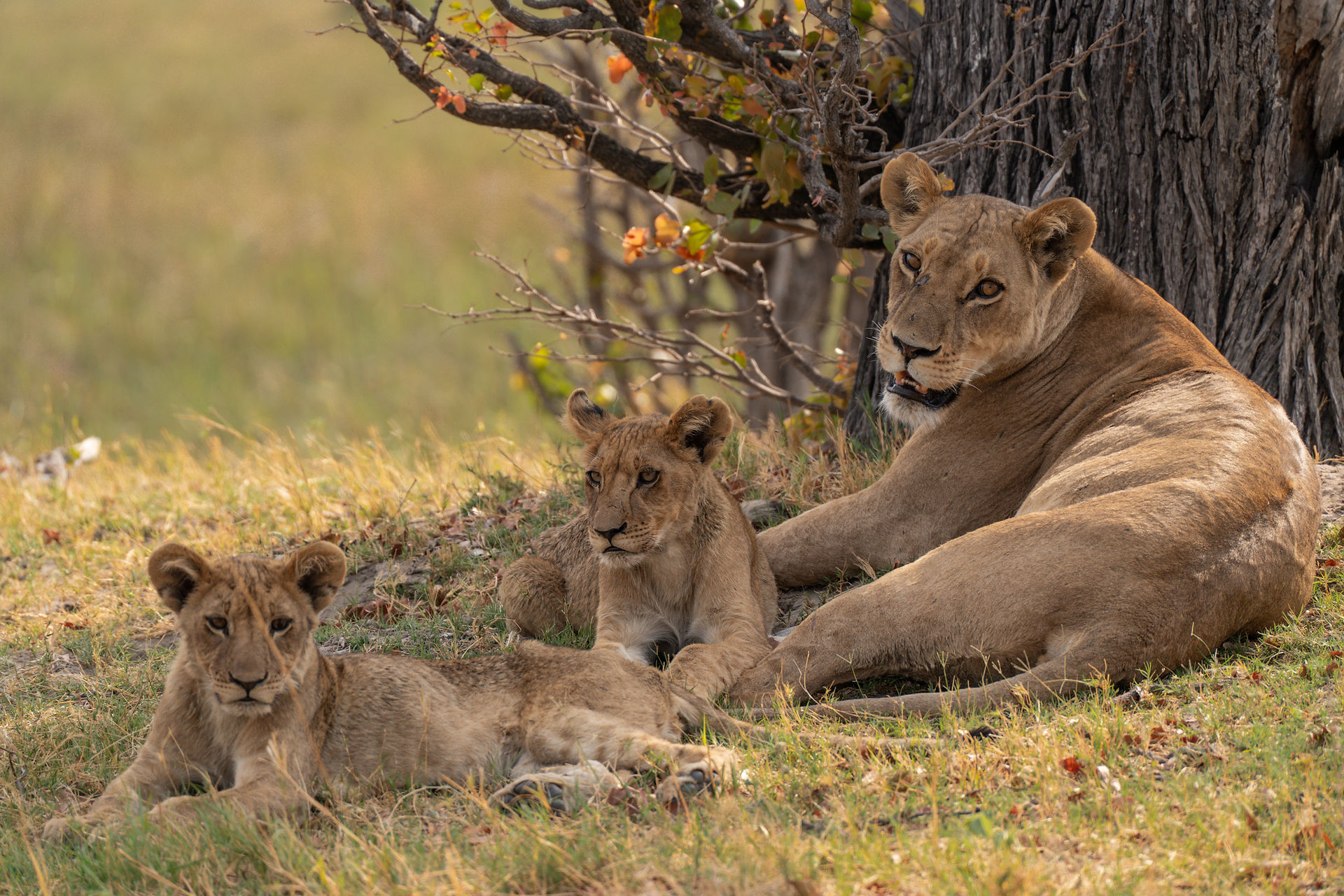

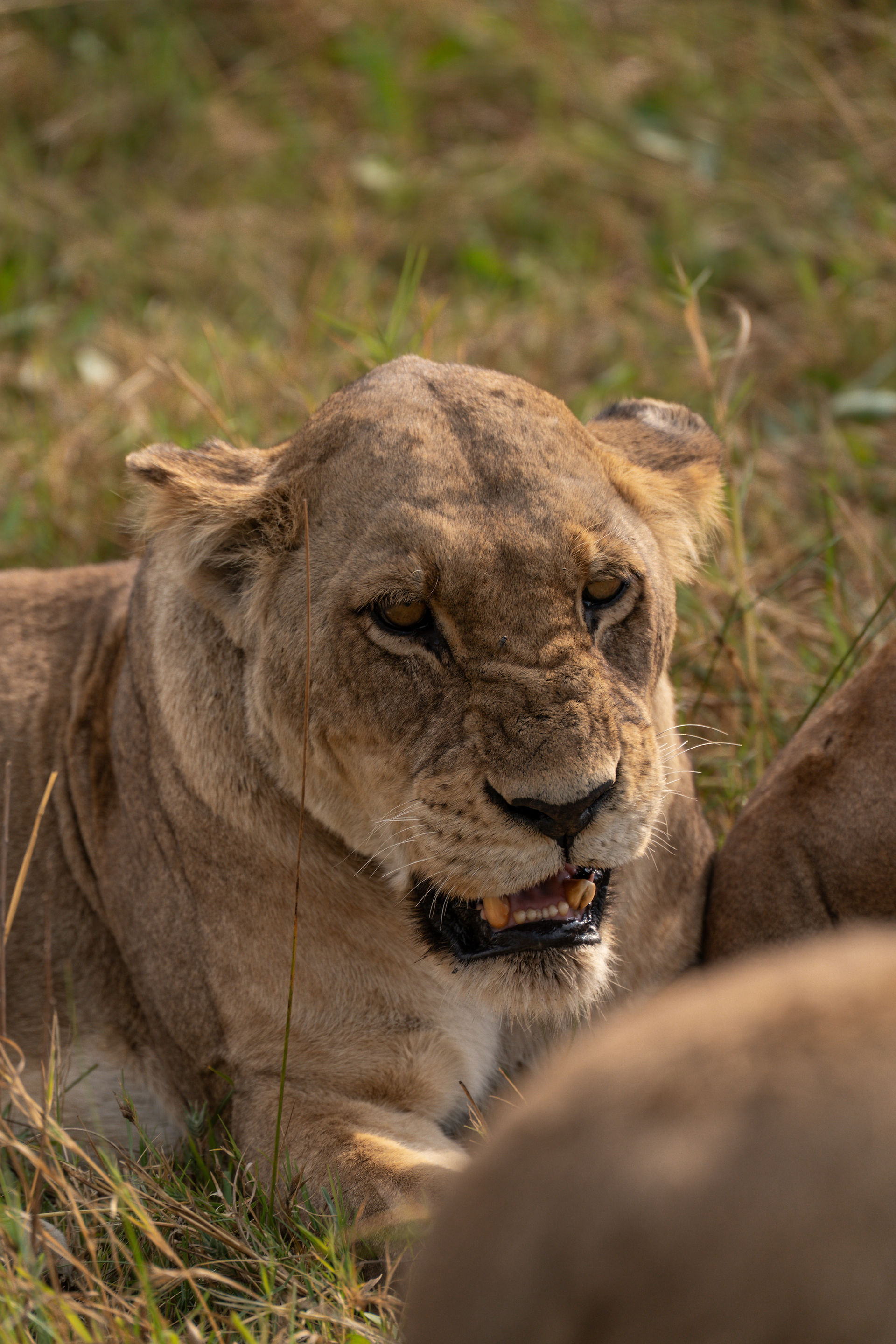


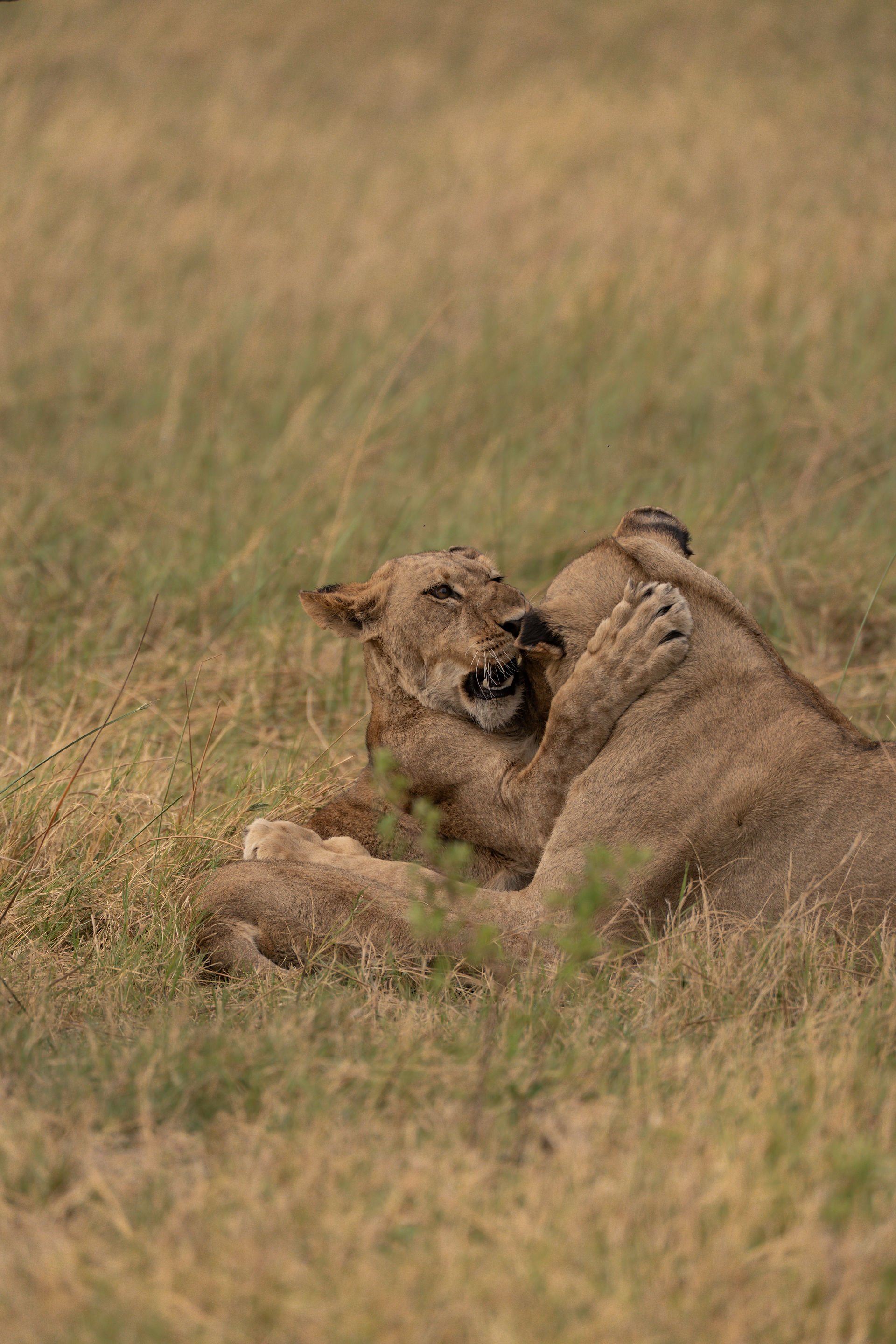


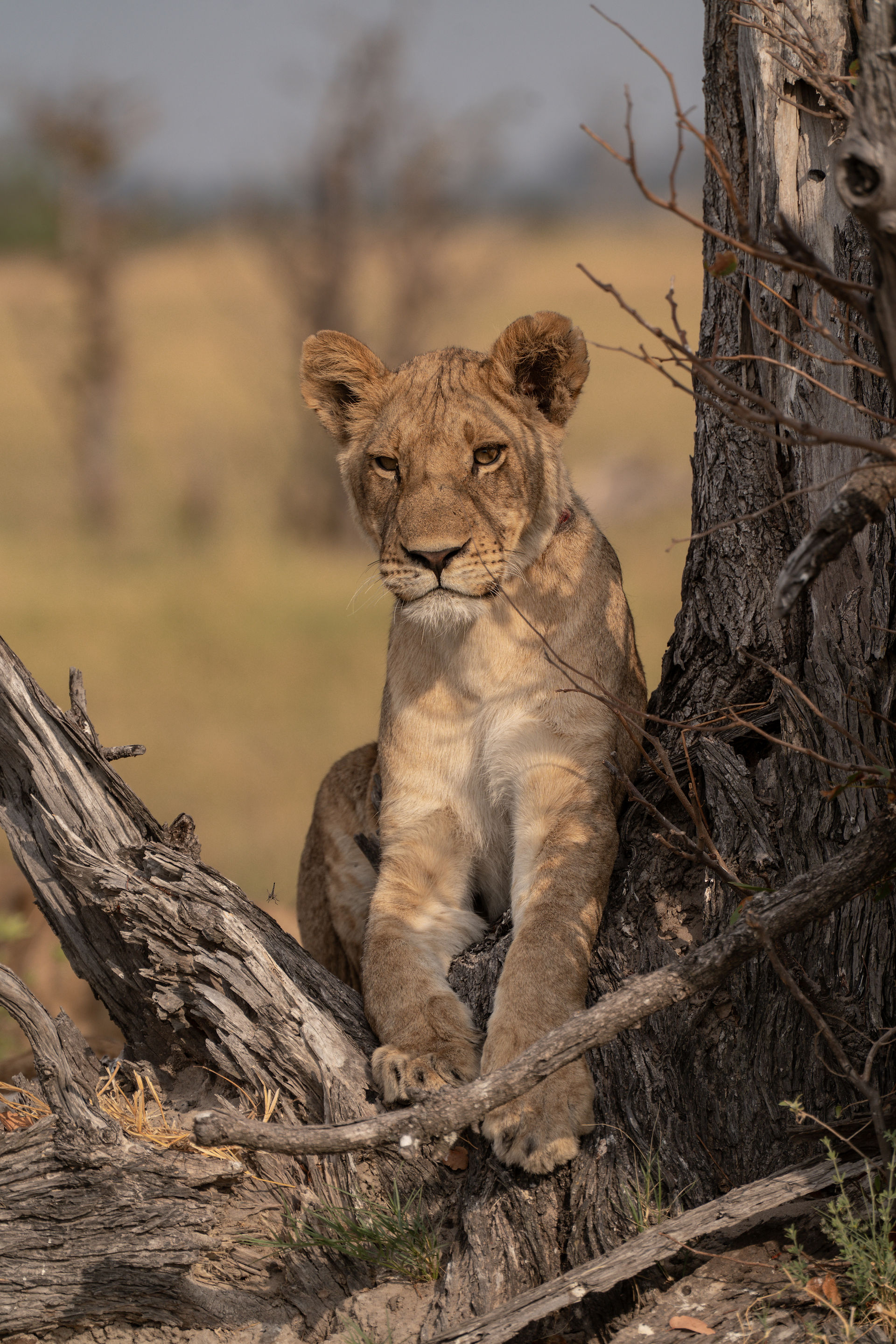
It felt like lions were everywhere. From every direction across the plains another seemed to appear, slowly gathering with the rest of the pride. The Okavango Delta truly felt full of lion energy — powerful, alive, and unfolding all around us.
A little further from this gathering, we also spotted a few male lions resting in a separate area. They lounged quietly in their own territory, their impressive manes catching the light as they lay stretched out on the ground. While the pride of lionesses and cubs formed a lively family scene, the males seemed calm and distant — powerful figures keeping watch over their part of the Delta.


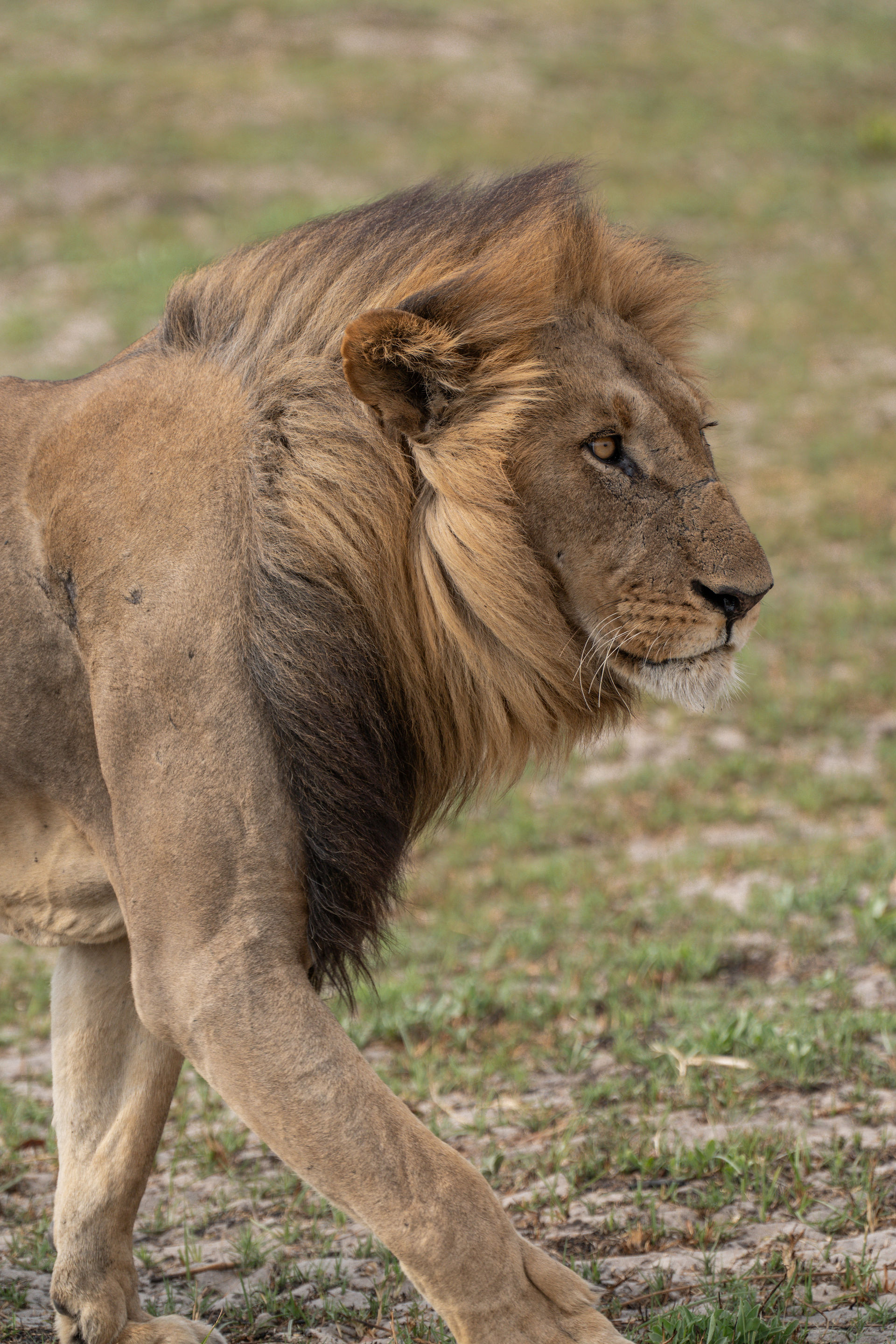
Once we moved on from these mane-fellas (who clearly have access to a better hairdresser than I do — I’d happily take their stylist’s contact), the morning shifted gears a little.
After so many intense encounters, we stopped for a coffee break at a safe spot where we could step out of the vehicle. Waiting for us was a five-star view over the plains: herds of zebras and impalas grazing peacefully while birds glided through the sky above.
We stood there with our coffee cups, but honestly, after a few seconds the coffee became almost irrelevant. The view completely stole the show. Watching the animals move slowly across the landscape in the quiet morning light was far more captivating than anything in the mug.
After a morning full of roaring encounters and powerful predators, the atmosphere here felt completely different — calmer, softer, almost meditative. Just black-and-white stripes moving through the grass, impalas grazing nearby, and birds drifting overhead.


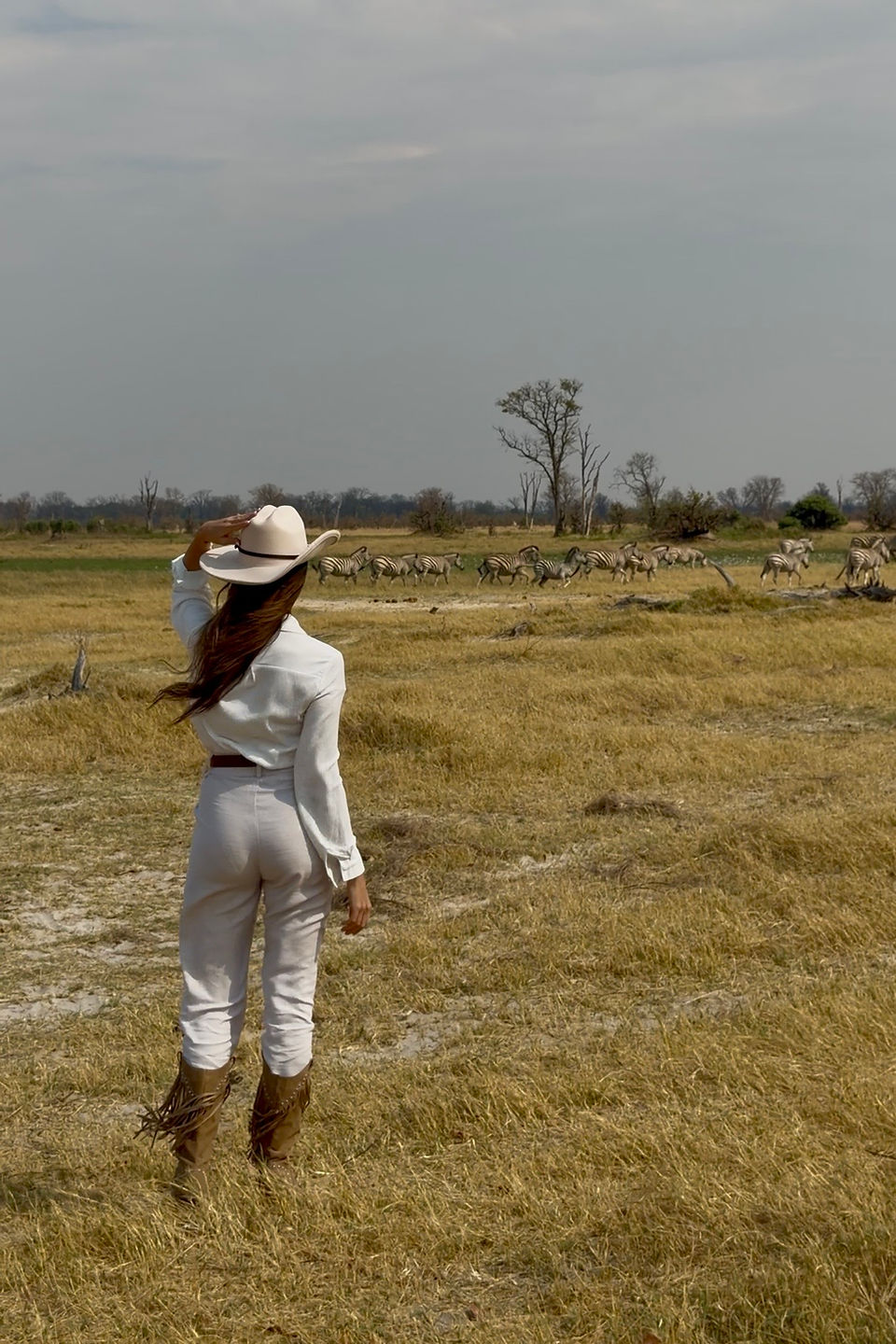


And the zebras… I absolutely love them. There’s something about their stripes and their expressions that always makes them look like they’re smiling. Elegant, a little cheeky, and somehow always dressed for the occasion — like horses in perfectly tailored pajamas.

After lunch and a short rest — during which playful primates dashed across the rooftops of the camp, sliding, leaping, and squabbling with chaotic energy — we set out again.
At one point it sounded less like a safari camp and more like a kung fu training ground above our heads. Tiny feet raced across the roof, followed by dramatic thumps, scrambles, and what can only be described as full-speed slides. Every few minutes another commotion would erupt, as if a new round had started.
During the quieter moments between these rooftop performances, I finally took advantage of one of the most incredible features of our tented suite: the bathtub with a view. Sinking into a warm bath while looking out over the Delta felt almost absurdly luxurious — the kind of experience that makes you pause and think, is this real life?
Later, we stepped out onto our private terrace, which doubled as a perfect little wildlife viewing spot. Even without leaving the camp, there was plenty to watch. Warthogs wandered past with their usual determined trot, impalas grazed calmly in the distance, and birds moved through the trees while the sounds of the Delta carried across the landscape.
All the while, the primates continued their acrobatics overhead, clearly convinced the camp roofs were their personal playground. It was impossible not to laugh — the most entertaining intermission before heading back out for the afternoon drive.


Later we embarked on a double deck safari boat, this time on a larger, stable vessel. It felt completely safe, allowing us to fully enjoy the delta without the tension of the small motorboat.
The delta unfolded like a living painting. Birds of every imaginable shape and colour nested along the banks, their songs filling the air. Baby birds poked their tiny beaks through the nests, chirping for food, while mating displays added bursts of movement and colour. Our sundowner was served amid this spectacle — drinks in hand, the sky ablaze with sunset hues, reflections dancing across the water, and the symphony of calls and flutters enveloping us. Even hippos made their presence known, but from the safety of the boat, they were fascinating rather than frightening.
As dusk fell, the insects became more active. On the return trip, covering your mouth and eyes is wise if you don’t want to risk tasting or getting bugs in your eyes, and generous insect repellent is essential. Despite the small inconveniences, the experience was nothing short of magical. Around this time, we also saw groups of elephants, including mothers with their babies, slowly making their way toward the water. Some stepped carefully into the shallows while others crossed through the channels, the smaller ones staying close to their mothers. Watching entire families move together in the fading golden light was a beautiful and peaceful moment that perfectly captured the rhythm of the delta at dusk.
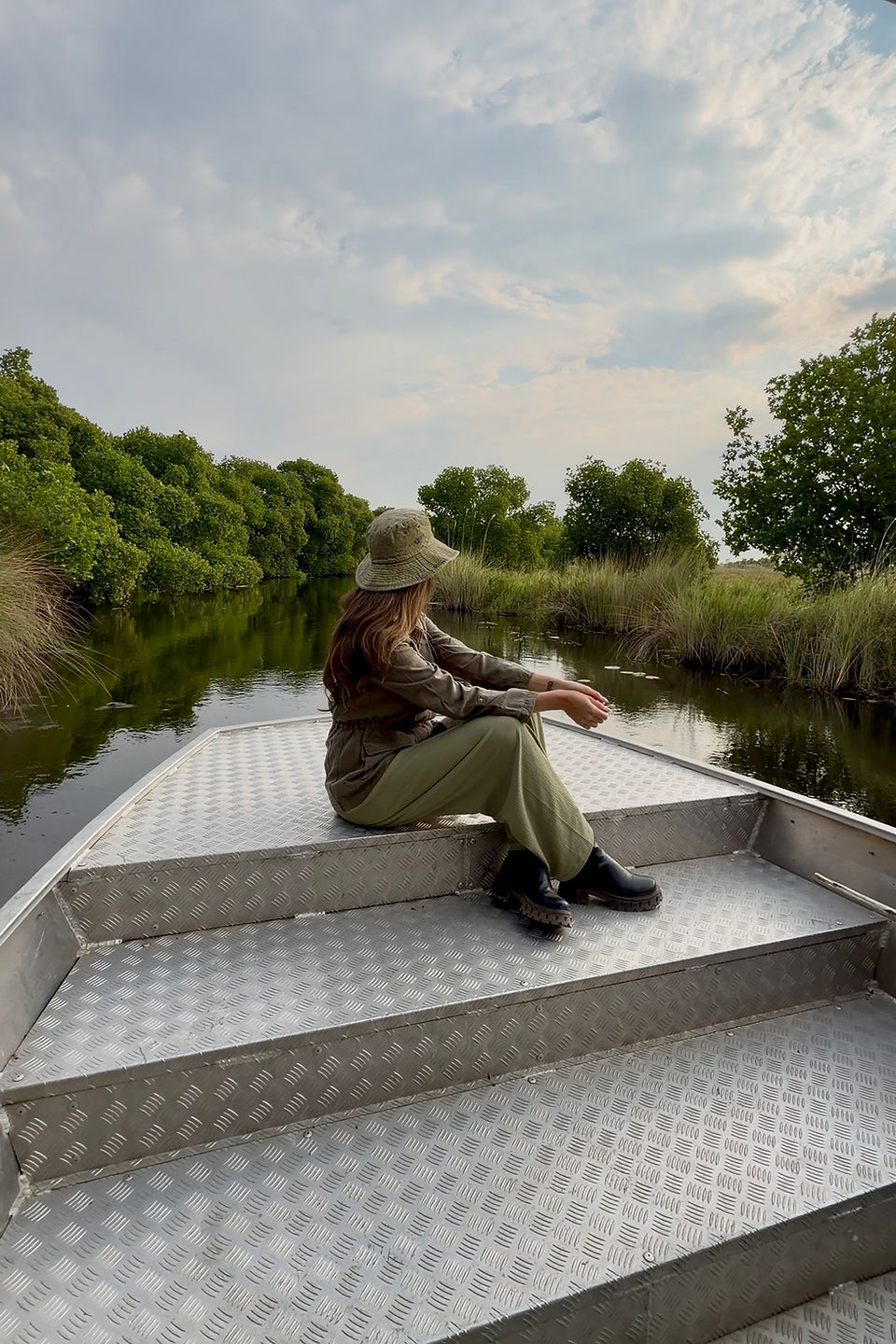


After the boat safari, we returned to camp for dinner, our minds still spinning from the vibrancy and intensity of the day. Even on the short drive back through the darkness, the bush was still alive — we spotted hyenas again and a few other animals moving quietly through the night, their eyes briefly reflecting in the vehicle’s lights before disappearing back into the wild. Exhausted but exhilarated, we went to bed early, ready to embrace our final morning in the Okavango Delta — a last chance to soak in Botswana’s wild, intimate magic.
DAY 6.
This morning was supposed to be our last game drive in the Okavango Delta, but Nico was feeling a bit… let’s say, “extra busy with the bathroom.” Classic food poisoning, something that happens to him from time to time. I, on the other hand, had stayed perfectly fine — maybe being vegan helps, wink wink. He told me to go on the morning drive without him, since he wouldn’t manage being in the vehicle. I left instructions with the staff to check on him, bring any needed medicine, and handle breakfast. Then I set off alone in the open safari vehicle, accompanied only by our guide and tracker, unaware of what I would discover once I returned.
The drive itself was magical. We saw zebras, steenbok, impalas, buffalo, and countless birds — ducks swimming with their tiny ducklings, so impossibly cute. We found a giant ostrich egg lying alone in the middle of nowhere. I asked our guide to leave it exactly where it was because I didn’t want the ostrich mom to come back and not find her egg. I’m not even sure it was really lost, but there was no adult ostrich in sight.


Later, we followed the fresh tracks of a mother and cub leopard. We tracked them for so long that I almost lost hope we’d find them, but eventually the trail led us to a tree where the cub was safely hidden. The mother was nowhere to be seen — likely out hunting — leaving her little one alone for the moment. Time was pressing, as Nico and I had a flight to catch, and I was increasingly worried about him. We slowly gave up on waiting for her return, making the difficult decision to hit the road early so I would have enough time to get back and check on Nico before our departure.
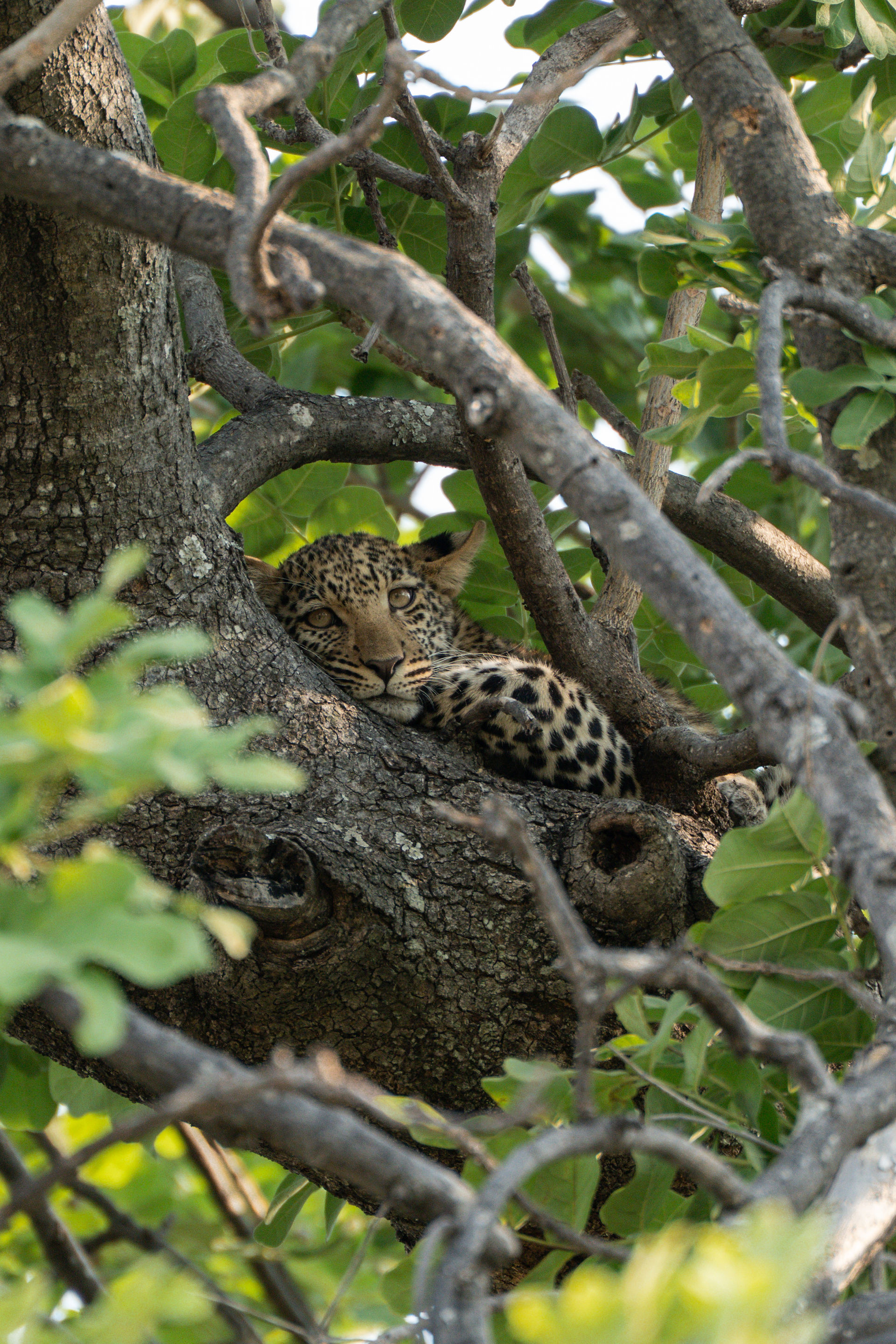


On the way back, we spotted two male lions against a breathtaking backdrop. They approached each other, touching gently — almost hugging — and it was one of those moments that makes you stop breathing. The perfect way to end a Botswana adventure.


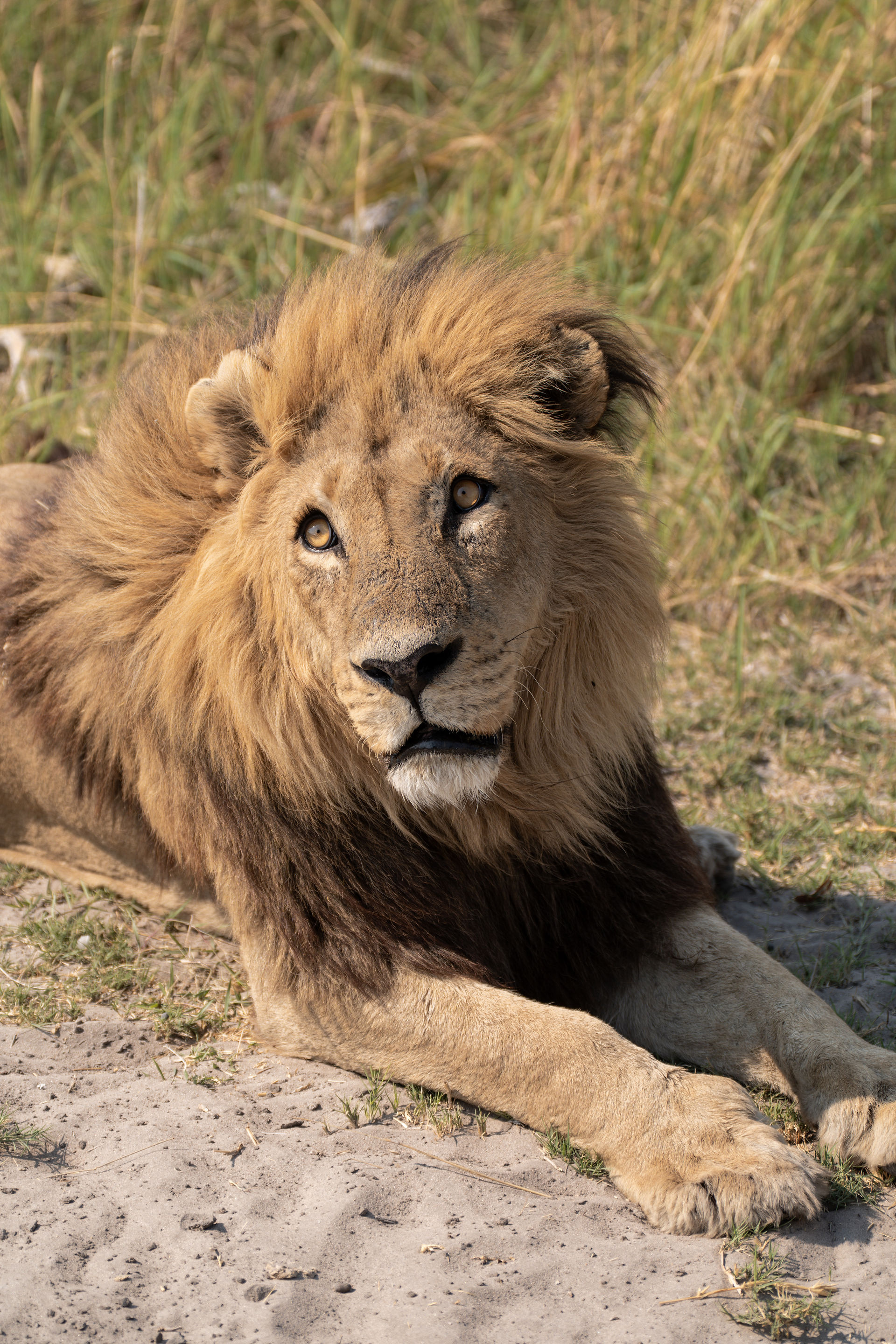


The delta seemed determined to say goodbye properly with a wonderful final symphony of wildlife.
When I arrived back at the camp, I hurried to see Nico. Staff were coming out of our room, and it looked and felt terrifying. I asked how he was, and a lady reassured me that he would be fine. I panicked even more and rushed inside. He was under the blanket, not responding to my calls. Someone was giving him medicine. He had received a bunch of pills while I was away — I wasn’t sure it was safe to mix them all. He was burning up, with a 40°C fever. I asked them to check his blood pressure too, and they told us we would probably need to go back home and skip the rest of our journey to Zambia. They also did a malaria test, which fortunately came back negative.


We still had two hours before leaving the camp, so we decided to wait and see how he felt, letting Nico decide. Finally, we boarded the plane to Kasane with the plan to visit a hospital there and figure out whether to continue our overland journey to Zambia or return to Switzerland. We took tablets, ice and cold towels to help him feel better during the flight. By the time we landed, he was already feeling much better and insisted he didn’t want to visit the hospital in Kasane. His fever had dropped, and he seemed fine. I was a bit worried whether continuing was the right choice, but he knows best how he feels, so we pressed on with the idea to go to the hospital in Zambia if needed.
The real surprise came at the Zambia entry border: a fever check before crossing. We were terrified we might not be permitted to continue, but the thermometer showed no fever, and we were cleared to proceed. Perhaps it wasn’t the safest choice to push on, but in the end, everything worked out, and we could continue our adventure.
Looking back on our time in Botswana, it felt like we had been let into a secret — a world almost entirely to ourselves. The country stretches over 580,000 km², yet with just 2.6 million people, it offers vast, open horizons and a wilderness that truly belongs to the wild. From the stark, silent Makgadikgadi Pans, where Timon and his clan of meerkats made me their lookout post, to the shimmering channels of the Okavango Delta as seen from above, Botswana revealed itself as a living mosaic of life. Gliding over the delta, the waterways twisted and reflected the sky, dotted with islands and punctuated by wildlife moving in quiet harmony. Cheeky primates tested the camp rules, playful and bold, while elusive leopards became our daily “hello buddy,” weaving into our drives, our dinners, and our memories.
Each encounter, from the smallest footprints in the sand to the grandeur of a sunset over the pans, reminded us how intimate and raw this landscape is. Botswana isn’t a place to simply watch; it’s a place to be part of, where the wild feels entirely yours and every moment carries its own magic. The patchwork of salt pans, waterways, islands, and endless skies created a rhythm that was both untamed and breathtaking, leaving a lasting impression on our hearts.
Botswana doesn’t shout. It whispers. And if you listen closely enough, it stays with you forever.


Comments