
Cyprus: Turquoise Coves, Mountain Villages & Mediterranean Contrasts

Updated: Sep 30

Yasas from Cyprus — an island of turquoise coves, ancient monasteries, mountain villages, palm-lined promenades, Mediterranean sunsets, and fascinating contrasts. A place where Byzantine churches, Ottoman influences, Venetian walls, and modern beach resorts coexist on one relatively small island surrounded by unbelievably clear water.
I visited Cyprus in June together with my mother, which honestly made the trip feel even more special. It was shaping up to be the perfect women’s getaway until an unfortunate accident changed our plans. After a fall, my mother needed to rest for the remainder of the trip, so I ended up continuing the second half of our Cyprus adventure on my own. Thankfully, she is well now, but it was certainly not how either of us had imagined the trip unfolding.
Despite the unexpected change of plans, Cyprus quickly won me over. Between exploring quiet villages, relaxing by the sea, and discovering places filled with history, every day felt completely different from the last.
One story that’s impossible to miss on the island is the legend of Aphrodite, the goddess of love and beauty, who is said to have emerged from the sea at Petra tou Romiou near Paphos. We didn’t make it there this time, but it’s already one of my reasons to return.
What I’ll remember most, though, is the relaxed Mediterranean rhythm—warm evenings by the sea, long lunches, iced coffee under palm trees, and sunsets that made time seem to slow down.

GENERAL INFORMATION

Cyprus has one of the richest and most complex histories in the Mediterranean. Because of its strategic location between Europe, Asia and the Middle East, the island has been influenced and ruled by many different civilizations throughout history including the Ancient Greeks, Romans, Byzantines, Venetians, Ottomans and British.
The island is deeply connected to Greek mythology and is famously considered the birthplace of Aphrodite, the Greek goddess of love and beauty.
During the Venetian period in the 16th century, large defensive walls were built around cities such as Nicosia and Famagusta to protect the island from Ottoman attacks. Many of these historical structures still exist today.
Cyprus later became part of the Ottoman Empire before eventually coming under British rule in 1878. The island gained independence in 1960. Greek influence on Cyprus dates back more than 3,000 years, while the Turkish Cypriot community developed after the Ottoman conquest in 1571. As a result, both Greek Cypriot and Turkish Cypriot communities have shared the island for centuries, helping shape its culture, traditions and identity.
One of the most important and sensitive moments in Cyprus’ modern history happened in 1974 following a Greek-backed coup and subsequent Turkish invasion, which led to the division of the island. Today, Cyprus remains divided between the Republic of Cyprus in the south and the Turkish-controlled northern part of the island.
Nicosia, also known as Lefkosia, remains the last divided capital city in Europe, separated by the UN-controlled Green Line.
Despite its complicated history, modern Cyprus blends Mediterranean lifestyle, ancient heritage and tourism in a very unique way.
Location: Cyprus is an island country located in the eastern Mediterranean Sea, south of Türkiye, and close to Greece, Lebanon, Israel and Egypt.
Symbol: Cyprus is strongly associated with Aphrodite, olive trees, Mediterranean beaches, Orthodox monasteries, and the island’s turquoise coastline. The mouflon, a wild mountain sheep native to Cyprus, is also considered one of the national symbols of the island.
Size: Approximately 9,251 km² (3,572 mi²)
Capital: Nicosia, known locally as Lefkosia, is the capital of Cyprus. Unlike most European capitals, parts of the city are still separated by a buffer zone, reflecting the island’s complex past and present. Lefkosia is the city’s Greek name and is still the official name used in Greek, while “Nicosia” is the internationally recognized English version derived from historical European usage.
Population: Approximately 1.2 million people.
Languages: Greek and Turkish are the official languages. English is very widely spoken throughout the island, especially in tourist areas, restaurants, hotels and transportation.
Useful Greek phrases:
Yasas (Γειά σας) — Hello
Kalimera (Καλημέρα) — Good morning
Kalispera (Καλησπέρα) — Good evening
Efharisto (Ευχαριστώ) — Thank you
Parakalo (Παρακαλώ) — Please / You’re welcome
Signomi (Συγγνώμη) — Excuse me / Sorry
Nai (Ναι) — Yes
Ohi (Όχι) — No
Even learning a few simple words is appreciated by locals and usually results in very friendly interactions.
Currency: Euro (€)
Cyprus is largely card-friendly and most places accept contactless payment, although carrying some cash is still useful for buses, smaller cafés or local shops.
Local time: Eastern European Time (EET) — UTC +2 ; Summer: UTC +3

Best time to visit Cyprus:
Spring (April–May)
Probably one of the best periods to visit.
Pros:
Warm but comfortable temperatures
Green landscapes and flowers
Ideal for sightseeing and beaches
Fewer crowds
Cons:
Sea slightly cooler than summer
Summer (June–September)
The classic beach season.
Pros:
Perfect beach weather
Very warm sea temperatures
Lively atmosphere and nightlife
Cons:
Very hot temperatures
Crowded beaches and resorts
Strong midday sun
What to pack:
Comfortable sandals or sneakers
Swimwear
Light summer clothing
Sunglasses and sunscreen
A light layer for mountain areas
Modest clothing for monasteries and churches
Food culture: Cypriot cuisine is heavily influenced by Greek and Mediterranean flavours and focuses on fresh ingredients, olive oil, herbs, grilled foods and local cheeses.

Typical foods and drinks:
Halloumi — Cyprus’ famous grilled cheese
Meze — a selection of many small dishes shared at the table
Souvlaki — grilled meat skewers
Sheftalia — traditional Cypriot sausages wrapped in caul fat
Kleftiko — slow-cooked lamb traditionally baked for hours until incredibly tender
Loukoumades — honey-covered dough balls
Shoushouko (Soutzoukos) — a traditional sweet made from almonds or walnuts coated in thickened grape juice
Fresh seafood
Greek salad
Iced coffee / frappé
Local wines
Zivania — a strong traditional grape spirit often considered Cyprus’ national drink
Food portions are often generous and meals are usually slow, social and meant to be shared.
Economy: Tourism is one of the most important sectors of the Cypriot economy and plays a major role in supporting jobs and local businesses across the island. Popular destinations such as Ayia Napa, Protaras, Paphos and Larnaca attract millions of visitors each year.
Alongside tourism, Cyprus also relies on financial services, shipping, real estate and international business. Agriculture remains important in some regions, with products such as citrus fruits, olives, grapes and the famous Halloumi cheese contributing to local production and exports.
Challenges facing Cyprus: Despite its beautiful coastline, relaxed lifestyle and thriving tourism industry, Cyprus faces several challenges that aren’t always visible to visitors.
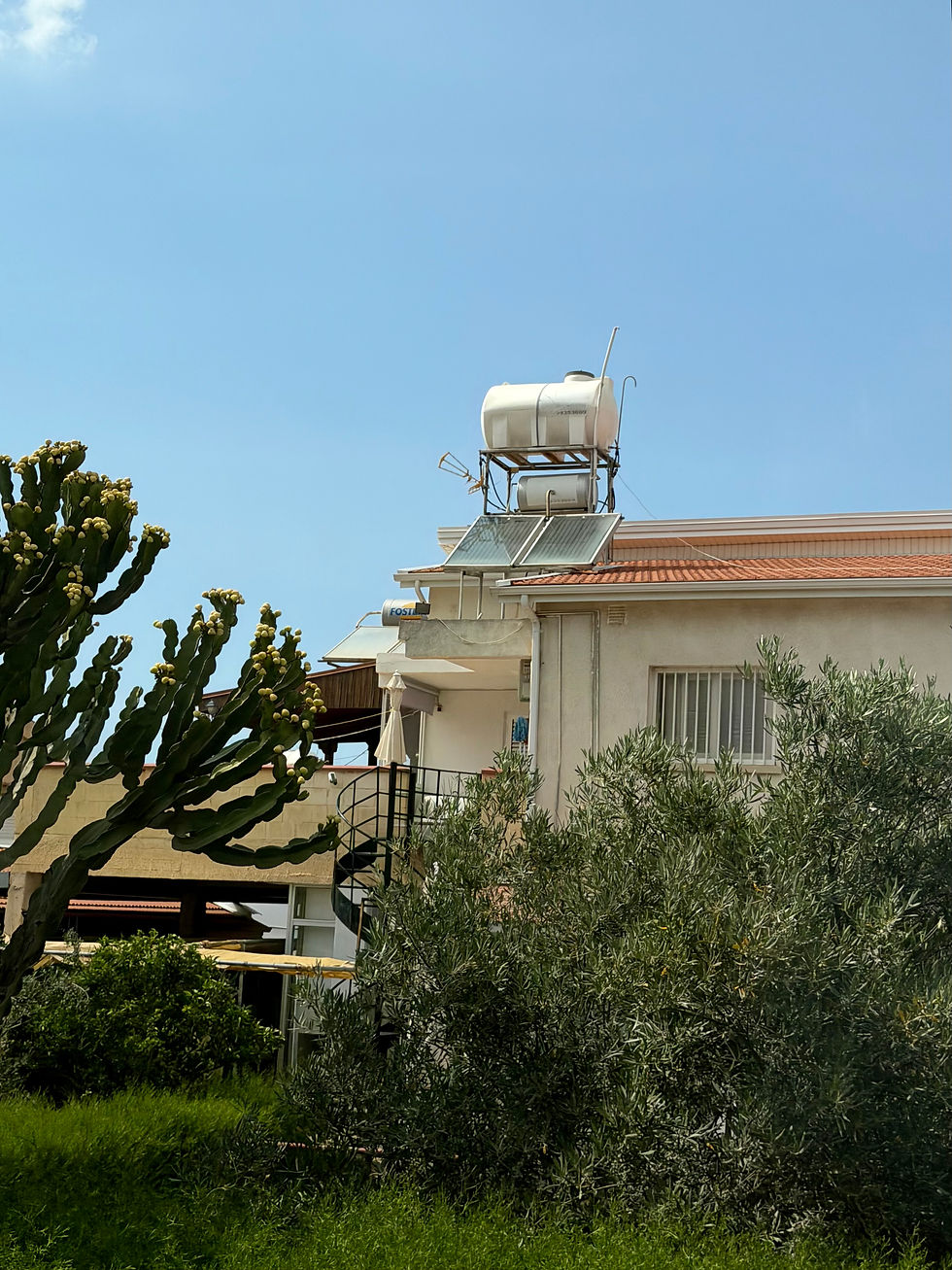
One of the biggest issues is water scarcity. Cyprus has a hot, dry climate and receives limited rainfall, especially during the summer months. The island relies on reservoirs, groundwater, desalination plants and careful water management to meet demand. In some areas, water conservation remains an important part of daily life, which is why large water storage tanks can be seen on the roofs of many homes. These tanks help store water for household use when supply is limited.
Visitors may also come across public water stations, particularly in mountain villages, where fresh spring water is available at very low cost. Locals often fill large bottles and containers with mountain water to take home.
Electricity costs are relatively high compared to many other European countries. As a result, solar panels are extremely common across the island. Thanks to Cyprus’ abundant sunshine, many households use solar energy to heat water, helping reduce energy expenses.
Another challenge is the island’s strong dependence on tourism. While the summer season brings visitors and economic activity, some coastal areas become much quieter during the off-season, and employment opportunities can be more limited outside the tourism sector. The tourism industry is also vulnerable to external events, including economic uncertainty and regional conflicts. In 2026, tourist numbers were affected by the conflict in the Middle East, with some travellers choosing alternative destinations despite Cyprus remaining safe and welcoming for visitors.

Another characteristic of Cyprus is its large population of stray cats. They can be found almost everywhere — wandering through villages, relaxing near beaches, sleeping beside ancient ruins or waiting outside cafés and restaurants. In some places, feeding stations and donation-operated food dispensers have been installed to help care for them. While the cats have become part of the island’s charm and are loved by many visitors, their large numbers also reflect the ongoing challenge of managing stray animal populations.
HOW TO GET AROUND
Renting a car:
Renting a car gives the most flexibility, especially for exploring beaches, villages and mountain areas at your own pace.
One important thing to remember is that Cyprus drives on the left side of the road because of British influence.Public buses:
Cyprus has affordable intercity and local buses connecting most major tourist areas.
Intercity Buses are useful for routes between Larnaca, Nicosia, Ayia Napa, Protaras, Limassol.
In Ayia Napa and Protaras, local buses such as Bus 101 and Bus 102, make beach hopping and exploring Cape Greco very easy.
Bolt:
Cyprus uses Bolt instead of Uber. It works well in larger tourist areas and is convenient for shorter rides.
ATV | Buggy:
While rental cars are the most convenient way to explore Cyprus, especially if you plan to visit mountain villages and more remote areas, in Ayia Napa and the surrounding Cape Greco area, buggies and ATVs are extremely popular and offer a fun way to explore beaches, sea caves and scenic coastal roads.

Things to know before visiting Cyprus:
Sun exposure: The Mediterranean sun is extremely strong, especially during summer. Sunscreen, water and avoiding midday heat are essential.
Dress codes: Monasteries and churches often require modest clothing. Very short dresses, exposed shoulders or swimwear are not appropriate inside religious sites.
Crossing into Northern Cyprus: EU citizens can generally cross checkpoints in Nicosia with either a passport or national ID card.
Electricity: Cyprus uses British-style Type G plugs.
Atmosphere: Cyprus moves at a slower pace. Long dinners, relaxed evenings, coffee culture and seaside walks are very much part of everyday life on the island.
DAY-BY-DAY ITINERARY
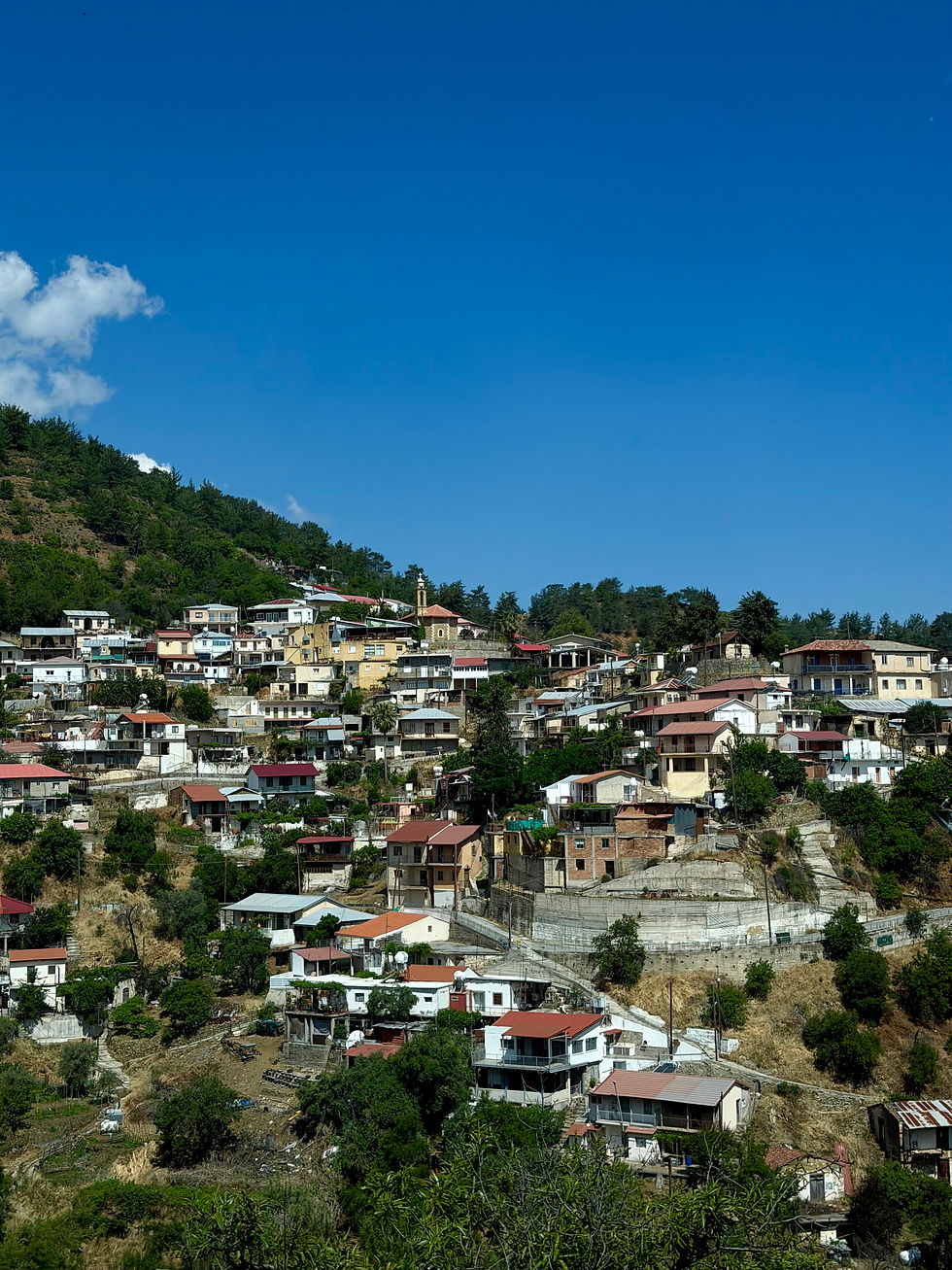
Our journey through Cyprus felt like discovering completely different sides of the island within only a few days — from the relaxed seafront atmosphere of Larnaca and its palm-lined promenades to the mountain villages and monasteries of the Troodos region, and from the dramatic cliffs, turquoise coves and beach life of Ayia Napa and Protaras to the fascinating history that continues to shape Cyprus today.
What surprised us most was how diverse Cyprus actually is. One moment we were walking through traditional stone villages surrounded by pine forests, and only a few hours later we were enjoying crystal-clear Mediterranean water beneath white coastal cliffs.
Each place had its own completely different atmosphere, yet together they created the perfect balance between history, culture, nature and relaxation.
Below, I’ll take you through our 5-day journey across Cyprus day by day.
DAY 1.

LARNACA
Larnaca is often overlooked compared to places like Ayia Napa or Paphos, but it actually turned out to be one of the most convenient places to start our Cyprus trip. Located on the southern coast of the island, Larnaca combines city life, beaches, palm-lined promenades and a more laid-back atmosphere than some of the busier resort towns.
The city is also one of the oldest continuously inhabited places in Cyprus, with a history dating back thousands of years. Today it is known for its seaside promenade, Finikoudes Beach, Saint Lazarus Church and its Mediterranean atmosphere. What I liked most immediately was that Larnaca felt authentic and local while still being very convenient for tourists.
We landed at Larnaca International Airport at around 8 PM and, instead of taking a taxi, we decided to use public transport to get into the city. Cyprus is actually very easy to navigate around Larnaca, especially if you stay near the centre.
From the airport, we initially planned to take Bus 425, which connects Larnaca Airport with the city centre and the Finikoudes seafront area. However, despite arriving at the stop on time, the bus closed its doors and departed without taking us. Fortunately, there are several bus options available from the airport, so we simply took the next bus to Larnaca Bus Station, which is also located close to Finikoudes and only a short walk from our accommodation.
Our home for the next two nights was a sea-view apartment on Finikoudes in Larnaca. We chose it mainly because of its central location, knowing we would spend most of our time exploring the island rather than staying in the room. The apartment offered views of the Mediterranean Sea and was conveniently located within walking distance of cafés, restaurants, the marina and many of Larnaca’s main attractions.
While the location on Finikoudes was excellent, the accommodation itself felt somewhat dated and our overall experience was less positive than expected. During our stay, despite having another night already booked, we found a note left in our room stating that additional charges would apply because the property believed we had not checked out on time. This was particularly confusing as we had placed a “Do Not Disturb” sign on the door and were still legitimate guests. Although the situation was later dismissed as a mistake, it created unnecessary confusion and left us disappointed with the level of communication and service.

Even though it was already evening by the time we arrived, we still decided to head out for a short walk along the promenade. One of the best things about staying in this part of Larnaca is that the beach is literally right outside the hotel. After a long travel day, hearing the sound of the waves and seeing the palm-lined seafront was a lovely introduction to the city. The only thing that immediately stood out was the humidity — even after sunset, the air felt surprisingly warm and heavy, making it clear that Cyprus was already deep into summer.
Finikoudes Beach is one of the most famous places in Larnaca. The name “Finikoudes” comes from the rows of palm trees lining the promenade, which give the whole area a relaxed Mediterranean atmosphere.
Since we had an early start planned for the next morning, we kept the evening relaxed before heading back to the apartment.
DAY 2.
TROODOS MOUNTAINS, KAKOPETRIA & KYKKOS MONASTERY

The next day we woke up early because we had booked an organized excursion with Eman Travel to the Troodos Mountains. Our pick-up was at 7:45 AM from the Intercity Bus stop on Athinon Street in Larnaca, conveniently located only a few minutes away from our hotel.
One thing worth mentioning is that the excursion did not begin on the main coach. After being picked up in Larnaca, we were first transported by a smaller shuttle bus together with other travellers from the area. We were then taken to a meeting point where everyone was transferred onto a larger tour bus that continued into the mountains.

As we left the coast behind, the scenery slowly started changing. The dry, sunny seaside landscape turned into green hills, pine forests and winding mountain roads. It honestly felt like a completely different side of Cyprus — quieter, cooler and much more traditional. Most tourists only know Cyprus for its beaches, but the Troodos region shows a much more authentic and local atmosphere.
Our first short stop was near Astromeritis for a coffee break before continuing deeper into the mountains. The higher we climbed, the fresher the air became and the more beautiful the views were. The roads curved through dense pine forests and small villages hidden between the mountains.
THRONI
After the coffee stop, we continued toward Throni, where the tomb of Archbishop Makarios III is located. Makarios was the first president of independent Cyprus and remains one of the most important figures in the country’s modern history. He was not only a political leader but also an Archbishop, which made him a very symbolic figure for Cypriots.
The tomb is located high in the mountains, surrounded by pine forests and incredible panoramic views over the Troodos region. The atmosphere there was very peaceful and reflective. Nearby there is also a large statue of Makarios overlooking the mountains


KYKKOS MONASTERY
From there, we continued to Kykkos Monastery, the most famous and wealthiest monastery in Cyprus. Located at over 1,100 meters above sea level, it is hidden deep within the Troodos Mountains and surrounded by forested slopes.
The monastery dates back to the 11th century during the Byzantine period and is dedicated to the Virgin Mary. It is especially famous because it houses an icon of the Virgin Mary believed by tradition to have been painted by Saint Luke himself.
Our guide also explained why Kykkos became one of the wealthiest monasteries in Cyprus. Over the centuries, many believers donated land, homes and other property to the Church, helping the monastery accumulate significant resources and influence. According to our guide, some families historically chose to leave property to the Church to help protect it during periods of uncertainty and foreign rule.
Kykkos has also long been an important pilgrimage destination. Even today, the monastery provides accommodation for pilgrims and visitors who travel to the mountains for religious reasons, allowing them to stay overnight in the peaceful surroundings of the monastery.
Kykkos Monastery was impressive. Unlike the simple stone exterior of many monasteries, this one is richly decorated with colourful mosaics, golden details, painted arches and intricate religious artwork. Every corridor and courtyard was beautifully maintained. Even people who are not particularly religious can appreciate the history, architecture and atmosphere of the place.
Visitors are expected to dress respectfully, so we made sure our outfits were appropriate for entering the monastery. Inside, everything felt calm, quiet and spiritual despite the number of tourists visiting.
We also had free time there for lunch and exploring the monastery grounds. The mountain air was noticeably cooler than in Larnaca, which made the experience even more enjoyable during the summer heat.


KAKOPETRIA
One of the highlights of the day was the village of Kakopetria. Considered one of the prettiest mountain villages in Cyprus, it immediately felt like stepping into another era. The historic quarter, known as Palia Kakopetria, is a maze of narrow cobblestone streets lined with traditional stone houses, wooden balconies overflowing with colorful flowers and picturesque corners around almost every turn. Small streams flow through the village, adding to its peaceful atmosphere and making it feel worlds away from the busy coastal resorts.
Located at around 650 meters above sea level, Kakopetria has long been a popular summer retreat thanks to its cooler mountain climate. The old village is a protected heritage area, meaning that buildings must retain their traditional appearance, helping preserve the unique character that makes the village so special.
The village’s unusual name roughly translates to “bad stone.” According to local legend, a large stone crushed a newly married couple, bringing tragedy to what should have been a joyful beginning and giving the village its name. Another version of the story links the name to a dangerous rock formation believed to bring misfortune to travelers. Whether fact or folklore, the story adds a mysterious touch to the village’s history.
Wandering through Palia Kakopetria was one of my favourite parts of the excursion. Friendly cats seemed to be everywhere, including several adorable kittens lounging in the shade. Naturally, I couldn’t resist stopping to cuddle a few of them.
During our walk, we passed the Olive Mill Museum, dedicated to the region’s olive oil heritage. Later, near the parking area before returning to the bus, we noticed one of Cyprus’ cat-feeding machines, where visitors can make a small donation to help feed the island’s many stray cats.
With its mountain setting, preserved architecture, fascinating legends and relaxed atmosphere, Kakopetria was easily one of the most memorable stops of the day.


What I loved most about this excursion was how different it felt from the beach side of Cyprus. In one day we saw mountain villages, forests, monasteries, historical landmarks and a completely different cultural side of the island. It reminded me that Cyprus is much more than just resorts and beaches — its mountain villages and religious heritage are equally beautiful and worth exploring.
LARNACA
After a full day in the Troodos Mountains, we returned to Larnaca in the late afternoon, arriving back around 5–6 PM. Although we were tired, we still wanted to make the most of the evening and headed out to explore the city.
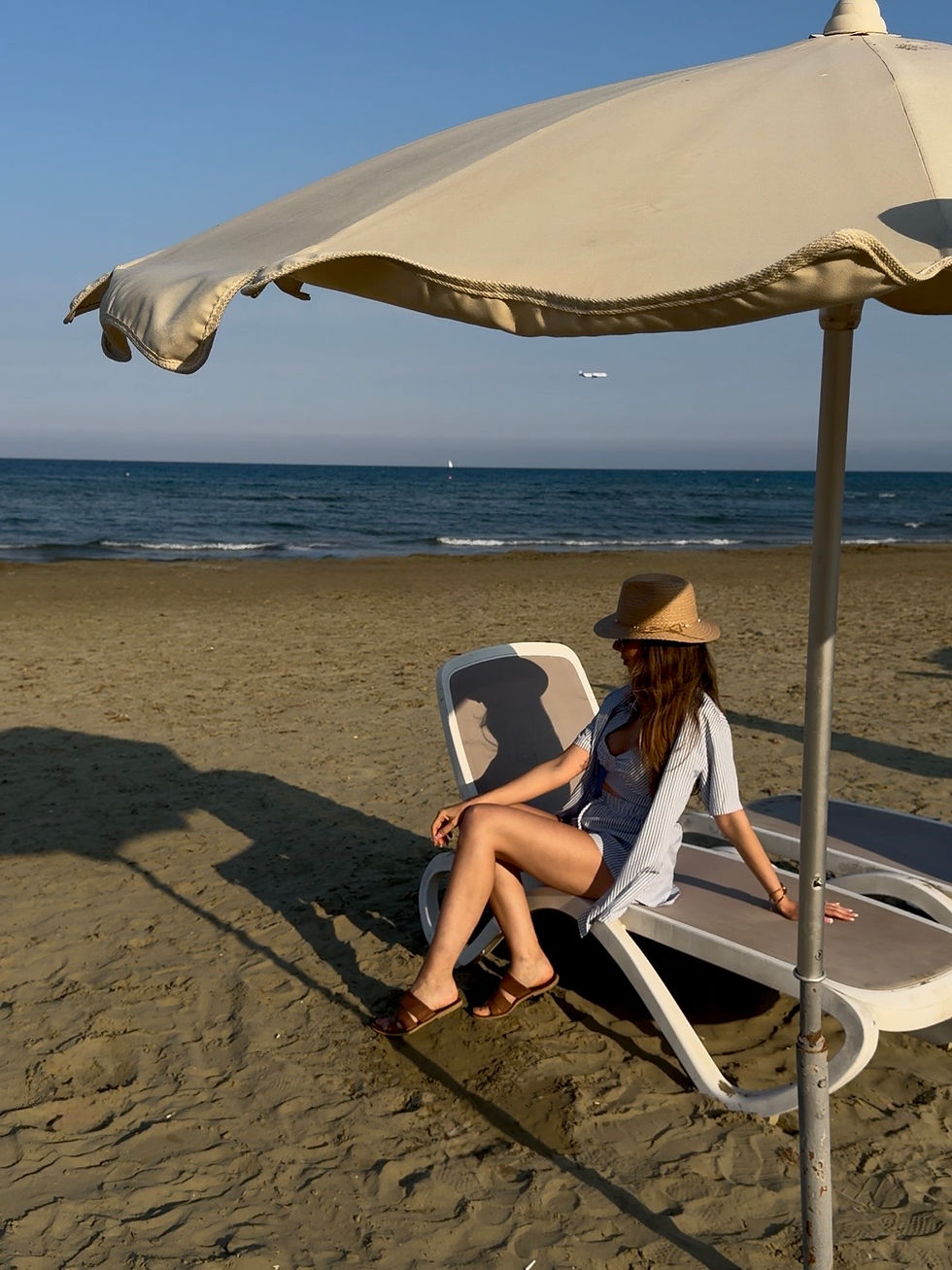
We started with a walk along Finikoudes Beach, Larnaca’s famous palm-lined promenade. The atmosphere was lively, with locals and tourists enjoying the waterfront, restaurants beginning to fill up and the Mediterranean Sea glowing in the evening light. Finikoudes is one of the most popular areas in the city and a great place for a relaxed seaside stroll.
From there, we wandered through Larnaca’s old town, exploring its narrow streets, traditional buildings and small local shops. It was the perfect place to pick up a few souvenirs and experience a different side of the city away from the beach.
The historic center is home to some of Larnaca’s most important landmarks, including the Church of Saint Lazarus and Larnaca Castle. Built in the 9th century, the Church of Saint Lazarus is one of the most significant religious sites in Cyprus and is believed to stand over the tomb of Saint Lazarus. Not far away stands Larnaca Castle, a medieval fortress that has served various purposes throughout its history under Byzantine, Ottoman and British rule. Today, it remains one of the city’s most recognizable landmarks and a reminder of Cyprus’ long and complex past.


For dinner, we stopped at Roussos Pizza – Neapolitan Pizza Larnaca. After a day spent exploring mountain roads, monasteries and villages, sitting down for a good meal felt well deserved and was the perfect way to end the day.
It wasn’t a day filled with beaches or swimming, yet it ended up being one of the most memorable days of the trip. From the cool mountain air of the Troodos region to the lively evening atmosphere of Larnaca, it showcased just how diverse Cyprus can be within a single day.
DAY 3.
CHANGE OF PLANS
Our original plan for this day was to visit Nicosia before continuing to Ayia Napa. In the end, we decided to spend a more relaxed morning in Larnaca and headed directly to Ayia Napa around midday instead. Although we didn’t get the chance to visit the capital during this trip, it quickly became one of the places I want to see on a future visit to Cyprus.
Known locally as Lefkosia, Nicosia is the capital of Cyprus and the last divided capital city in Europe. Unlike the island’s coastal destinations, which are known for beaches and seaside promenades, Nicosia is a city shaped by centuries of history and the events that continue to influence Cyprus today.
The city’s origins date back thousands of years, but one of its most recognizable features is the ring of Venetian Walls that surrounds the old town. Built in the 16th century by the Venetians to defend the city from Ottoman attacks, the walls remain one of Nicosia’s most iconic landmarks and still define the shape of the historic centre.
At the heart of the old town lies Ledra Street, one of the city’s most famous streets. Today it is a lively pedestrian area lined with shops, cafés and restaurants, but it also leads directly to the Green Line checkpoint that separates the Greek Cypriot south from the Turkish Cypriot north.
What makes Nicosia so unique is that everyday life continues on both sides of a political division. People shop, work, meet friends and go about their daily routines while crossing points, UN buffer zones and reminders of the island’s division remain visible throughout the city.
The division dates back to 1974, following a Greek-backed coup and subsequent Turkish invasion of Cyprus. Since then, the city has remained split between the internationally recognized Republic of Cyprus in the south and the Turkish-controlled northern part of the island.
Visitors can cross between the two sides on foot using designated checkpoints. Many travellers choose to explore both areas in a single day to experience the different architectural styles, cultures and historical influences found throughout the city.
One of the most famous attractions on the northern side is Büyük Han, a beautifully restored Ottoman caravanserai dating back to the 16th century. Once a resting place for merchants and travellers, it now serves as a cultural centre filled with artisan workshops, galleries and cafés arranged around a picturesque courtyard.
Nearby stands the Selimiye Mosque, originally built as a Gothic cathedral during the Lusignan period before being converted into a mosque following the Ottoman conquest. The building is often cited as one of the best examples of Cyprus’ layered history, reflecting influences from different civilizations, religions and periods.
Although Nicosia doesn’t offer the beaches and turquoise waters that attract many visitors to Cyprus, its history, architecture and cultural significance make it one of the most fascinating destinations on the island. Missing it this time simply gave me another reason to return.

AYIA NAPA
By noon we left Larnaca with InterCity bus which was late and continued toward Ayia Napa, where we would spend the next part of our trip.
Ayia Napa is probably the most famous resort destination in Cyprus and is especially known for its turquoise water, beach clubs, nightlife and luxury resorts. Years ago the town was mainly associated with parties and nightlife tourism, but today it has evolved into a much more diverse destination that combines beautiful beaches, modern hotels, restaurants, boat trips and relaxed Mediterranean luxury.
Compared to Larnaca, Ayia Napa felt much more resort-oriented and international. The atmosphere was completely different — beach clubs, palm trees, modern hotels and coastal roads replaced the historical streets and old architecture we had explored earlier in the trip.
The area is famous for having some of the clearest water in Cyprus, with beaches, hidden coves, sea caves and dramatic coastal cliffs that honestly look almost tropical during summer. From the famous sandy bays of Ayia Napa to the rugged coastline of Cape Greco, the sea constantly shifts between deep blue, emerald and bright turquoise depending on the sunlight. At the same time, despite being one of the island’s most popular tourist destinations, Ayia Napa still manages to maintain the relaxed Mediterranean atmosphere that makes Cyprus so enjoyable.
WHERE TO STAY

AYÃ RESORT
For our stay in Ayia Napa we checked into the beautiful AYÃ Resort. The property immediately stood out because of its modern Mediterranean design, calm atmosphere and beautifully styled spaces.
We stayed in a Premium Garden Suite with a Private Pool, which ended up being one of the highlights of the trip. Having our own small private pool made the whole experience feel much more peaceful and exclusive. The room itself was spacious, elegant and designed in a very minimal yet warm style with neutral tones, natural textures and large windows that brought in plenty of light.


Everything in the hotel felt extremely aesthetic and carefully designed — from the architecture to the pool areas and even the small decorative details. The overall atmosphere was modern, luxurious and very Instagrammable without feeling pretentious.
The main pool area was especially beautiful, surrounded by sunbeds, palm trees, and clean white architecture that perfectly matched the Mediterranean setting. Throughout the day, DJs created a relaxed holiday atmosphere with music by the pool, giving the resort a lively yet sophisticated vibe. I particularly enjoyed the food and drinks served around the pool area, making it easy to spend hours simply relaxing between swims without needing to leave the resort.


What really stood out was the service. The staff throughout the resort were genuinely kind, welcoming and attentive. Check-in was smooth, and everyone made the experience feel relaxed and effortless from the moment we arrived.
In the evening we had dinner at Manña Restaurant, located within the resort, and it honestly exceeded our expectations. The restaurant had a very stylish atmosphere with beautiful interior design and a menu combining Mediterranean flavours with more modern presentation.
The food was beautifully presented and everything tasted fresh and high quality. The whole dining experience felt elevated but still relaxed, perfectly matching the atmosphere of the resort itself.


AYÃ Resort managed to feel luxurious while maintaining a calm and understated atmosphere. It did not feel like a huge crowded resort, but rather like a modern boutique escape designed for relaxation. The stylish design, private pool experience, welcoming staff and vibrant atmosphere around the main pool made it one of the most memorable accommodations of our trip.
Instagram: @aya.resort.cyprus
Book here: AYÃ RESORT Ayia Napa


Unfortunately, later that evening, my mother had an unexpected fall and injured her back. While it wasn’t the way either of us had imagined the rest of the trip unfolding, we decided to make the best of the situation. The comfortable surroundings of the resort allowed her to slow down, rest and enjoy the peaceful atmosphere over the following days, while I continued exploring parts of Cyprus on my own. In a way, the trip unexpectedly became a combination of a relaxing resort stay for her and a solo adventure for me — and thankfully, it all turned out well in the end.
DAY 4.
EXPLORING AYIA NAPA’S COASTLINE SOLO
After several days filled with cities, mountains and historical sites, day four was all about experiencing the famous coastline of Ayia Napa. Since my mother was resting at the resort, I checked in on her in the morning before heading out to explore on my own. As much as I wanted to stay with her, I also couldn’t resist discovering the beaches, coves and dramatic coastal scenery that make this part of Cyprus so famous.
I ended up seeing most of these places in a single day, mainly because I wanted to make the most of my time while my mother relaxed at the resort and still be able to spend the following day with her. Looking back, it was an incredible day, but also a very intense one. The combination of walking, buses, transfers and the strong June heat made it much more demanding than I expected.
For getting around the area, there are several convenient options:
renting a car for maximum flexibility,
renting a buggy or quad bike,
using Bolt (which works in Cyprus instead of Uber),
or simply using the local buses.
The easiest public transport options are:
Bus 101 toward Cape Greco and Protaras,
Bus 102 back toward Ayia Napa.
The buses are affordable, frequent and surprisingly convenient since many of the area’s most famous attractions are located along the same coastal road. A single ticket costs €2, while a day pass costs €6 and allows unlimited travel. Since I knew I would be making multiple stops throughout the day, I opted for the day pass, which quickly paid for itself.

SEA CAVES
I started my day by taking a Bolt to the Sea Caves. However, the driver dropped me off on the main road rather than at the actual viewpoint, meaning I still had to walk roughly 700 meters to reach the cliffs. It didn’t feel too bad in the morning, but I definitely noticed the distance much more later under the scorching midday sun.
The Sea Caves are one of the most photographed locations in Cyprus and it is easy to understand why. The coastline here is made up of dramatic white limestone cliffs and natural rock formations carved by the Mediterranean over thousands of years. The water looked almost unreal, shifting between deep blue, turquoise and emerald depending on the sunlight.
One thing worth mentioning is that the area involves walking on uneven rocky terrain, so comfortable shoes are definitely a good idea. Despite the heat, the views made every step worthwhile.


KONNOS BAY
From there I caught Bus 101 and continued toward Konnos Bay, one of the most beautiful beaches in the region. Nestled between pine-covered hills and rocky cliffs, Konnos feels much more natural and secluded than some of Ayia Napa’s busier beaches. The sheltered bay is famous for its calm turquoise water and scenic setting, making it a favourite among both locals and visitors.


PROTARAS - FIG TREE BAY
After Konnos, I continued by bus to Protaras and visited Fig Tree Bay, often ranked among the best beaches in Europe. Unlike the more rugged scenery around Cape Greco, Fig Tree Bay is known for its wide stretch of golden sand and crystal-clear shallow water. The beach takes its name from a solitary fig tree that has stood nearby for centuries. Despite its popularity, the water was so clear that it almost looked like a swimming pool.


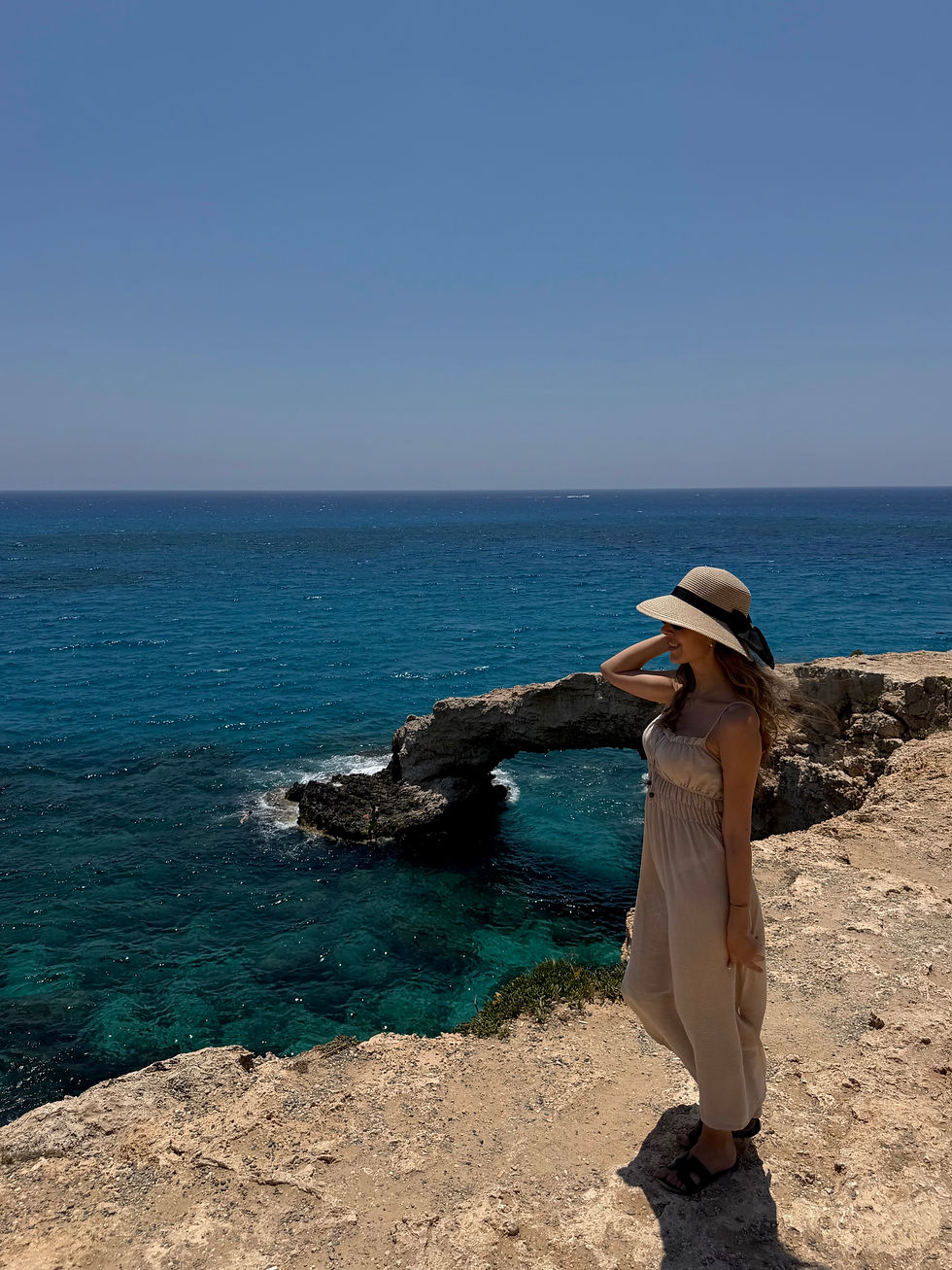
LOVE BRIDGE
From Protaras I headed back toward Ayia Napa to visit the famous Love Bridge. This natural white rock arch extending into the sea is one of the area’s most recognizable landmarks. According to local legend, couples who kiss there will stay together forever. Whether true or not, it is certainly one of the most photogenic spots on the island.
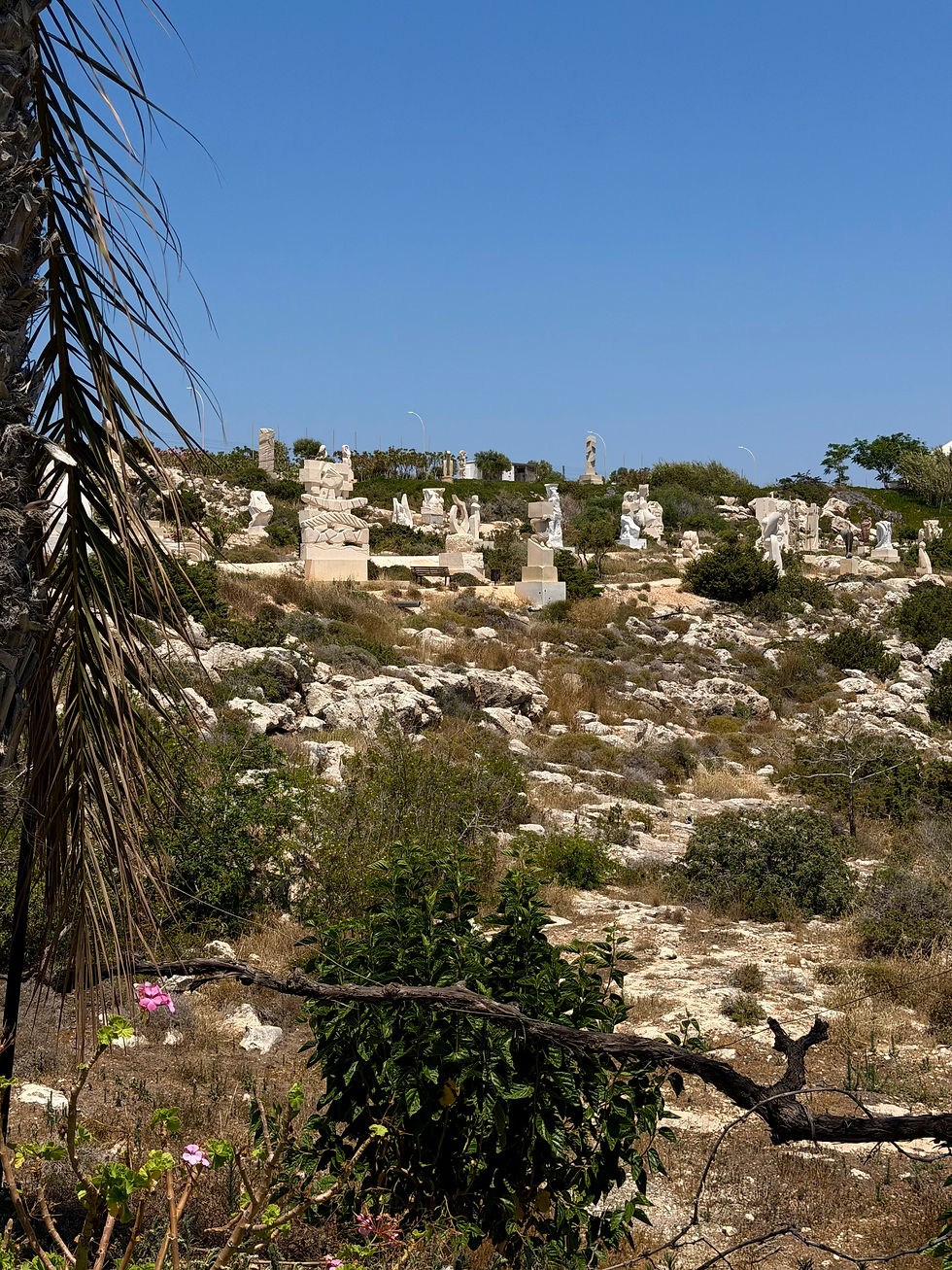
SCULPTURE PARK
Nearby is the Sculpture Park of Ayia Napa, an open-air exhibition featuring dozens of sculptures created by artists from around the world. Spread across a hillside overlooking the Mediterranean, the park combines art with spectacular coastal views and is worth visiting even if you’re not particularly interested in sculpture.
NISSI BEACH
Later in the afternoon, I made my way to Nissi Beach, arguably the most famous beach in Cyprus. Nissi is known for its white sand, shallow turquoise water and small islet connected to the shore by a sandbank. The colours here genuinely looked tropical and lived up to every photo I had seen before visiting.


MAKRONISSOS BEACH
My final beach stop of the day was Makronissos Beach. Although often overshadowed by Nissi, I actually found it equally beautiful. The beach is made up of several small bays with soft golden sand and calm, crystal-clear water. Compared to Nissi, it felt slightly more relaxed and less crowded, making it a perfect final stop before heading back.
AYÃ RESORT
After spending the day exploring cliffs, beaches, coves and viewpoints, I took a Bolt back to AYÃ Resort. The first thing I did was check on my mother, who was thankfully comfortable and enjoying a restful day at the hotel. We then spent some time relaxing together by the pool.
The atmosphere around the resort was just as enjoyable as the day before. DJs performed throughout the afternoon, creating a relaxed holiday vibe without it feeling overly loud or intrusive. Sitting by the pool, listening to music and reflecting on the day’s adventures felt like the perfect way to end a busy day of solo exploration.


While I loved seeing so many places in a single day, I would probably recommend spreading these stops over few days if you’re visiting during the hotter summer months. The distances may look short on a map, but the heat can be surprisingly exhausting. That said, from dramatic sea caves and hidden coves to famous beaches and panoramic viewpoints, this day showed me exactly why Ayia Napa’s coastline is considered one of the most beautiful parts of Cyprus.
DAY 5.

A RELAXING FINAL DAY IN AYIA NAPA
After my busy day exploring the coastline, our final day in Cyprus was intentionally much slower. Since we had an evening flight home, we decided to make the most of our remaining hours at AYÃ Resort and simply enjoy everything the property had to offer.
The morning began with a relaxed breakfast overlooking the pool area. With no sightseeing plans, no buses to catch and nowhere we needed to be, it felt nice to slow down and enjoy the atmosphere. After several busy days spent exploring cities, mountain villages, beaches and historical sites, this was exactly the kind of ending the trip needed.
Most of the day was spent between the resort’s beautiful lagoon-style pools and our private pool. The main pool area remained one of my favourite parts of the property, with its clean Mediterranean design, palm trees, comfortable sunbeds and relaxed atmosphere. Throughout the day, DJs played music that perfectly matched the setting, creating a sophisticated beach-club vibe without feeling overwhelming.

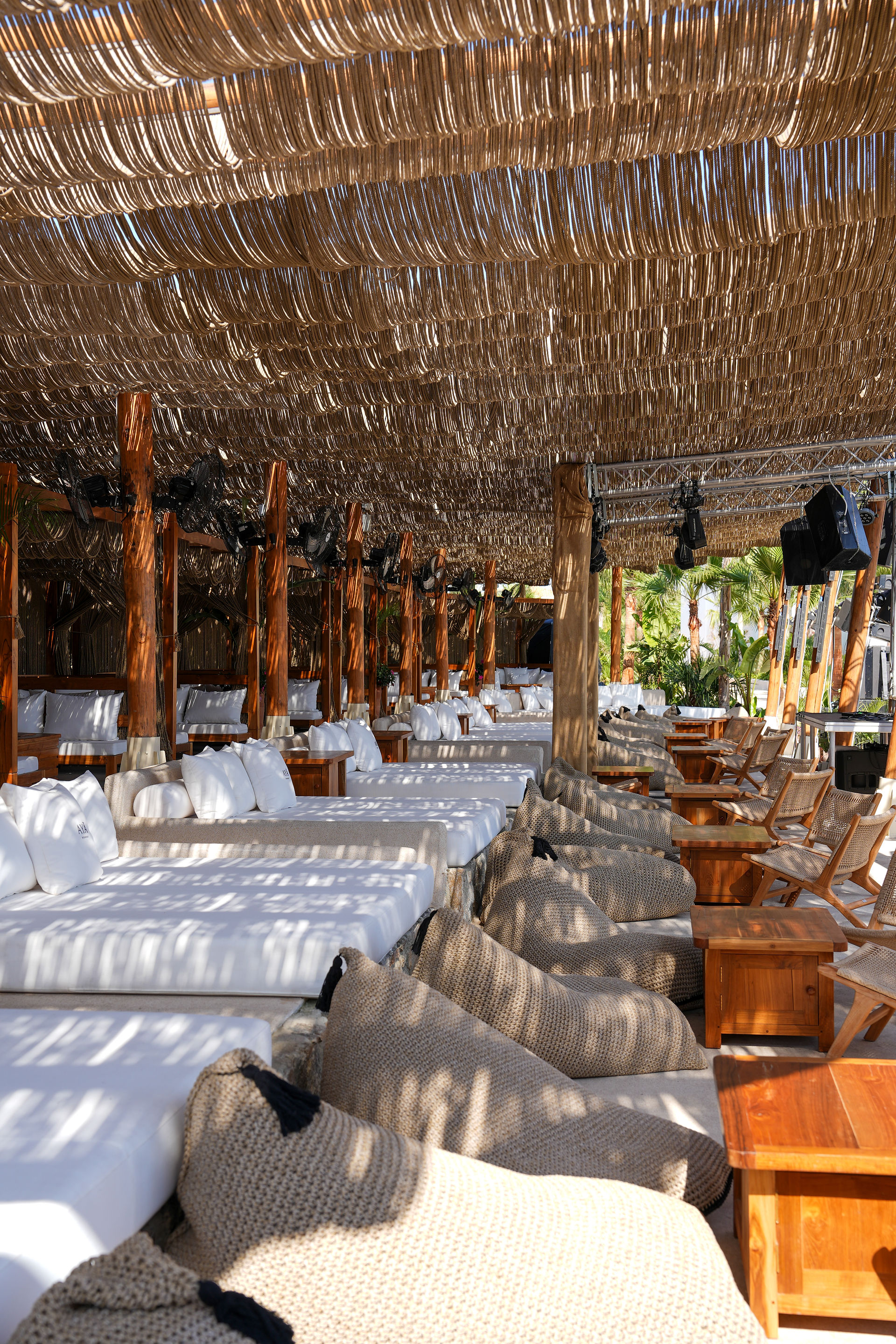


I spent the hours soaking in the pool, taking photos, enjoying the sunshine and simply appreciating the final moments of our holiday. Lunch by the pool was another highlight, allowing us to continue enjoying the resort without needing to leave the comfort of the hotel grounds.
Given everything that had happened after my mother’s fall, we were especially grateful for the kindness shown by the resort staff. They were incredibly understanding and considerate, allowing us a much later check-out at 6 PM so that my mother could remain comfortable and continue resting before our journey home. It was a thoughtful gesture that we genuinely appreciated and one that made the end of our stay far less stressful. A sincere thank you to the team for their kindness and flexibility.
At 6:10 PM, we boarded the direct Kapnos Airport Shuttle from Ayia Napa to Larnaca Airport. The ticket cost €13 per person and the direct connection made it one of the easiest ways to reach the airport from the resort area.
The shuttle arrived slightly later than scheduled and the drive was admittedly more exciting than expected at times, but thankfully we arrived safely at Larnaca Airport. Since our flight wasn’t departing until 10:35 PM, we ended up arriving quite early. However, given the evening traffic and the fact that we were travelling from Ayia Napa, we preferred allowing plenty of extra time rather than risking any last-minute stress.
As a completely unexpected bonus, I ran into a girl I knew on the shuttle. Considering we were both travelling through Cyprus and heading home on the same evening, it felt like quite a coincidence. We ended up spending the remaining time before our flight together at the airport, which made the wait pass much more quickly.
And just like that, our five days in Cyprus came to an end. What started as a mother-daughter getaway unexpectedly turned into a mix of shared experiences and solo adventures, but despite the changes to our plans, it became a trip I will remember for a very long time. While my mother was able to enjoy the comfort and relaxation of the resort during the final days, I had the chance to discover parts of the island on my own, giving us both a different but equally memorable experience.
Cyprus left a much bigger impression on me than I ever expected. It is a destination that combines history, culture, nature and beach life in a way few places can — and one that I already know I would happily return to.
For such a relatively small island, Cyprus offers an incredible variety of experiences within very short distances, which is honestly what makes it such an easy and rewarding destination to explore.
Before visiting, I mostly associated Cyprus with beaches and summer holidays, but the island turned out to be far more diverse than I expected. Within just a few days, we explored mountain villages hidden among pine forests, centuries-old monasteries, lively coastal towns, dramatic sea caves, turquoise coves and some of the clearest water I have seen in Europe.
As the third-largest island in the Mediterranean, after Sicily and Sardinia, Cyprus has long served as a crossroads between Europe, Asia and Africa. That unique position has shaped its history, culture and identity for thousands of years and is one of the reasons the island feels so fascinating despite its relatively small size.
One of the things I loved most about Cyprus is how easy it is to combine completely different experiences in a single trip. You can spend the morning wandering through a traditional mountain village and the afternoon overlooking crystal-clear Mediterranean water. Distances are short, travelling around the island is straightforward and the atmosphere feels welcoming almost everywhere you go.
Along the way, we also met countless friendly cats that seem to have adopted the entire island. Whether sleeping in village streets, wandering along promenades or relaxing near historical sites, they became an unexpected but unforgettable part of the experience.
Cyprus may not always be the first destination people think of when planning a Mediterranean getaway, but it deserves far more attention. Between the history, landscapes, beaches, culture, food and atmosphere, it offers much more variety than many visitors expect.
It certainly surprised me, and something tells me this won’t be my last visit to the island.


Comments