
Provence: Sun-Soaked Villages, Cicadas & the Art of Slowing Down


Bonjour from Provence — a region of golden stone villages, endless vineyards, olive trees, cypress-lined roads, lavender fields, sleepy cafés beneath plane trees, and the unmistakable soundtrack of summer carried by cicadas echoing through the hills.
Provence has this almost cinematic quality to it. The light feels softer, dinners last longer, afternoons stretch endlessly beneath the sun, and even the smallest villages somehow look like scenes from an old French film. It’s a place where time slows down naturally without trying too hard.
This trip felt especially special because I experienced it together with Nico and Thea — our purrfect little travel companion who joined us throughout the journey. Traveling through Provence with our cat somehow made the entire experience feel even softer and more peaceful. Watching Thea explore gardens, nap beneath the sun and quietly observe vineyards from hotel terraces honestly became part of the magic of the trip itself.

Provence is one of those rare places we keep returning to over and over again. Every visit somehow feels familiar and new at the same time. This time, our journey took us from the vineyards and countryside of the Var department to some of Provence’s most beautiful destinations, including Saint-Rémy-de-Provence, Les Baux-de-Provence, and even a quick visit to Marseille's dramatic Mediterranean coastline.
Compared to some of the busier and more photographed parts of Provence, Var feels quieter, greener and more intimate. Vineyards replace crowds, hidden villages appear between rolling hills, and the atmosphere feels deeply connected to nature, food and slow Provençal living.
Although Provence is famous for its lavender season in early July, we visited in May — a period that honestly felt almost perfect. The landscapes were still intensely green, flowers were blooming everywhere, jasmine scented the warm evening air, tourist crowds were much smaller, and despite technically being spring, temperatures reached 31–32°C almost every day. It already felt completely like summer.
And then there are the cicadas — the true soundtrack of Provence. Their constant singing filled almost every quiet afternoon by the pool, every golden-hour dinner and every countryside drive with that unmistakable southern French atmosphere that immediately makes you feel like you’re in Provence.
GENERAL INFORMATION
Provence is one of France’s most iconic regions, shaped by Roman, medieval, and Mediterranean influences. Its landscapes, hilltop villages, vineyards, lavender fields, and coastal towns have inspired artists such as Vincent van Gogh and Paul Cézanne.
Location: Southeastern France, stretching from the Rhône Valley to the Mediterranean Sea and the Italian border.

Symbols:
Lavender fields
Cypress trees
Sunflowers
Olive groves
Rosé wine
Cicadas
Hilltop villages
Main city: Marseille
Other notable towns: Aix-en-Provence, Avignon, Arles, Gordes, Roussillon, Saint-Rémy-de-Provence, Moustiers-Sainte-Marie, Cassis
Language: French
Useful phrases:
Bonjour — Hello
Bonsoir — Good evening
Merci — Thank you
S’il vous plaît — Please
Parlez-vous anglais ? — Do you speak English?
L’addition, s’il vous plaît — The bill, please
Currency: Euro (€)
Best time to visit:
April–June: Warm weather, flowers, fewer crowds.
Late June–mid July: Lavender season (best time for the famous purple fields).
Best lavender areas: Valensole Plateau, Sault, Abbaye Notre-Dame de Sénanque (near Gordes)
September–October: Harvest season, vineyards, pleasant temperatures, fewer tourists.
What to pack:
Comfortable walking shoes for cobbled villages and hilltop towns
Lightweight summer clothing and breathable fabrics
A light sweater or jacket for cooler evenings
Swimwear for hotel pools, beach clubs, and the Mediterranean coast
Sunglasses, a hat, and sunscreen — the Provençal sun is stronger than many people expect
Mosquito repellent, especially for countryside stays and outdoor dinners
A camera — because Provence is ridiculously photogenic
Food culture: Provençal cuisine is deeply connected to seasonality, simplicity, and the abundance of ingredients produced throughout the region. Olive oil, fresh vegetables, herbs, seafood, and local wines form the foundation of many traditional dishes.
Dining in Provence is less about fine dining alone and more about enjoying good food slowly — long lunches beneath plane trees, relaxed dinners on sunny terraces, and meals shared with family and friends.
The cuisine reflects the region itself: Mediterranean, colourful, unpretentious, and full of flavour.
Staple ingredients: Olive oil, olives, garlic, tomatoes, aubergines, courgettes, peppers, onions, fresh herbs (thyme, rosemary, oregano, savoury), Herbes de Provence, basil, lavender, lemons, artichokes, chickpeas, seafood, anchovies, fresh fish, goat cheese, truffles, honey, almonds, figs, melons, rosé wine, and local wines.
Typical foods and drinks:
Bouillabaisse: Provence’s most famous dish, originating from Marseille. A rich seafood stew traditionally made with several types of Mediterranean fish, shellfish, herbs, and saffron, usually served with toasted bread and rouille sauce.
Ratatouille: A classic Provençal vegetable dish made with tomatoes, aubergines, courgettes, peppers, onions, garlic, and herbs. Simple, colourful, and one of the region’s most iconic recipes.
Tapenade: A flavourful spread made from olives, capers, anchovies, olive oil, and herbs. Typically served with bread as an appetizer or aperitif snack.
Socca: A thin, crispy chickpea pancake originally from nearby Nice. Cooked in a wood-fired oven and often enjoyed as street food or a light snack.
Fresh seafood: Thanks to its Mediterranean coastline, Provence is known for excellent seafood including sea bass, dorade, mussels, oysters, octopus, and prawns, often prepared simply with olive oil, lemon, and herbs.
Rosé wine: Provence is considered the rosé capital of the world. Light, dry, and refreshing, it has become synonymous with long summer lunches and warm evenings on terraces.
Olive oil: One of the foundations of Provençal cuisine. The region produces some of France’s finest olive oils, used in everything from cooking and dressings to tapenade and traditional dishes.
Lavender honey: Produced from bees feeding on Provence’s famous lavender fields. Delicately floral and fragrant, it is often enjoyed with bread, pastries, yogurt, or local cheeses.

What to buy:
Lavender products
Local olive oil
Provençal ceramics
Rosé wine
Herbes de Provence
Marseille soap
Things to know:
Lunch is often served from 12:00–14:00.
Many small shops close during the afternoon.
Reservations are recommended in summer.
The sun is strong—especially July and August.
Mosquitoes can be surprisingly active, especially near gardens, vineyards, rivers, and around the Camargue region. Packing insect repellent is highly recommended during the warmer months.
Cicadas are seasonal. If you visit between late May and September, you’ll hear their distinctive song almost everywhere in the countryside. For many people, the sound of cicadas is as synonymous with Provence as lavender fields and olive trees.
HOW TO GET AROUND

We explored Provence by car from Switzerland, which is by far the best way to experience the region. Having your own vehicle gives you complete flexibility to visit hilltop villages, vineyards, olive mills, scenic roads, and lavender fields at your own pace. Many of the most beautiful places in Provence are difficult or time-consuming to reach by public transport.
Driving your own car
If you’re coming from neighboring countries such as Switzerland, Germany, Italy, Belgium, or the Netherlands, driving directly to Provence is often the easiest option. The roads are excellent, parking is generally straightforward outside major cities, and the journey itself becomes part of the experience.
Car rental
For travellers arriving by plane or train, renting a car is highly recommended. Major rental companies operate from Marseille, Nice, Avignon, Aix-en-Provence, and Toulon. Even a short rental gives much more freedom than relying solely on public transport.
Private transfers
Private drivers and hotel transfers are widely available, especially from Marseille Airport, Avignon TGV Station, and Aix-en-Provence. They can be convenient for travelers staying in luxury hotels or those who prefer not to drive.
Organized tours
Day tours are popular for destinations such as the Valensole lavender fields, Gorges du Verdon, wine regions, and Luberon villages. They can be a good option if you’re based in Aix-en-Provence, Avignon, or Marseille and don’t want to rent a car.
Public transport
Trains connect larger cities including Marseille, Aix-en-Provence, Avignon, Arles, and Toulon, while regional buses serve many smaller towns and villages. However, schedules can be limited, especially on weekends and outside peak season, making it less practical for exploring the countryside extensively.

Must-see areas:
Luberon
Valensole Plateau
Gorges du Verdon
Calanques National Park
Saint-Rémy-de-Provence
Île de Porquerolles
Camargue Regional Nature Park
Fontaine-de-Vaucluse
Colorado Provençal
Moustiers-Sainte-Marie
Power plugs: Type C & E, 230V
Local time: CET (UTC+1), CEST (UTC+2 in summer).
DAY-BY-DAY ITINERARY

Our journey through Provence was all about slowing down and embracing the region’s gentle rhythm of life. From the vineyard-covered hills of Var and peaceful countryside retreats to the hilltop villages of the Alpilles, olive groves, sun-drenched terraces, and long dinners beneath the evening sky, every day felt beautifully unhurried.
Rather than chasing sights from one place to another, this trip was centred around the things Provence does best — exceptional food, charming villages, olive oil tastings, poolside afternoons, Mediterranean views, and simply enjoying the atmosphere that makes this region so special.
Traveling together with Nico and Thea made the experience even more memorable, turning simple moments into some of our favourite memories of the trip.
Below, I’ll take you through our 5-day journey across Provence day by day.
DAY 1.
WHERE TO STAY
HOSTELLERIE DE L'ABBAYE DE LA CELLE
For the first part of our trip we stayed at Hostellerie de l’Abbaye de La Celle, a beautiful countryside property located in the small village of La Celle in Var.
We arrived around 7 PM together with Thea after driving through winding Provençal roads lined with vineyards, cypress trees and soft evening light. The hotel immediately felt like exactly the kind of place you imagine when dreaming about southern France — elegant but relaxed, luxurious without being pretentious, and completely surrounded by nature.


One of the many reasons we chose it was because it is pet friendly, which made traveling with Thea so much easier and more enjoyable.
We stayed in a private garden suite spread over two floors, which honestly felt more like a peaceful little Provençal home than a hotel room. Having our own private outdoor area surrounded by greenery made the entire stay feel incredibly calm and intimate.
After checking in, we immediately headed toward the pool area to catch golden hour before sunset. And honestly, that moment alone already made the trip feel worth it.


The pool is surrounded by rolling hills, vineyards, tall cypress trees and old stone architecture, while cicadas sing constantly in the background and birds circle above the valley. The light during sunset turns everything warm gold and soft green in the most beautiful way possible. It felt like Provence in its purest form.
That evening we had dinner at the hotel’s restaurant, which is part of Alain Ducasse’s culinary collection, with chef Nicolas Pierantoni leading the kitchen. And honestly — it deserves a Michelin star.
The entire experience felt refined yet deeply connected to Provence itself. The dishes focused on seasonal ingredients, local flavours and elegant presentation without ever feeling overly complicated.
What impressed me most was how accommodating they were regarding vegan food. Instead of treating it like an afterthought, the kitchen created dishes that still felt intentional, balanced and genuinely exciting.


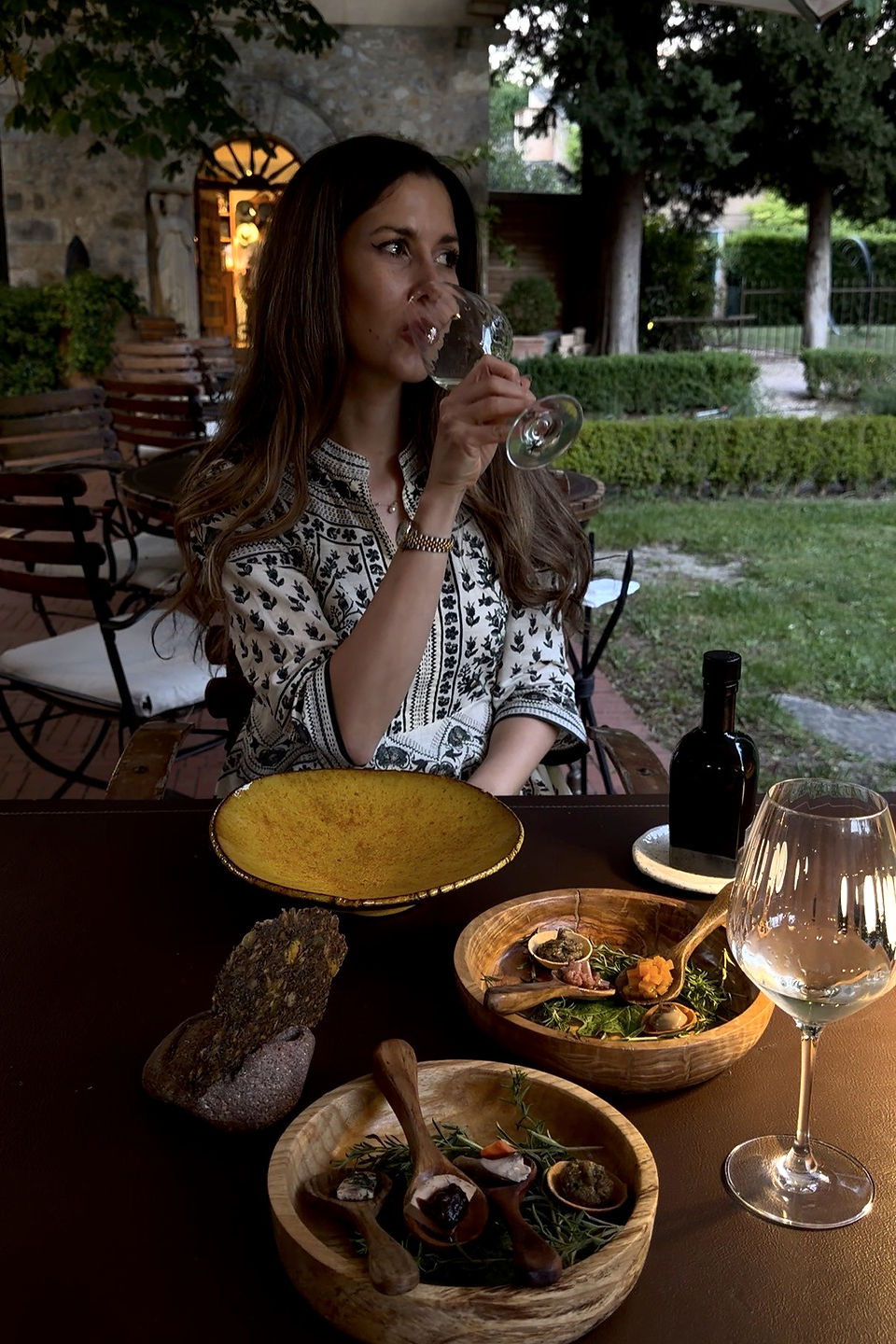
The atmosphere itself made the evening even more memorable — warm summer air, candlelight, cicadas in the background and the quiet feeling of being completely surrounded by the Provençal countryside.
Instagram: @abbayedelacelle
DAY 2.

HOSTELLERIE DE L'ABBAYE DE LA CELLE
We started the morning slowly at Hostellerie de l’Abbaye de La Celle with coffee in our room, taking in the view across the rooftops and the elegant cypress trees beyond. Thea joined us by the window, contentedly watching the world go by while we enjoyed a quiet start to the day.
Afterwards, we wandered through the gardens, stopping to admire the roses and breathe in the fresh morning air. The grounds were wonderfully peaceful, and we spent some time simply strolling along the paths, appreciating the beauty and tranquillity of our surroundings.


Thea, meanwhile, had settled into her favourite holiday routine: rotating between naps, sunbathing by the windows, and carefully keeping watch over the property from the comfort of our suite.
Before heading off, we lingered over breakfast. Fresh pastries, fruit, coffee, homemade jams, crusty baguette, and the gentle soundtrack of birdsong and cicadas made it feel like the perfect southern French morning.
Soon after, we packed up the car and set off. Nico had planned a surprise and refused to give me any clues, so I spent the next hour trying—and failing—to guess where we were going.


LES ROCHES BLANCHES | CASSIS
An hour later, we arrived at our destination and the surprise he had been keeping secret from me was finally revealed.
Later that day we drove toward the coast to Les Roches Blanches in Cassis for massage at their Sisley Spa followed by lunch and pool time overlooking the Mediterranean.


Les Roches Blanches is honestly one of the most beautiful hotels on the French Riviera. Built dramatically into the rocks above the sea, the property combines Mediterranean glamour with a calm understated elegance.
The views there almost do not look real — white cliffs, pine trees, boats floating in impossibly blue water and endless sea stretching toward the horizon.


The Sisley Spa experience felt deeply relaxing, especially combined with the sound of the sea and warm coastal air. Afterwards we spent time by the pool and had lunch overlooking the water, which felt like the perfect Côte d’Azur afternoon.

CASSIS
Although this visit was focused almost entirely on Les Roches Blanches, Cassis is a destination we keep returning to and one of our favourite places on the Mediterranean coast.
Once a small fishing village, Cassis is now known for its colourful harbour, dramatic limestone cliffs, and the famous Calanques National Park. Despite its popularity, it still manages to retain a relaxed Provençal atmosphere, with waterfront cafés, narrow streets, local markets, and fishing boats gently bobbing in the harbour.
Over the years we’ve visited several times and explored much more of the area, including hiking through the spectacular Calanques. In one particularly questionable travel decision, we attempted the hike wearing flip-flops — an experience that quickly turned into a lesson in why proper hiking shoes exist. The scenery was absolutely worth it, but our feet would probably disagree.
The calanques themselves are some of the most beautiful landscapes in southern France, where white limestone cliffs plunge into impossibly turquoise water that often looks more Caribbean than Mediterranean. Even though this trip was more about relaxation than exploration, it was nice returning to a place that already holds so many great memories for us.
Later we returned to Hostellerie de l'Abbaye de La Celle for some quiet time with Thea before heading toward Marseille for dinner at Tuba Club.


TUBA CLUB | MARSEILLE
Tuba Club is one of those places that perfectly captures modern Mediterranean coolness. Located directly on the rocks by the sea in Marseille, it feels somewhere between a boutique hotel, beach club and hidden local restaurant.
The atmosphere there is incredible — during the day swimmers jumping directly into the sea from the rocks, salty air, warm sunset light reflecting on the water and music blending into the sound of waves.
It's a seafood restaurant and obviously for vegans, the menu is quite limited. I ended up eating a lentil salad with bread. And yet… I would still return even if I was about to completely starve.
Because Tuba Club is less about the food itself and more about the feeling of the place. The sunset there, surrounded by rocks and sea with Marseille slowly glowing in the distance, feels almost impossibly cinematic.


DAY 3.
Our third morning started once again at Hostellerie de l’Abbaye de La Celle. By this point, we’d fully settled into the slow rhythm of Provençal life — lingering over coffee by the large window doors overlooking the gardens, watching the morning light fill the courtyard, and enjoying the peaceful atmosphere before the day began.


LA CELLE
Afterwards, we took a short stroll through the tiny village of La Celle. The village itself is incredibly small but full of Provençal charm — quiet streets, warm stone facades, flowers climbing walls, and almost no tourists. Since we arrived before opening time and the abbey next door was still closed, we wandered around for a while before returning to the hotel.


Back at the property, we spent the rest of the morning enjoying the property and the pool beneath the Provençal sun. Since the pool area was still quiet, we decided to bring Thea with us for a little adventure. As a strictly indoor cat, she’s not particularly interested in exploring the outdoors and much prefers observing the world from a safe distance. She stayed close to us the entire time, clearly using us as her security team, before eventually deciding that a small poolside cabin looked like a much safer option than the open surroundings.


Realizing she wasn’t entirely convinced by the Provençal pool lifestyle, we brought her back to the room where she immediately seemed much happier and more relaxed. Some cats dream of adventure. Thea dreams of comfortable rooms, air conditioning, and being left completely unbothered.
The outing did lead to one unexpected encounter, though. While Thea was safely in our arms, she met one of the property’s resident cats. The two exchanged what appeared to be a brief but important and friendly feline conversation, and to our surprise, the cat then followed us all the way back to our room as if continuing the discussion.
ABBAYE DE LA CELLE - MONASTERY | LA CELLE
Afterwards we visited the abbey located directly next to the property. Admission is free and it’s absolutely worth visiting if you’re staying nearby. The abbey is typically open from 9:30 AM to 6:30 PM, although it’s worth noting that it is closed on Mondays.
The Abbaye de La Celle is one of Provence’s most remarkable Romanesque monuments, with a history spanning nearly a thousand years. Long before the monastery existed, the site was occupied by a Gallo-Roman villa focused on wine production, and archaeological discoveries have revealed traces of human activity dating back as far as the Iron Age.
The monastery itself developed during the 11th century under the authority of the powerful Abbey of Saint-Victor in Marseille. Over time, it became one of the most important female monasteries in Provence, welcoming daughters of aristocratic families from across the region. Much of what visitors see today dates from the late 12th and early 13th centuries, when the complex was extensively rebuilt into the Romanesque structure that survives today.
Walking through the cloisters, chapter house, former dormitory, church, and peaceful inner courtyard felt like stepping back through centuries of Provençal history. It’s fascinating to think that generations of nuns once lived, prayed, and worked within these walls while the surrounding countryside remained largely unchanged.


After the monastery closed in the 17th century, the buildings were gradually transformed into a farm before eventually falling into disrepair. Extensive archaeological excavations and restoration work over recent decades have carefully uncovered and preserved the site’s many historical layers, from Roman foundations to medieval monastic life.
Today, surrounded by old stone walls, cypress trees, and quiet gardens, the abbey perfectly reflects the peaceful and spiritual atmosphere that still defines many parts of Provence. Timeless, beautifully preserved, and remarkably tranquil, it ended up being one of the most interesting surprises of our stay.
Before leaving, we also had another incredible lunch at the hotel — honestly one of the best food experiences of the trip. We would also like to thank Didier, whose kindness, attentiveness, and wonderful sense of hospitality made our stay even more special. From the moment we arrived, he made us feel genuinely welcome and cared for, always taking the time to chat, help, and ensure everything was perfect. The food was exceptional, but it was people like Didier who gave the entire experience its soul.


HAMEAU DES BAUX
Later that afternoon we continued further into Provence toward Hameau des Baux. The property feels like a collection of elegant little Provençal houses surrounded by vineyards, olive trees and hills.
We spent the afternoon relaxing by the pool before enjoying happy hour cocktails — including one of the best Aperol Spritz variations I’ve ever had.


That evening we had dinner at the hotel restaurant Allegria led by chef Julie Chaix, recognized by Gault & Millau.
The food once again focused heavily on seasonal Provençal ingredients with refined presentation and beautifully balanced flavours.


DAY 4.
We started the day slowly with coffee in bed while the first morning light filtered through the windows of our little Provençal room. One of my favorite things about Hameau des Baux was how peaceful the mornings felt — no alarms, no rush, just quiet countryside views, birdsong, and the feeling that the entire day was still ahead of us.
Meanwhile, Thea had already claimed her favorite spot by the window, carefully monitoring the gardens below and making sure everything on the estate was running according to her standards.


After a slow start and a bit of relaxation at the hotel, we set off to explore some of the most beautiful villages and towns in the Alpilles region of Provence.
LE PARADOU
Our first stop was Le Paradou, a tiny Provençal village surrounded by olive groves and stone houses. The atmosphere there felt incredibly authentic and local — sleepy cafés, shaded streets and almost no rush anywhere.
MAUSSANE-LES-ALPILLES
From there we continued toward Maussane-les-Alpilles, known for its olive oil production and elegant Provençal atmosphere. The town feels refined but still deeply traditional, filled with beautiful stone buildings, fountains and cafés beneath plane trees.
One thing I love about Provence is that even the smallest villages somehow feel aesthetically perfect without looking artificial.


MOULIN CASTELAS - OIL TASTING
As we do every time we visit Provence, we also made time for an olive oil hunt. This time we stopped at Moulin Castelas, located between Maussane-les-Alpilles and Les Baux-de-Provence, one of the region’s most respected olive mills. The tasting offered a great introduction to different olive varieties and production methods, and the staff were incredibly knowledgeable. Needless to say, we couldn’t leave empty-handed and ended up taking home four bottles.


SAINT-RÉMY-DE-PROVENCE
Later we visited Saint-Rémy-de-Provence, probably one of the most famous towns in Provence and honestly one of my personal favourites.
Founded on a site inhabited since ancient times, the town sits just a few kilometres from Glanum, one of the best-preserved Roman archaeological sites in southern France. Over the centuries, Saint-Rémy developed into an important Provençal market town and remains one of the cultural hearts of the region today.
The town perfectly balances sophistication with authentic Provençal charm. Elegant boutiques, art galleries, lively cafés, fountains, shaded squares, and beautiful stone streets lined with colourful shutters create the kind of atmosphere people imagine when dreaming about Provence.
Saint-Rémy is also deeply connected to Vincent van Gogh, who voluntarily stayed at the nearby Saint-Paul-de-Mausole asylum between 1889 and 1890. During that period he created more than 150 paintings, including some of his most famous works, inspired by the olive groves, cypress trees, wheat fields, and landscapes surrounding the town.
Walking through Saint-Rémy today, it’s easy to understand why so many artists fell in love with this corner of Provence. Despite its popularity, it somehow manages to remain elegant, relaxed, and unmistakably Provençal. For me, it feels like Provence distilled into a single town.


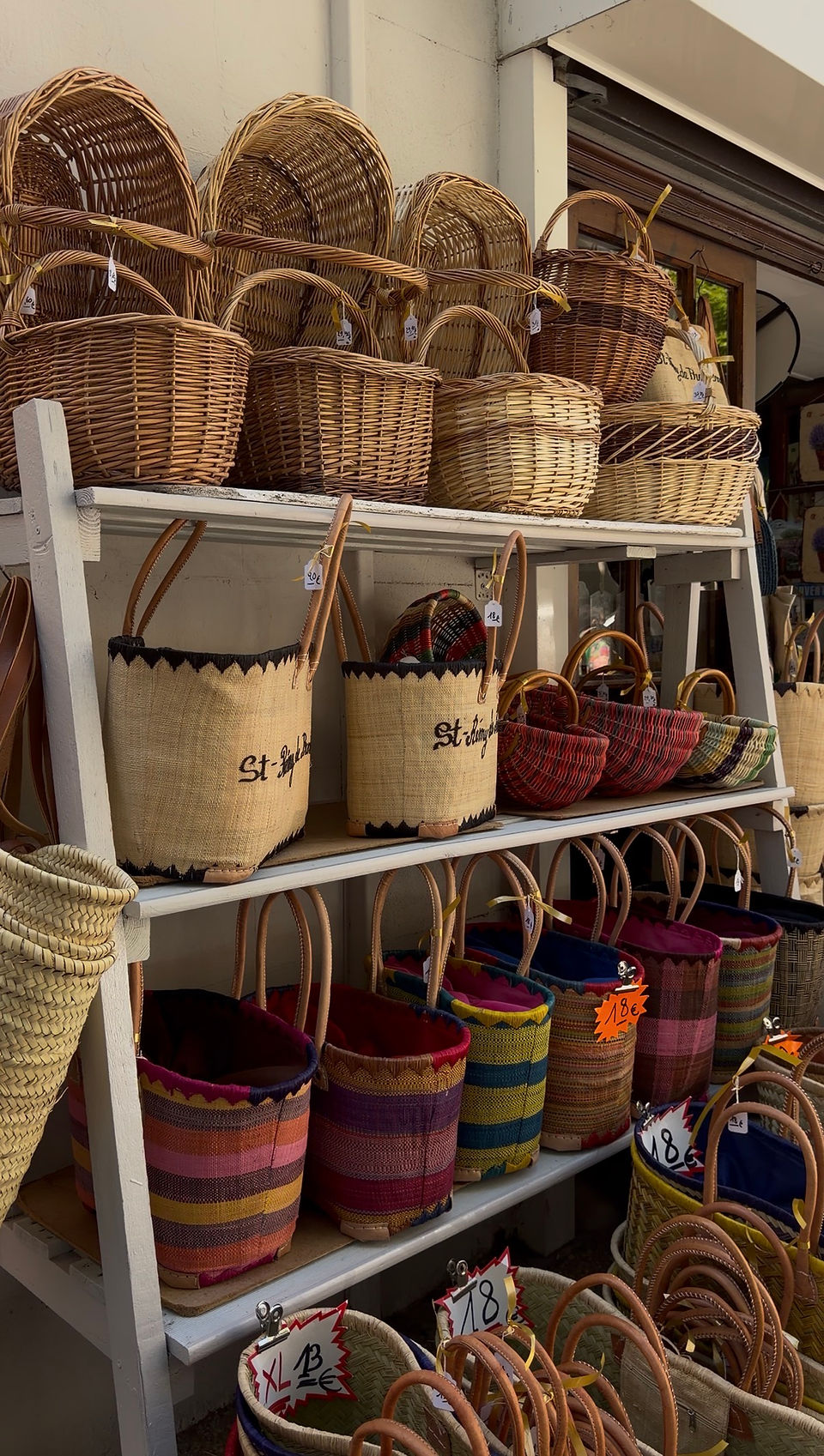


After exploring some of the surrounding villages and towns — and, of course, picking up a few bottles of excellent local olive oil along the way — we returned to the hotel where our fur little baby was patiently waiting for us. The rest of the afternoon was spent relaxing by the pool beneath the Provençal sun, enjoying the peaceful countryside views and the wonderfully slow pace that had quickly become the theme of our stay.


LA TABLE D'ESTOUBLON

After returning to the hotel for more pool time and relaxation, we headed for dinner at La Table d’Estoublon.
The restaurant is located within the famous Domaine d’Estoublon estate surrounded by olive groves and vineyards. The setting alone feels magical, especially during golden hour.
Dinner there ended up being another highlight of the trip — elegant Provençal cuisine, beautiful surroundings and one of those evenings where everything simply feels perfectly southern French.


DAY 5.
LES BAUX-DE-PROVENCE
On our final morning we headed very early toward Les Baux-de-Provence, arriving around 8 AM.
At that hour the village honestly felt almost ghostly — completely empty streets, closed cafés, silent stone alleys and no tourists yet. And strangely, that made it even more beautiful.
The only other ''local'' we encountered that morning was a snake casually slithering the already sun-baked stones. It seemed completely unbothered by our presence and looked like it had claimed the village to itself.
Les Baux-de-Provence is one of the most famous hilltop villages in all of France, dramatically perched on rocky cliffs overlooking the Alpilles landscapes.
CHÂTEAUX DES BAUX
At the very top stands the Château des Baux, a medieval fortress overlooking endless olive groves, vineyards and Provençal valleys below.
The castle officially opened at 9 AM and entrance cost €10, so we waited quietly while the village slowly began waking up beneath the morning sun. We've been here already but couldn't skip it so we decided to visit again.
Walking through the ruins of the Château des Baux felt like stepping into another century. Perched dramatically on a rocky plateau high above the Alpilles, the fortress was once one of the most powerful strongholds in southern France.
During the Middle Ages, Les Baux was ruled by the influential Lords of Baux, a noble family who claimed descent from one of the Three Wise Men and adopted the Star of Bethlehem as their symbol. At its peak, the fortress controlled a vast territory across Provence and was protected by imposing walls, towers, defensive gates, and natural cliffs that made it extremely difficult to conquer.
The château witnessed centuries of conflicts, sieges, and political struggles before eventually being dismantled in the 17th century on the orders of King Louis XIII, who wanted to prevent rebellious strongholds from challenging royal authority. What remains today are the impressive ruins carved directly into the limestone rock, offering a fascinating glimpse into medieval military architecture.
Beyond the history, the views are what truly make the experience unforgettable. From the ramparts, endless olive groves, vineyards, cypress trees, and rolling Provençal hills stretch toward the horizon in every direction.
And somehow, standing there in the quiet morning light, looking out across the landscape that has changed so little over the centuries, felt like the perfect ending to the trip.
Afterwards, we returned to the hotel one last time to collect Thea, our luggage, and check out before beginning the drive home. Within a few minutes, medieval ruins and panoramic views were replaced by suitcases, car keys, and the familiar routine of departure.
As we drove away through the olive groves and cypress-lined roads of Provence, with Thea safely settled in the car beside us, we couldn’t help feeling a little sad that the trip was already over.
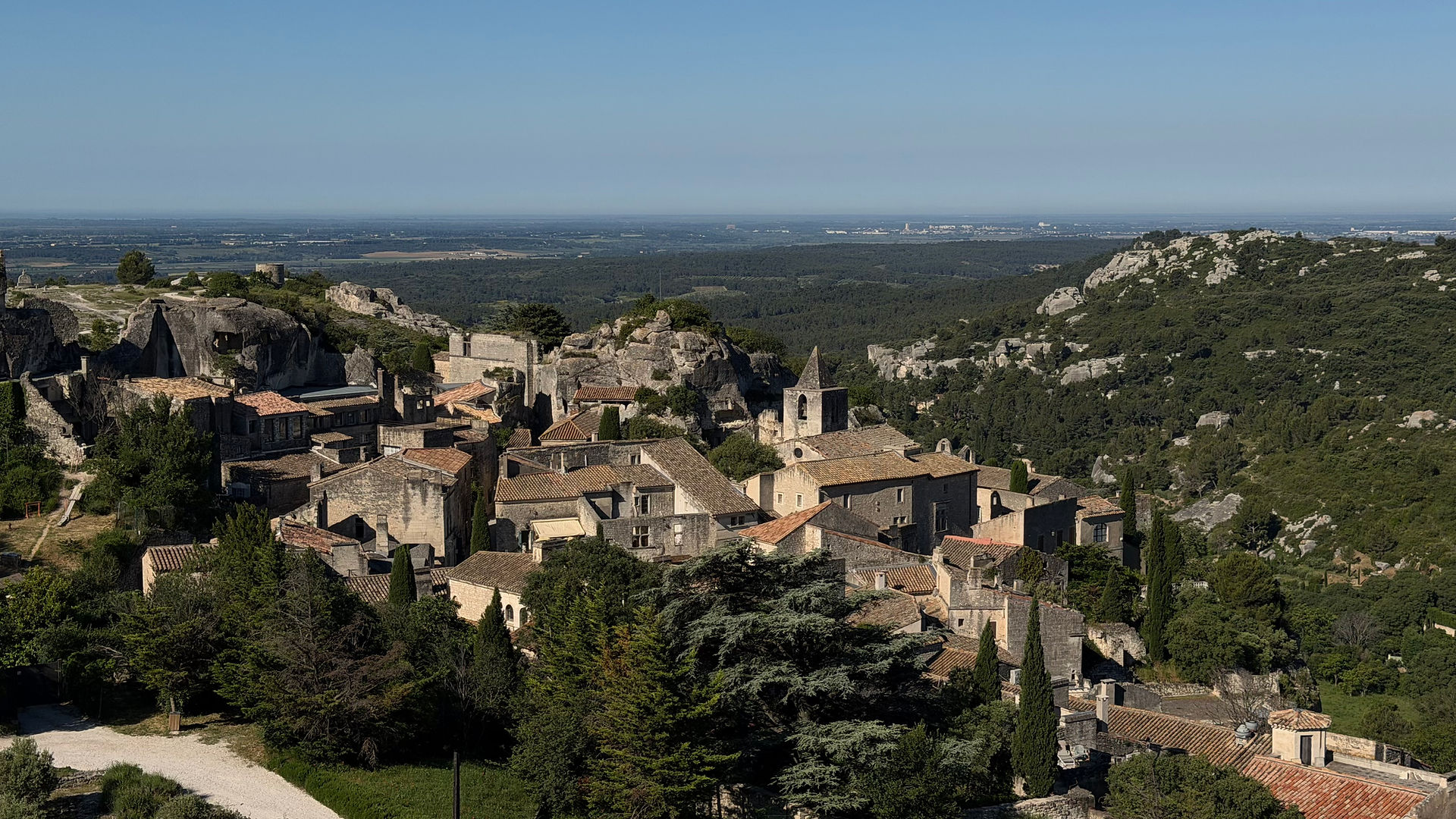


Provence is one of those places that slowly gets under your skin.
Not through dramatic landmarks or fast-paced experiences, but through atmosphere, light, smells, sounds and small moments that somehow stay in your memory long after returning home.
The cicadas.
The golden evening light.
The smell of lavender and pine trees.
Long lunches beneath plane trees.
Pools surrounded by vineyards.
The deep blue Mediterranean stretching toward the horizon.
Warm nights filled with crickets and wine glasses clinking softly in the background.

Every time we visit Provence, we leave already dreaming about returning again. And each trip only makes us fall more in love with it.
There’s something about this region that feels deeply comforting and inspiring at the same time — a way of living centred around beauty, food, nature and slowing down enough to actually enjoy where you are.
Traveling through Provence together with Nico and Thea made the entire journey feel even more special. Watching our little cat peacefully observing vineyards, gardens and sunsets from beautiful hotel terraces somehow became part of the soul of the trip itself.
At this point, Provence no longer feels like just a destination we visit.
It feels like a place we emotionally keep returning to even when we leave.
And honestly?
We sometimes catch ourselves dreaming about buying a small place somewhere among the olive trees, vineyards and cicadas one day.


Comments